

This post is also available in:
 עברית (Hebrew)
Drone swarms are posing an increasing challenge to air-defense systems. Small, unmanned aircraft can be launched in large numbers, attack from multiple directions, and force defenders to expend expensive interceptors against relatively low-cost targets. As a result, militaries are increasingly exploring alternatives that can neutralize multiple drones without relying on missiles or ammunition.
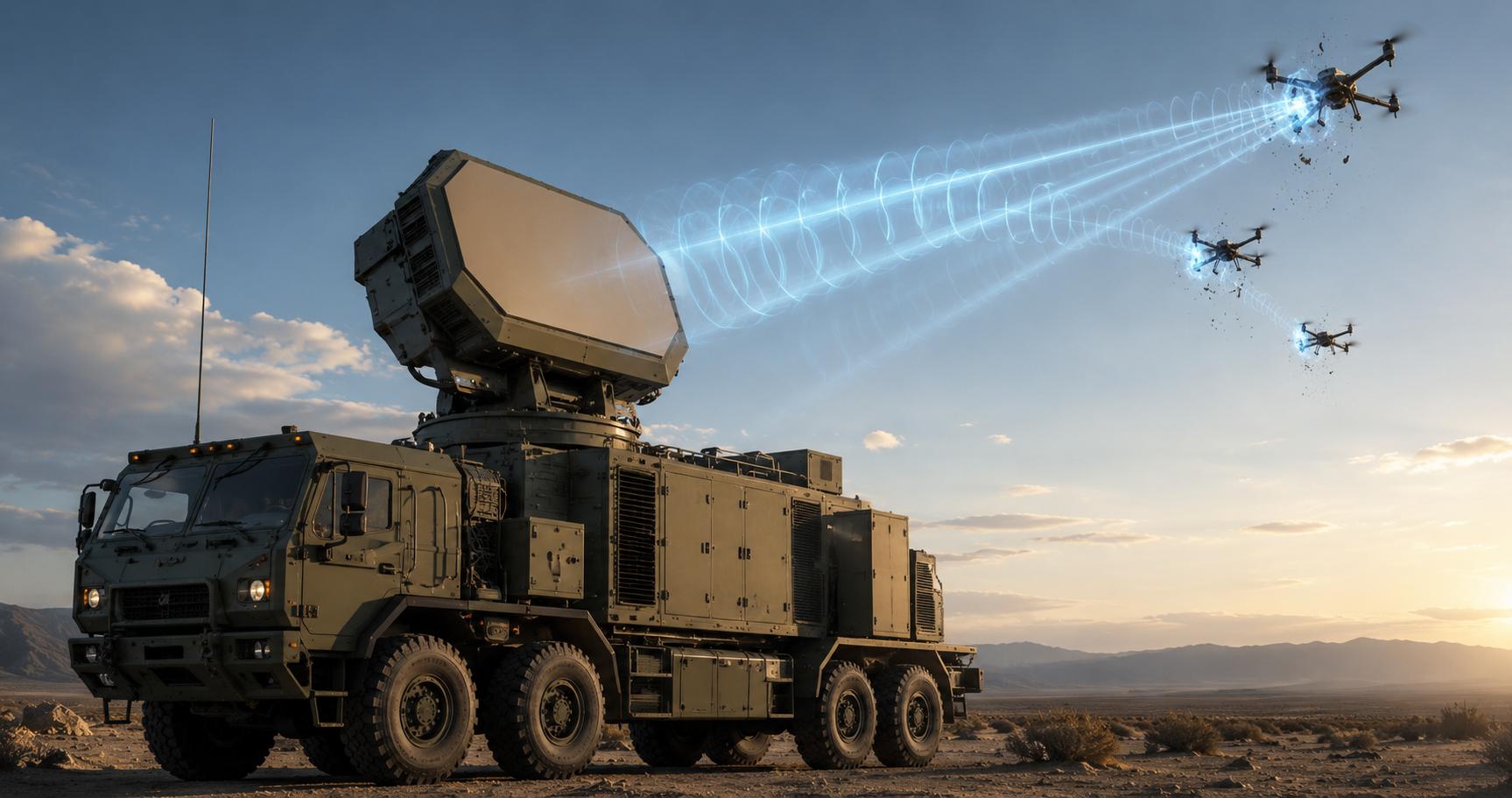
One approach (called RapidDestroyer by Thales) uses directed radio-frequency energy. Instead of physically striking a target, these systems attack the electronics that allow drones to navigate, communicate, and operate. Recent testing demonstrated how this concept could provide a new layer of defense against mass drone attacks.
During a series of trials, a radio-frequency directed-energy weapon (RFDEW) successfully disabled 80 drones using concentrated electromagnetic energy. The system works by transmitting high-power radio waves toward incoming targets. When those signals reach the drone, they interfere with onboard electronics and critical subsystems, causing the aircraft to lose functionality and preventing it from continuing its mission.
Unlike kinetic defenses that must engage each target individually, radio-frequency weapons can affect multiple drones within the engagement area simultaneously. According to Interesting Engineering, this makes them particularly attractive against swarm attacks where large numbers of aircraft appear at once.
The latest version of the system incorporates a redesigned four-panel effector, the component responsible for directing energy toward targets. According to the developer, the upgraded configuration concentrates more energy on incoming drones, increasing effectiveness and extending operational range. The tests reportedly demonstrated consistent and near-immediate disruption of targeted aircraft.
Another notable aspect is the integration of artificial intelligence into the command-and-control architecture. The AI assists with detecting, tracking, and prioritizing targets, helping operators respond more quickly when multiple threats appear simultaneously. Human operators remain responsible for overseeing engagements and authorizing actions.
From a defense perspective, RFDEW represent an increasingly important category of counter-drone technology. They offer a potentially lower-cost method of engaging large numbers of unmanned systems while avoiding the ammunition limitations associated with conventional interceptors.
The broader significance of the testing lies in the shift toward non-kinetic defenses. As drone attacks become more frequent and sophisticated, future air-defense architectures are likely to combine traditional missiles, electronic warfare tools, and directed-energy systems to create multiple layers of protection against increasingly diverse aerial threats.























