This post is also available in:
 עברית (Hebrew)
Undersea operations present a persistent challenge: distance and endurance. Oceans are vast, and autonomous underwater vehicles must travel long ranges before reaching their mission areas. Using onboard power alone limits range and time on station, while deploying crewed submarines for every task is costly and resource-intensive. For navies seeking persistent sensing and distributed capabilities, energy management remains a central constraint.
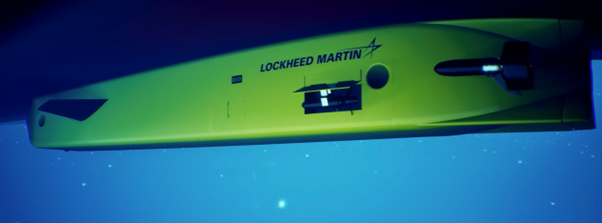
A newly revealed multi-mission autonomous undersea vehicle (Lamprey by Lockheed Martin) proposes an unconventional solution. Instead of expending its own power to reach distant waters, the vehicle attaches itself to the hull of a friendly ship or submarine and travels as a passenger. While docked, it uses small hydro-generators driven by water flow to recharge its batteries. By the time it detaches near its operational area, it carries a full energy reserve for independent missions.
The docking mechanism relies on suction-based or mechanical attachment systems designed to secure the vehicle during transit. According to Interesting Engineering, once released, the platform operates autonomously, powered by the energy accumulated during the journey. A communications mast allows data exchange both above and below the surface, supporting integration into broader maritime networks.
Flexibility is a defining feature of the system. Built around an open-architecture design, it includes a sizable internal payload bay that can accommodate various mission modules. These may include sensor packages for surveillance and intelligence collection, electronic warfare systems, acoustic decoys, or lightweight torpedoes. The vehicle can also be configured with retractable launchers for small aerial drones, extending its operational reach above the waterline.
Another key concept is cooperative deployment. Multiple vehicles can be positioned in a designated area and remain stationary on the seabed, collecting data quietly over extended periods. Upon receiving instructions, they can transmit intelligence, reposition, or execute assigned tasks. This distributed approach creates a network of autonomous nodes that complicates detection and targeting.
From a defense perspective, such capabilities support a shift toward more resilient and dispersed undersea operations. By leveraging host vessels for transport and charging, autonomous vehicles can operate farther from home ports while reducing reliance on large crewed assets. Distributed sensors and effectors also increase coverage without concentrating risk.
The development underscores how autonomy and energy innovation are converging in maritime systems. Rather than building larger platforms with bigger batteries, designers are rethinking deployment itself—turning friendly ships into mobile charging stations and delivery platforms for autonomous undersea assets.