

This post is also available in:
 עברית (Hebrew)
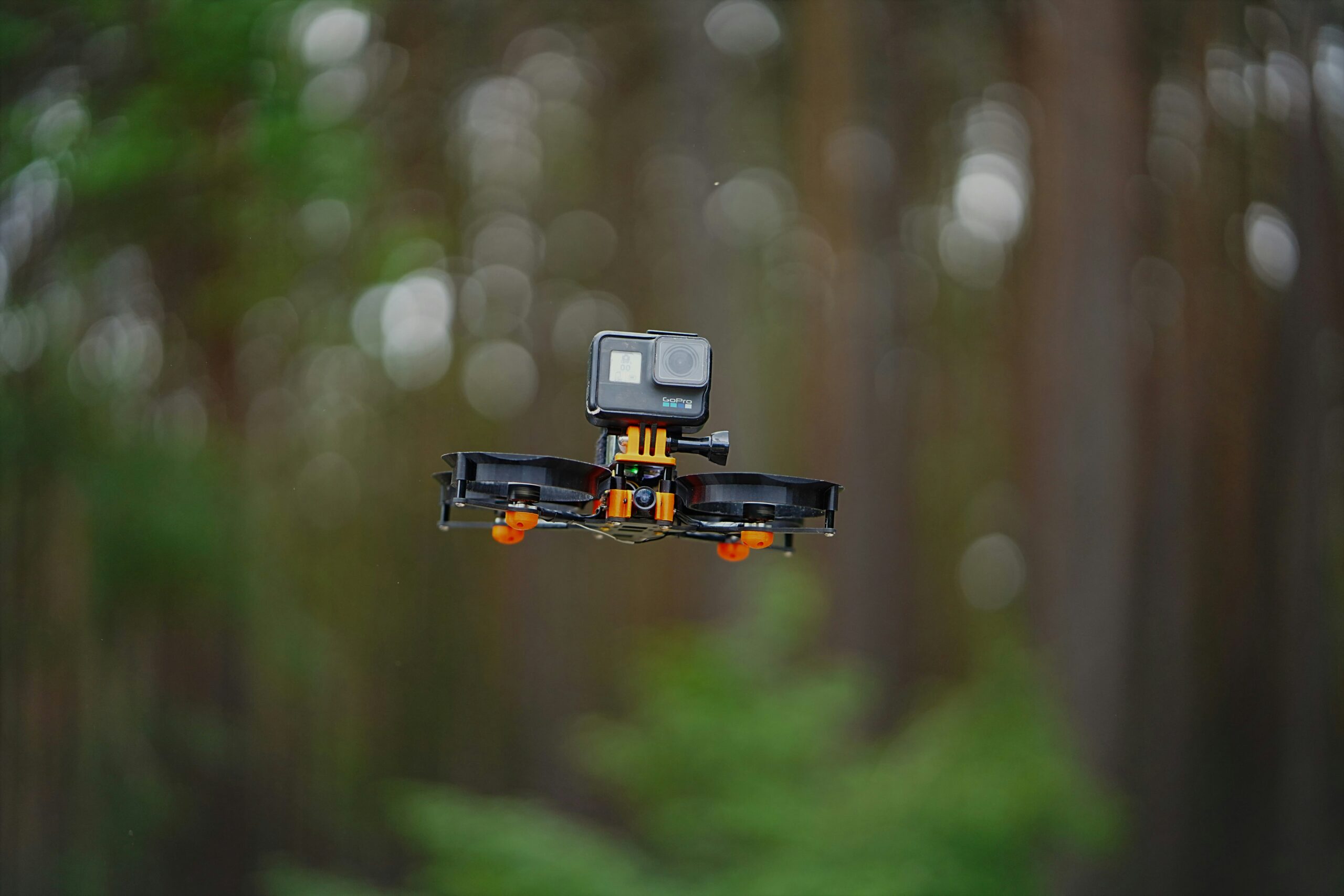
Modern battlefields are increasingly shaped by small, fast, and expendable aerial systems. Forces operating under constant surveillance and electronic warfare pressure need tools that are inexpensive, flexible, and able to operate where larger platforms struggle. First-person view (FPV) drones have emerged as a response to this challenge, but many commercially derived systems lack the durability, range, or adaptability required for sustained military use.
The recent delivery of the first Zeus FPV drones to Ukraine highlights an effort to close that gap. The Zeus family was developed with an emphasis on industrial-scale production and battlefield validation, rather than ad-hoc modification of civilian platforms. Manufacturing and testing take place in Finland, following a development program completed in 2025 in cooperation with a Ukrainian partner, with the explicit goal of producing a system proven under real combat conditions.
According to the Defense Post, at the core of the Zeus concept is modularity. The drones are offered in three sizes, covering missions from short-range reconnaissance to heavier tactical tasks. The 27.9-cm variant, positioned as a mid-range workhorse, can be configured for either radio control or fiber-optic guidance. The fiber-optic option removes reliance on radio links altogether, making the system resistant to jamming, with range limited only by the length of the fiber spool. In this setup, it carries a payload of around 3 kilograms. When radio-controlled, payload capacity increases to roughly 5 kilograms, with operational ranges exceeding 20 kilometers and significantly higher top speed.
The larger 33-cm Zeus follows the same design philosophy but is optimized for heavier loads. With a maximum takeoff weight of about 7 kilograms, it supports both control methods and offers a balance between payload capacity and flight performance suitable for tactical-level tasks.
At the opposite end of the scale is the 6.5-cm Zeus microdrone. Weighing just over 200 grams, it is intended primarily for close-range reconnaissance, offering short endurance but high maneuverability in confined environments.
While described as dual-use, the relevance of these systems to defense is clear. FPV drones have become a central element in modern military operations, used for reconnaissance, target acquisition, and precision effects at relatively low cost. Systems like Zeus, designed from the outset for military requirements and produced at scale, reflect how this category is evolving from improvised solutions into a standardized capability likely to shape future European and regional defense planning.























