This post is also available in:
 עברית (Hebrew)
Countering long-range attack drones has become a persistent challenge for air defense planners. Low-cost, long-endurance UAVs can loiter for hours and strike far from the front line, forcing defenders to choose between absorbing damage or expending expensive interceptor missiles. The problem is less about detection than about finding a sustainable way to stay in the air long enough to identify, track, and engage these threats.
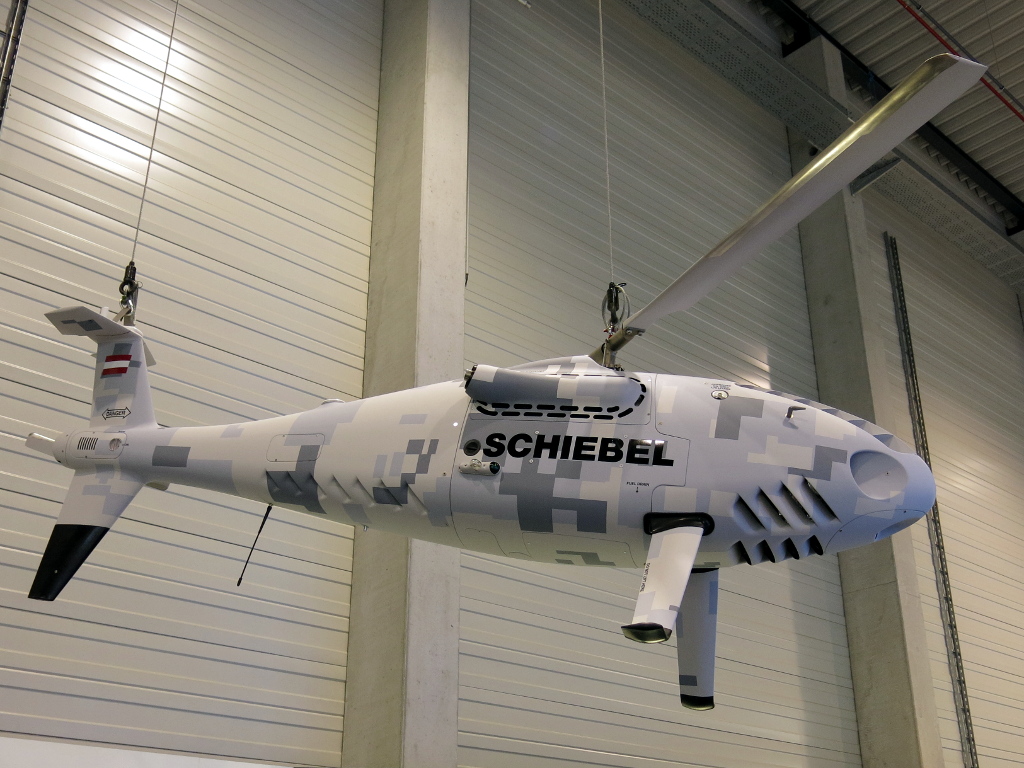
A newly unveiled unmanned helicopter platform points to one possible solution. The Camcopter S-301 is a vertical take-off and landing UAV designed from the outset for military operations, including armed missions. Recently displayed with twin launch pods carrying 70 mm semi-active laser-guided rockets, the system illustrates how armed drones are evolving from pure surveillance assets into airborne interceptors capable of precision engagements.
The concept is straightforward: pair long endurance with guided, relatively low-cost munitions. According to Interesting Engineering, it can remain airborne for up to 10 hours, operating beyond line of sight and covering wide areas where attack drones are likely to appear. When cued by onboard sensors or external targeting data, it can engage aerial targets using laser-guided rockets, offering a cheaper alternative to traditional air defense interceptors. Its VTOL design allows it to operate from ships, vehicles, or improvised forward sites, reducing dependence on fixed infrastructure.
Technically, the platform supports a payload of more than 110 kilograms within a maximum takeoff weight of 485 kilograms. This allows it to carry weapons alongside electro-optical and infrared sensors, radar, or electronic warfare payloads. Integrated avionics enable automatic takeoff and landing, autonomous navigation, mission updates during flight, and independent return-to-base if communications are disrupted.
From a defense and homeland security perspective, such a system fits the growing need for persistent, layered air defense. An unmanned interceptor can patrol for long periods, reduce pilot risk, and free manned aircraft for higher-end missions. It is particularly relevant against slow or medium-speed UAV threats, where endurance and cost efficiency matter as much as raw performance.
There are still open questions. Intercepting faster targets depends on speed and climb performance, details that will only be clarified through operational testing. Even so, the emergence of armed VTOL drones optimized for long patrols highlights a broader shift: air defense is no longer just about missiles on the ground, but about who can maintain presence in the air the longest.