

This post is also available in:
 עברית (Hebrew)
Air combat is becoming increasingly complex as threats multiply and reaction times shrink. Pilots are expected to manage dense sensor data, coordinate with multiple platforms, and operate in contested airspace where emitting a radar signal can be a liability. As a result, air forces are looking beyond remotely piloted drones toward systems that can sense, decide, and act on their own—while still operating safely alongside human pilots.
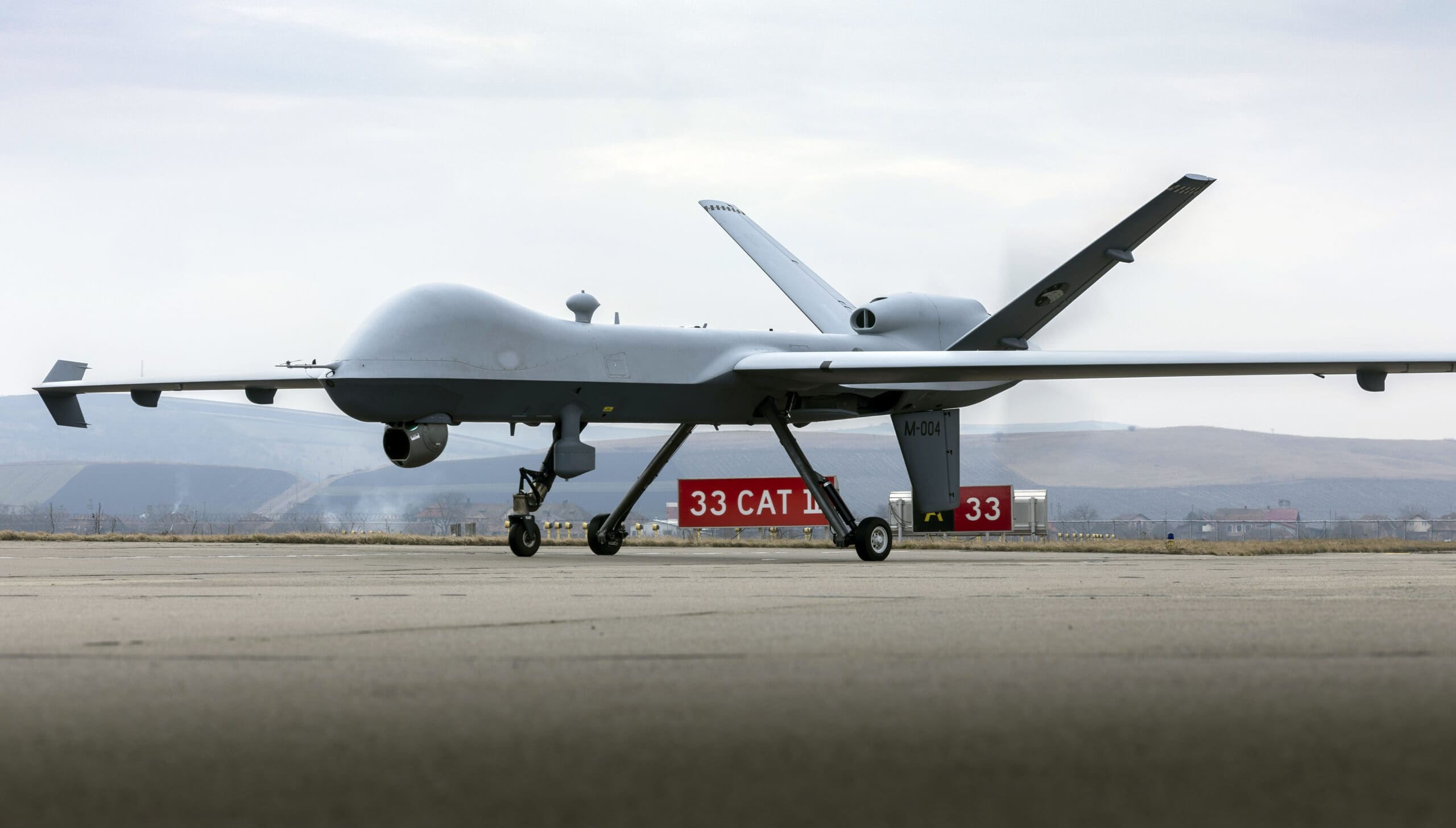
A recent live exercise of MQ-20 offered a glimpse of how that future might look. During the event, the jet-powered unmanned aircraft successfully carried out an autonomous air-to-air intercept against a crewed adversary aircraft. The scenario tested whether an unmanned platform could independently detect a target, maneuver into position, and execute an engagement without direct human control.
According to Interesting Engineering, the key to the intercept was how the drone found its target. Instead of relying on radar, which broadcasts the aircraft’s presence, the system used an infrared search-and-track sensor. By detecting the heat signature of the opposing aircraft, the drone was able to track it passively, remaining concealed while building a precise picture of the target’s movement.
Once contact was established, onboard software took over. The system fused sensor data to predict the adversary’s flight path, calculated an intercept geometry, and generated a firing solution. Telemetry from the exercise confirmed that the simulated weapon engagement would have resulted in a successful kill. All of this occurred while the aircraft operated across a large volume of airspace, managing speed, altitude, and positioning without external inputs.
Equally important was how the drone behaved during the engagement. Despite aggressive maneuvering, it complied with predefined airspace rules, remaining within assigned zones and avoiding restricted areas. This ability to respect airspace boundaries is critical for future operations where autonomous systems must coexist with crewed military aircraft and, potentially, civilian traffic.
The test also demonstrated smooth transitions between different autonomy modes. Basic flight tasks—such as maintaining course and altitude—were handled seamlessly alongside higher-level mission decisions. This separation reduces workload for operators and allows the aircraft to adapt as conditions change.
From a defense perspective, the implications are significant. Autonomous intercept capability supports emerging concepts where unmanned aircraft operate as collaborative partners to crewed fighters, extending sensor reach, engaging threats, or taking on high-risk roles. Passive sensing combined with onboard decision-making also enhances survivability in environments saturated with electronic warfare.
While still a controlled exercise, the intercept marks a meaningful step toward autonomous air combat systems that can operate independently, responsibly, and effectively in modern skies.























