

This post is also available in:
 עברית (Hebrew)
Low-cost drone swarms have exposed a growing imbalance in modern air defense. Small, unmanned aircraft can cost only a few thousand dollars and be launched in large numbers, while traditional interceptor missiles often cost hundreds of thousands per round. The conventional “one shot, one kill” approach quickly becomes unsustainable when facing multiple incoming targets, especially if magazines run dry during a prolonged engagement.
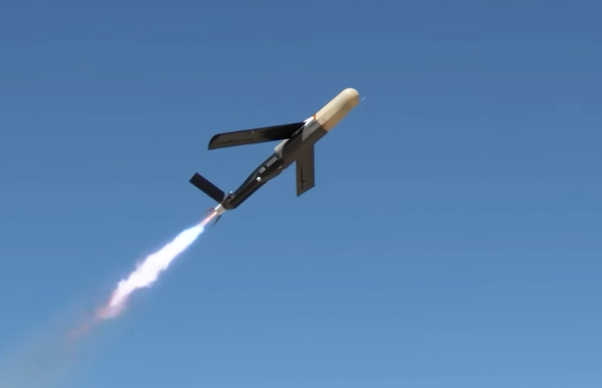
To address this gap, the U.S. Army recently demonstrated a different model: a reusable interceptor drone that disables threats using electromagnetic energy rather than explosives. During live-fire testing, the system—part of the Low, Slow, Small-Unmanned Aircraft Integrated Defeat System (LIDS)—engaged a swarm scenario involving roughly ten drones approaching from multiple directions.
At the center of the demonstration was the Coyote Block 3 unmanned interceptor. Earlier variants evolved from small reconnaissance drones into turbine-powered interceptors equipped with kinetic or explosive payloads. This variant retains the jet-powered airframe and maneuverability of its predecessor but replaces the warhead with an energy-based payload.
Instead of destroying targets through impact, the drone disables them electronically. While specific technical details have not been disclosed, the system is believed to employ either high-power microwave effects or advanced electronic warfare techniques. A microwave burst can induce damaging voltage surges inside a drone’s circuitry, while electronic disruption can overwhelm control links and onboard systems. By approaching close to the target before activating its payload, the interceptor increases effectiveness while limiting collateral risk.
According to Interesting Engineering, another key difference is reusability. After completing its mission, the platform can be recovered, refurbished, and redeployed. This significantly alters the cost equation compared to single-use interceptor missiles. It can also link into existing air-defense command networks and coordinate autonomously with other interceptors to divide and prioritize targets.
This approach reflects a broader shift toward sustainable counter-drone architectures. As drone technology proliferates across both military and civilian domains, layered systems must address not only performance but also cost and endurance. A reusable, energy-based interceptor offers a way to counter swarms without expending high-value munitions on low-cost threats.
The demonstration underscores how air defense concepts are adapting to the realities of drone-heavy battlefields, where resilience and economics are as critical as firepower.























