This post is also available in:
 עברית (Hebrew)
Sustaining drone operations at scale has become one of the defining challenges of modern warfare. Frontline units rely on unmanned systems for reconnaissance, strike missions, and real-time targeting, yet maintaining production volumes under combat conditions is difficult. Supply chains, component sourcing, and industrial capacity all determine whether battlefield demand can be met consistently.
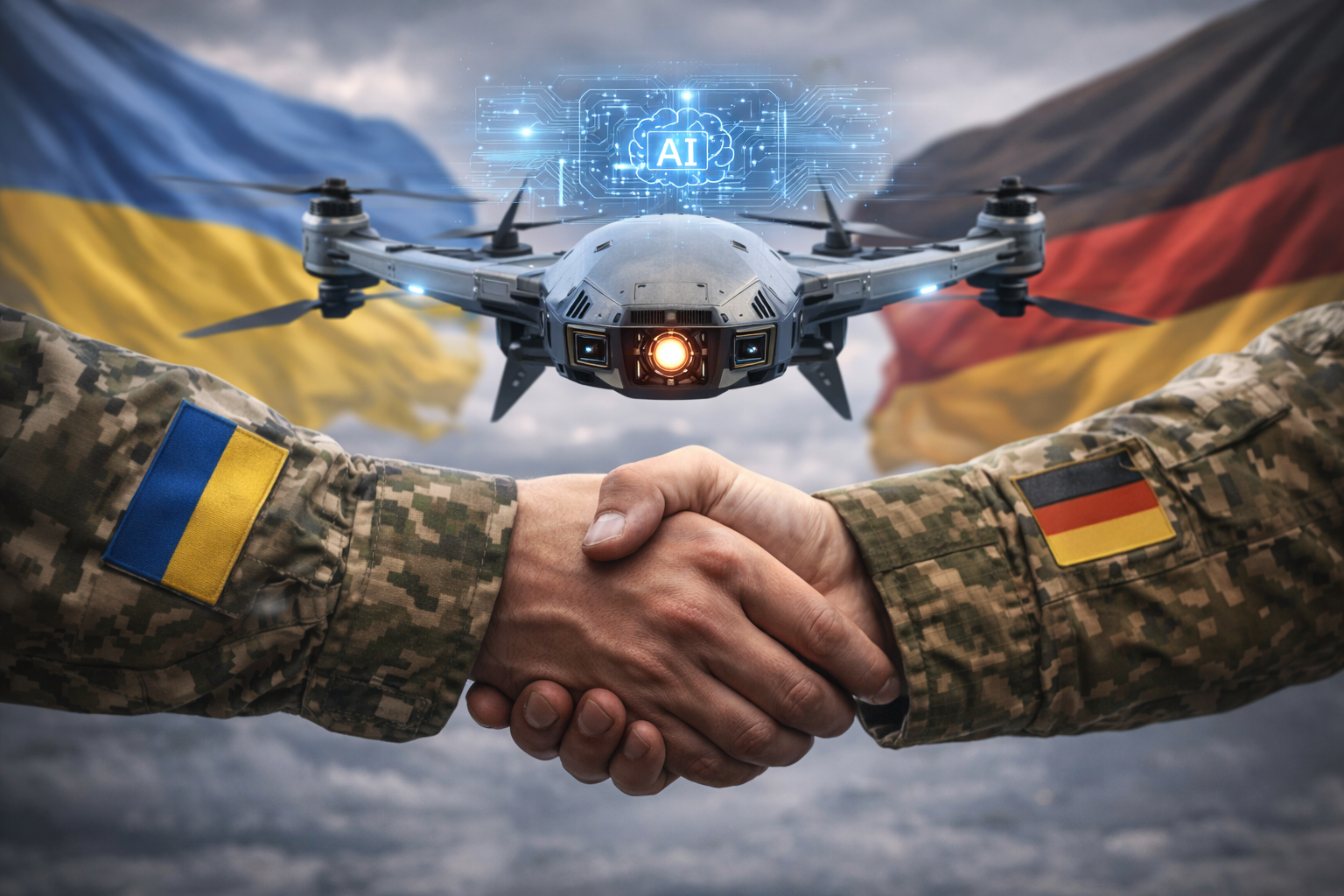
A new production milestone highlights efforts to address that gap through joint manufacturing. The Linza 3.0 attack UAV has emerged from a German–Ukrainian partnership, marking the first drone of its type assembled under the combined program. Designed with direct input from frontline experience, the system integrates artificial intelligence into both navigation and mission execution.
At the core of the platform is an AI-driven visual-inertial navigation module. This allows the drone to operate autonomously even in contested environments where satellite navigation signals may be degraded.
According to NextGenDefense, the airframe measures 30 centimeters and can carry a payload of up to 4 kilograms. It is capable of covering approximately 15 kilometers within a 60-minute mission profile. The compact design supports rapid deployment and ease of production, while the integrated AI architecture enables both strike and reconnaissance roles.
The program’s significance extends beyond a single platform. The joint venture aims to scale output to more than 10,000 units annually, reflecting a move toward industrialized drone production rather than ad hoc assembly. Automation is expected to increase throughput and reduce dependence on manual processes, supporting sustained operational supply.
From a defense perspective, the combination of AI-enabled autonomy and localized manufacturing is central to resilience. Autonomous navigation enhances survivability in electronic warfare conditions, while distributed production reduces vulnerability to supply chain disruption. In high-intensity conflicts, the ability to replenish UAV inventories quickly can influence operational tempo.
The drone represents a broader trend toward integrating artificial intelligence directly into frontline systems while aligning industrial partnerships to meet sustained demand. As unmanned platforms continue to shape battlefield dynamics, scalable production and autonomous capability are increasingly intertwined.