This post is also available in:
 עברית (Hebrew)
Modern air defenses are being pushed to their limits by faster, higher-flying, and more complex threats. Cruise missiles, ballistic missiles, hypersonic weapons, and even systems operating at the edge of space compress reaction times and strain legacy architectures that were designed decades ago. For states seeking to protect major cities and strategic assets, incremental upgrades are no longer enough.
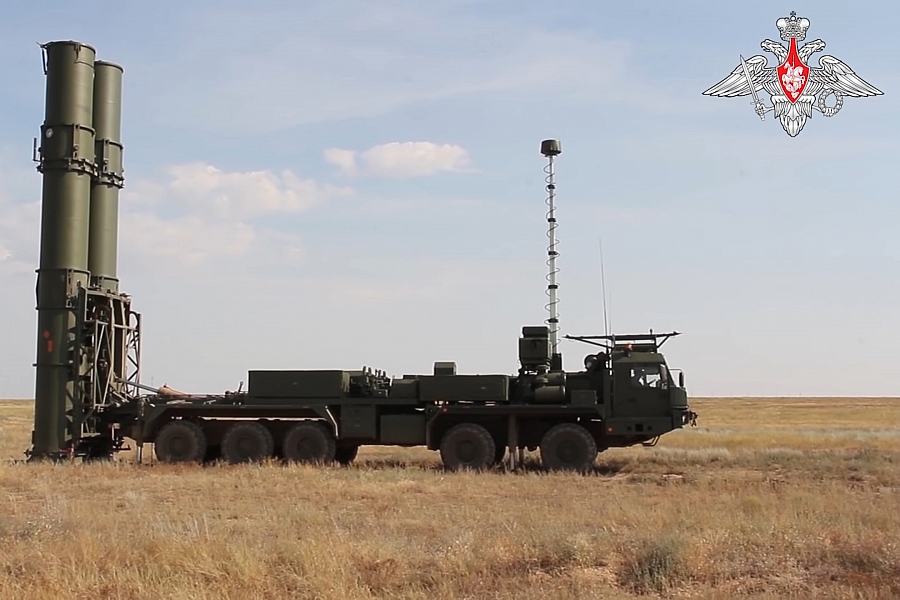
Russia’s answer to that challenge is the S-500 Prometheus, which Russian media say has now entered combat duty as a full regiment. This marks the first time the country has fielded an air and missile defense system intended to unify roles that were previously handled by separate platforms. The move also prompted the creation of a new organizational structure within the Russian Aerospace Forces to manage combined air- and missile-defense missions.
The system is positioned as the successor to the S-400 Triumf, building on a lineage that stretches back to the Soviet-era S-300. Like its predecessors, it is a mobile system built around large, multi-axle launch vehicles supported by acquisition, engagement, and battle-management radars. The difference lies in its intended mission set. The new system is designed not only to engage aircraft and cruise missiles, but also to counter ballistic and hypersonic threats that operate at much higher altitudes and speeds.
According to Interesting Engineering, the system’s reported performance highlights a shift toward broader interception envelopes. Russian sources claim the system can engage targets at ranges exceeding 480 kms and at altitudes far above those reachable by the S-400. Figures cited in reports suggest potential engagement heights up to roughly 200 kilometers, expanding the target set to include high-altitude vehicles and objects in low Earth orbit. The system is also said to employ “hit-to-kill” interceptor missiles, intended to destroy targets through direct impact rather than explosive fragmentation.
Another reported improvement is response time. According to Russian accounts, the system’s engagement cycle has been reduced to just a few seconds, compared with roughly ten seconds for the S-400. Faster response is critical when dealing with hypersonic weapons, where the window for detection, tracking, and interception is extremely narrow.
Details about the system’s operational deployment remain limited. Early indications suggested the first regiment would reinforce defenses around Moscow, though no official confirmation has been provided. Claims that the system can counter advanced aircraft or hypersonic missiles remain unverified, and there has been no confirmation of combat use.
Even so, the system’s entry into service signals how air defense systems are evolving: away from single-role platforms and toward integrated networks designed to address threats that now span airspace and near-space alike.