

This post is also available in:
 עברית (Hebrew)
Navies are facing a growing challenge offshore: how to maintain persistent awareness and protection across vast maritime areas without tying up crewed vessels for weeks at a time. Long patrol cycles, rising personnel costs, and the increasing presence of unmanned threats are pushing maritime forces to look for autonomous platforms that can operate far from shore, quietly and continuously.
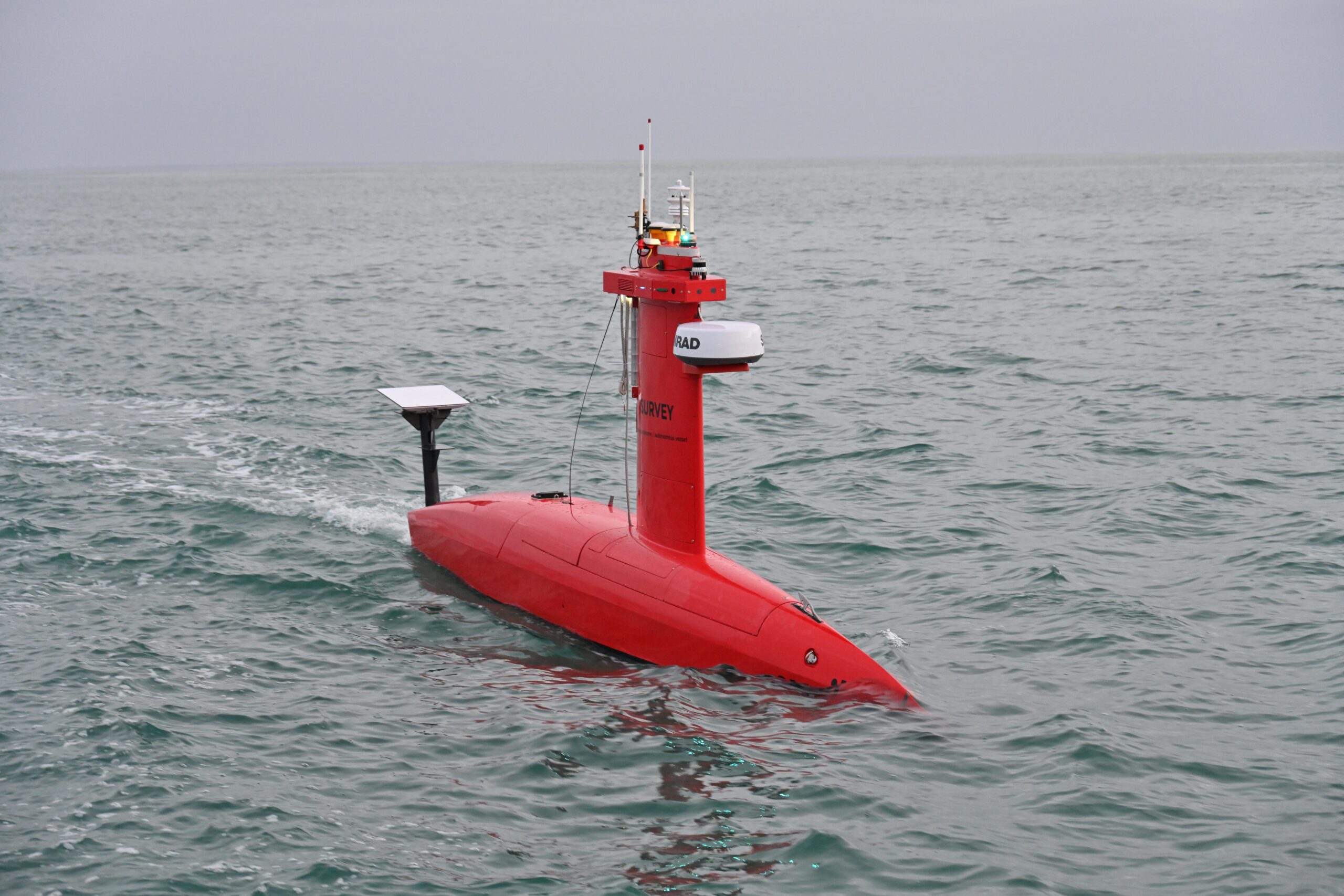
One solution gaining traction is a long-range autonomous surface vessel designed specifically for extended missions. Recent new contracts awarded to a nine-meter uncrewed surface drone underscore how this category is moving from experimentation into routine naval use. The platform is built to remain at sea for up to 20 days, covering distances of roughly 3,700 kms, without an onboard crew, while maintaining low acoustic and radar signatures.
According to Interesting Engineering, the vessel addresses endurance first. With a fuel capacity of 550 liters and efficient propulsion, it can cruise at speeds of up to 24 kmph while conducting surveillance, monitoring, or survey tasks over wide areas. Its ability to hold position or “hover” at sea allows it to support precise data collection and subsea operations, functions traditionally requiring much larger ships.
Flexibility is a key design feature. Unlike smaller variants in the same family, this version can deploy and tow remotely operated vehicles, expanding its usefulness for seabed inspection and underwater tasks. It is also equipped to operate multibeam echo sounders at depths reaching 3,000 meters, making it suitable for hydrographic mapping, infrastructure inspection, and maritime safety missions. Despite these capabilities, the entire platform can be transported in a single standard 12-meter container, simplifying logistics and deployment.
From a defense perspective, the platform’s modularity is particularly significant. One of the newly announced configurations will integrate counter-unmanned aerial system capabilities, allowing the vessel to detect, track, and support the neutralization of hostile drones at sea. Extending counter-drone coverage offshore is becoming increasingly important as aerial threats are no longer confined to land or coastal zones. Hosting these systems on an autonomous vessel allows navies to project protective bubbles around offshore assets without exposing crews.
A second configuration focuses on hydrographic and oceanographic missions, accelerating seabed mapping and expanding coverage for navigation safety and maritime planning. Reliable, up-to-date seabed data is also critical for naval operations, undersea infrastructure protection, and route planning.
Together, these use cases reflect a broader shift toward autonomous maritime systems that combine endurance, low observability, and mission flexibility. As offshore security demands grow, long-range surface drones are emerging as a practical way for navies to extend presence and protection well beyond the horizon.























