This post is also available in:
 עברית (Hebrew)
Modern warfare presents extreme risks to soldiers conducting reconnaissance and direct action missions. Operating in complex, contested environments exposes personnel to constant threats, making intelligence gathering and capturing prisoners incredibly dangerous endeavors. The demand for advanced systems that can execute these high-stakes tasks while removing human operators from immediate harm is a defining challenge for today’s military forces, driving innovation in unmanned technologies. This operational reality necessitates platforms that can provide persistence and presence without risking lives.
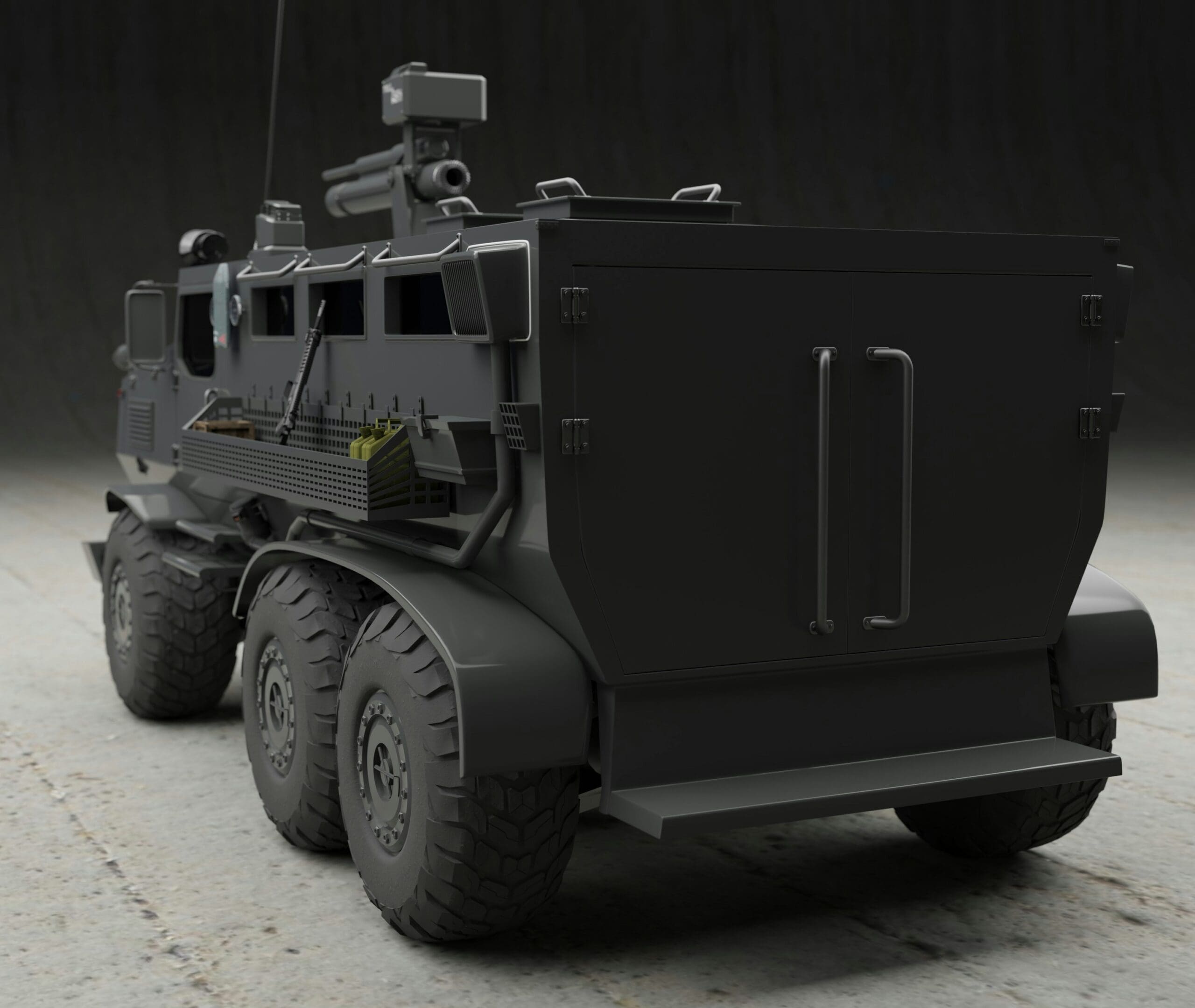
In response, a new Ukrainian reconnaissance-strike ground robot (DevDroid’s TW-7.62) has been introduced as a formidable solution. According to United24, this unmanned ground vehicle (UGV) is engineered to operate at the heart of the conflict, undertaking hazardous missions that would otherwise require direct human intervention. The platform’s effectiveness was reportedly proven in a recent operation where it was instrumental in the capture of three Russian soldiers. This event showcases the system’s potential to fundamentally alter tactical engagements and project force on the modern battlefield.
The “strike” component of the vehicle’s design implies it is equipped with potent offensive capabilities. While the source does not specify the exact armaments, such ground robots are typically designed with modularity in mind, allowing for the integration of various weapon systems based on mission needs.
At the core of the system is an integrated fire-control architecture that includes a ballistic computer designed to enhance engagement accuracy and firing efficiency against hostile targets. The platform also incorporates artificial intelligence capabilities that enable autonomous target detection, identification, and continuous tracking without constant human input. These features allow the ground robot to operate under remote supervision rather than direct control, executing complex combat tasks while significantly reducing the need for infantry to expose themselves to enemy fire.
The successful field deployment of such a UGV highlights a significant trend in warfare: the growing reliance on robotic systems to augment or even replace soldiers in the most dangerous roles. This evolution not only enhances force protection but also unlocks novel tactical possibilities for ground forces, reshaping operational doctrines for future conflicts. As these technologies mature, they will become more integral.