This post is also available in:
 עברית (Hebrew)
Small flying robots face a persistent tradeoff between endurance and complexity. Flapping-wing designs can generate thrust but consume energy quickly, while fixed-wing platforms struggle to combine compact storage with efficient glide performance. For missions that require long loiter times, low noise, and minimal power use, engineers are still searching for flight concepts that balance simplicity with efficiency.
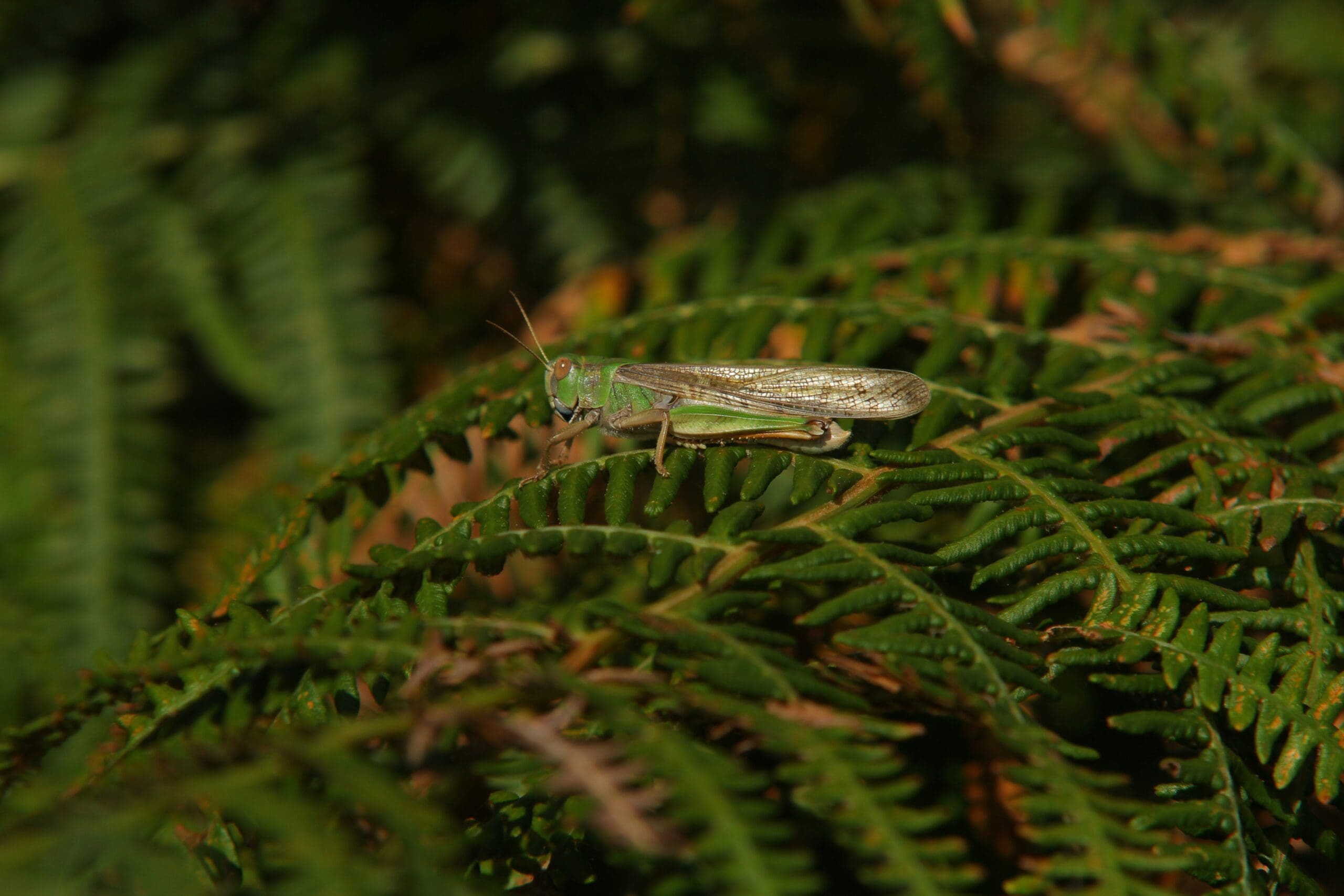
A recent research effort points to an unexpected source of insight: grasshoppers. Engineers studying untethered gliding flight examined how certain grasshopper species travel long distances while expending very little energy. Their focus fell on the hindwings of the American grasshopper, which deploy into large, lightweight surfaces during gliding. Rather than flapping continuously, the insect relies on extended wings to convert altitude into distance, conserving energy in the process.
To translate this biological principle into engineering terms, researchers analyzed the geometry of grasshopper hindwings in detail. High-resolution CT scans captured the three-dimensional structure of the wings, including their curvature and distinctive corrugation. These data were then used to create a series of 3D-printed wing models that could be tested under controlled conditions.
According to TechXplore, the team evaluated how different design features affected glide performance. Models were launched across a laboratory space and tested in a water chamber to simulate aerodynamic forces. While the natural wings are corrugated, the experiments showed that smooth wing surfaces generated the most efficient glide. Corrugation did contribute to lift, but it also introduced drag that reduced overall performance. This finding suggests that the grasshopper’s wing structure may represent a compromise between flight efficiency and the ability to fold wings compactly when not in use.
The next challenge is combining these advantages. Future designs aim to preserve the folding benefits of corrugation while maintaining the aerodynamic efficiency of smoother surfaces. Such a hybrid approach could enable small robots to be launched in compact form and then deploy into efficient gliders once airborne.
From a defense and homeland security perspective, this research has clear relevance; lightweight gliding robots could support surveillance, environmental sensing, or communications relay missions where endurance and low acoustic signature matter more than speed. Systems inspired by insect flight may operate with minimal power, making them harder to detect and easier to deploy in large numbers.
Beyond robotics, the work also feeds back into biology. By using engineered models to test flight hypotheses, researchers can better understand why insects evolved certain wing shapes in the first place. The result is a two-way exchange: biology informing engineering, and engineering tools refining biological insight.
The research was published here.