This post is also available in:
 עברית (Hebrew)
Air and missile defense planners are facing a rapidly widening threat spectrum. Beyond traditional aircraft, modern forces must contend with ballistic missiles, cruise missiles, unmanned systems, and emerging hypersonic weapons—all operating at different ranges, speeds, and altitudes. Relying on a single defensive layer is no longer sufficient, especially as attacks increasingly combine multiple threat types in the same engagement.
A recent delivery marks progress toward addressing that challenge through a layered approach. A new (Italian and French) medium-range air defense system has entered service alongside existing short- and close-range assets, forming a more comprehensive defensive structure. The concept is simple but demanding in execution: detect threats early, engage them at the longest possible distance, and maintain overlapping coverage as targets close in.
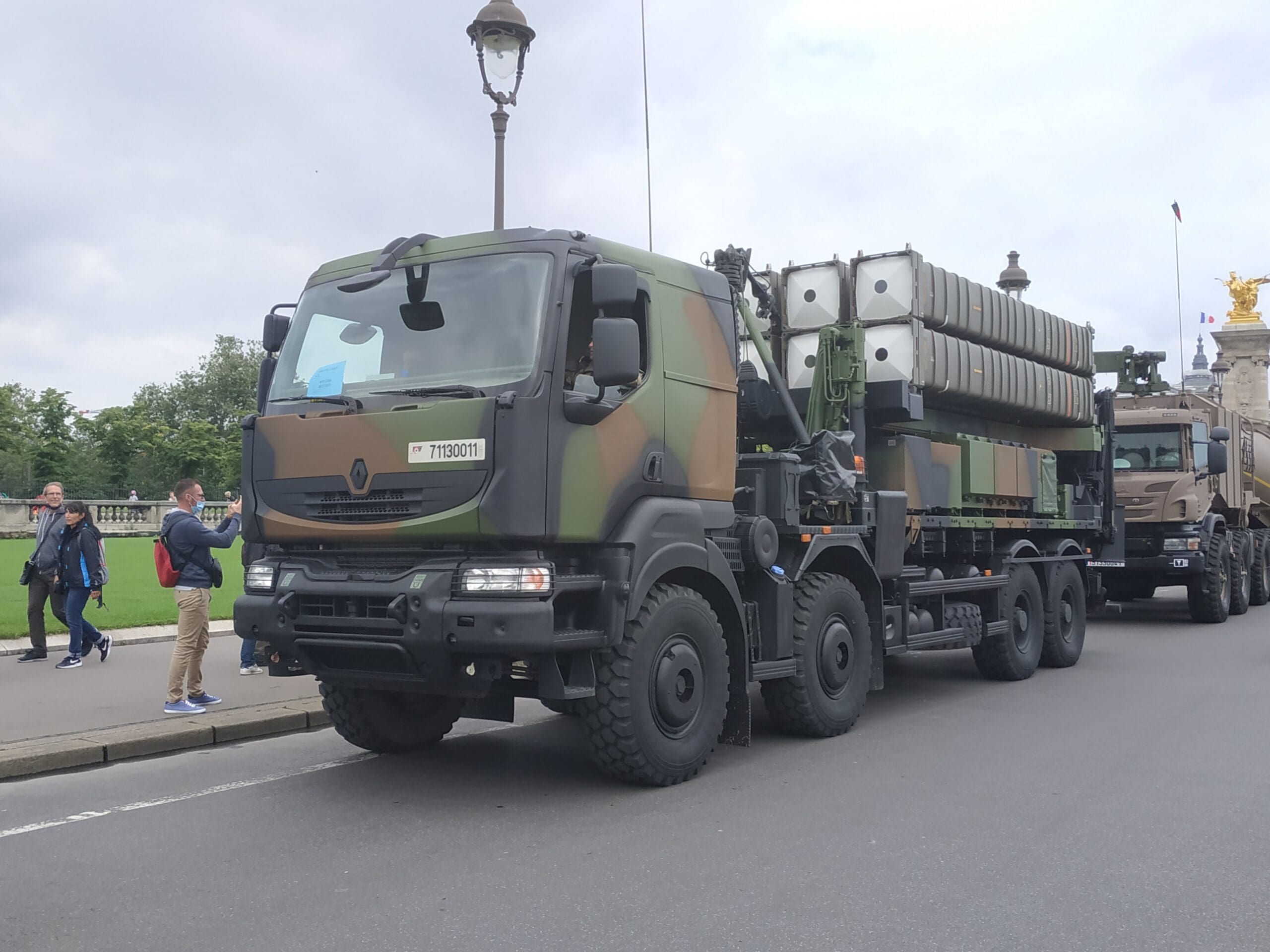
According to the Defense Post, at the center of this upgrade is a next-generation medium-range system (SAMP/T NG) designed to intercept a wide range of aerial and missile threats. It builds on an earlier operational design but introduces a new interceptor missile with extended reach—over 150 kilometers—and improved performance against complex targets. Detection is handled by a high-power mobile radar capable of tracking threats well beyond 300 kilometers, giving operators more time to classify and respond.
This medium layer is complemented by a short-range system optimized to protect deployed forces and critical sites. Using modern interceptor missiles, it is intended to counter aircraft, helicopters, drones, cruise missiles, and anti-radiation weapons. Its role is to close gaps that may remain after long-range engagements and to provide flexible coverage in fast-moving tactical situations.
Together, the systems are designed to operate as part of a fully integrated, 360-degree air and missile defense architecture. High mobility allows them to be repositioned quickly, while modular design supports tailored deployment based on mission needs. Interoperability is a key feature, enabling the systems to plug into wider national and alliance-level air defense networks rather than operating in isolation.
This layered structure reflects how air defense doctrine is evolving. Modern conflicts have shown that protecting population centers, military units, and critical infrastructure requires multiple defensive rings working in concert. Medium-range interceptors handle higher-end threats at distance, while shorter-range systems manage saturation attacks and low-flying targets that slip through.
As more advanced missiles and drones enter service worldwide, layered air defense is becoming less a strategic choice and more a necessity. The latest deployment demonstrates how combining complementary systems—rather than relying on a single solution—offers a more resilient response to the increasingly complex air threat environment.