

This post is also available in:
 עברית (Hebrew)
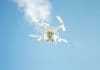
Detecting a drone is becoming more difficult as unmanned aircraft become increasingly autonomous. Many counter-UAS systems look for radio signals exchanged between a drone and its operator, but an aircraft following a preprogrammed route or navigating independently may not need to maintain that connection. With no obvious transmission to detect, defenders need another way to find it before it gets too close.
A new integration between AEye and AB Swiftstrike AI will use 3D lidar to detect small aerial targets at approximately a km away, adding an optical sensing layer to an autonomous counter-drone system.
At the center of the integration is STRATOS, its long-range lidar sensor. According to the company, it can detect objects at distances reaching about 1.5 kilometers, while providing more than twice the resolution of its earlier Apollo sensor.
Lidar works by transmitting laser pulses and measuring how long their reflections take to return. Repeating that process rapidly across the surrounding area creates a three-dimensional representation of objects within the sensor’s field of view.
For counter-drone operations, that means the sensor can provide measurements including a target’s range, altitude and speed without relying on the drone to emit a radio-frequency signal.
According to Interesting Engineering, resolution is particularly important at longer distances. A small UAV far from the sensor occupies only a tiny part of the observed scene, making it difficult to distinguish from surrounding objects. Higher-resolution 3D data can provide more detail for classifying the aircraft and maintaining an accurate track as it approaches.
Despite its intended range, the sensor is roughly comparable in size to a smartphone. It also uses a software-defined architecture, allowing some sensor behavior and capabilities to be modified through software rather than requiring entirely new hardware.
The AI plans to feed the lidar information into its existing counter-UAS architecture, which combines multiple sensors with autonomous software and kinetic interception capabilities. The additional data could extend the time available for the system to classify a potential threat and prepare an appropriate response.
The technology has relevance beyond military battlefields. Radio-silent drones can also present problems around airports, power facilities, government sites and other critical infrastructure, where early detection is essential but electronic sensing alone may leave gaps.
Lidar is not a complete replacement for radar, cameras or radio-frequency detection. Weather and atmospheric conditions can affect optical sensing, while different sensors provide different types of information.
Its value is therefore in combination. A counter-drone network that listens for radio transmissions, watches with cameras and radar, and actively maps the airspace with lasers has more than one opportunity to find an aircraft.
As drones become better at operating without communicating, that multi-sensor approach is becoming increasingly important. The target may remain electronically silent, but it still has a physical shape, and lidar provides another way to see it.