This post is also available in:
 עברית (Hebrew)
Resupplying personnel in remote or contested areas is one of the most difficult challenges in military and emergency operations. Landing a drone to deliver cargo can expose both the aircraft and the recipients to danger, particularly in urban combat, mountainous terrain or disaster zones where suitable landing areas may not exist. Even brief landings can increase the risk of detection or attack.
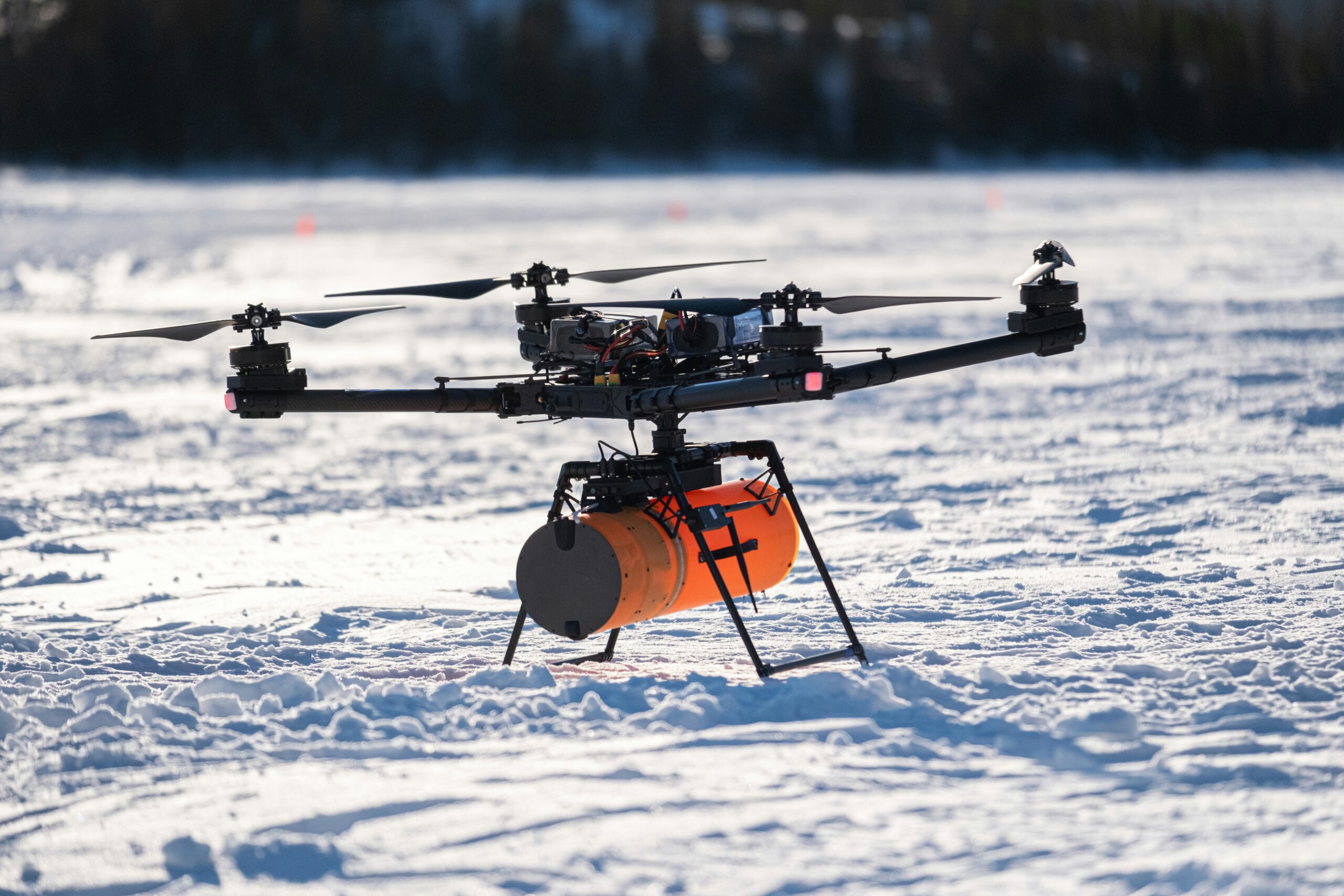
A new hybrid unmanned aircraft from EKOLOT Aerospace & Defense aims to solve that problem by delivering supplies while remaining safely in the air. Called the ZEUS PHOENIX PX-100, the platform has been designed to transport mission-critical cargo without requiring the drone to touch down, allowing deliveries in locations that would otherwise be difficult or unsafe to reach.
The drone offers two different delivery methods depending on the mission. Its Drop-Box Delivery system releases cargo in a controlled manner for locations where packages can safely land on the ground. For more precise deliveries, the Rope & Hook Delivery system lowers payloads on a tether from heights of up to 30 meters, enabling operators to place equipment exactly where it is needed while the aircraft hovers overhead. Medical supplies, communications equipment, spare parts and other essential cargo can therefore be delivered without exposing personnel or requiring a landing zone.
According to NextGenDefense, the platform combines hybrid propulsion with an electric flight system, providing more than four hours of autonomous endurance. It can carry payloads of up to 30 kilograms over a mission radius of 140 kilometers, while operating in temperatures ranging from -10°C to 50°C. The aircraft is capable of flying at altitudes of up to 3,250 meters, with a cruising speed of approximately 45 km/h.
Navigation and flight safety were also central to the design. The drone supports beyond-visual-line-of-sight (BVLOS) operations using encrypted communications intended to protect against interception or unauthorized control. It also incorporates three independent motion sensors for redundancy, an automatic emergency parachute, an autonomous return-to-home function and an independent remote shutdown capability. For precise navigation, the platform combines multiple satellite navigation systems with real-time kinematic (RTK) correction, allowing positioning accuracy to within centimeters.
Beyond logistics, the platform can also be configured for intelligence, surveillance and reconnaissance missions through a modular payload bay that supports electro-optical and infrared cameras, LiDAR and other sensor systems.
Although suitable for humanitarian aid and civil protection, the platform is particularly relevant to defense operations. Autonomous cargo delivery without landing can reduce risks during frontline resupply, special operations and casualty support missions by limiting the time aircraft spend in vulnerable areas. Combined with its surveillance capabilities, the platform demonstrates how modern unmanned systems are increasingly blending logistics and reconnaissance into a single, adaptable platform capable of supporting a wide range of operational missions.