This post is also available in:
 עברית (Hebrew)
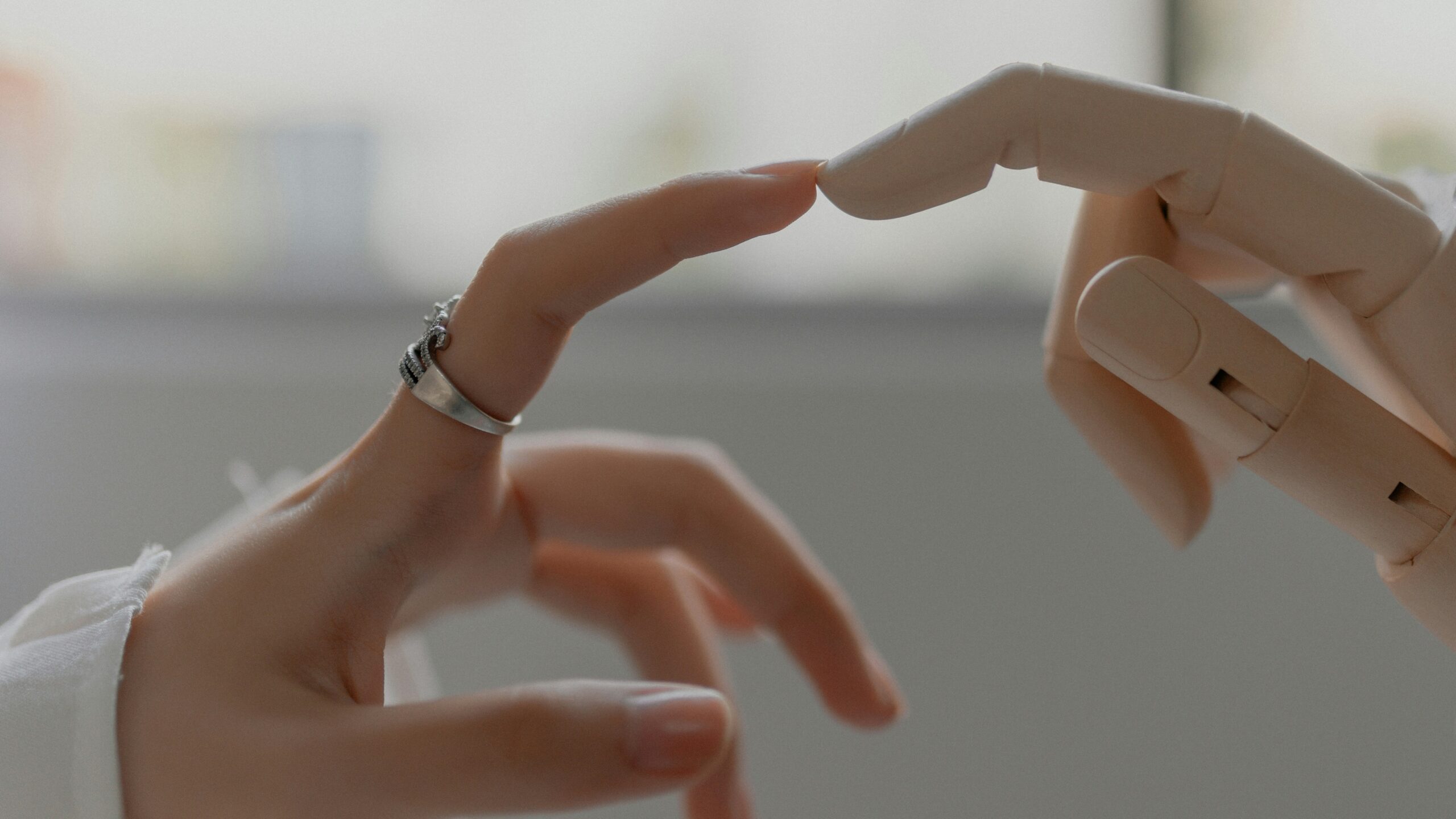
Vision has improved dramatically in modern robots, but touch remains one of the most difficult human senses to reproduce. Detecting exactly how much pressure is being applied, where contact occurs, and how forces are distributed typically requires dense arrays of electronic sensors and significant computing power. These systems can become expensive, complex, and too slow for applications requiring immediate feedback.
Researchers have now taken a different approach by embedding the sensing capability directly into the material itself rather than relying on large numbers of electronic components.
The newly developed tactile sensor uses a soft mechanochromic material, which is a material that changes color when it is deformed. Whenever an object presses against its surface, the material produces a detailed pattern of color variations that directly corresponds to the pressure and strain being applied.
Instead of measuring force electronically, the system simply observes these color changes using an ordinary USB camera. According to Interesting Engineering, because the tactile information is already encoded in the visible color pattern, there is no need for computationally intensive image reconstruction algorithms that often slow conventional vision-based tactile sensors.
The result is a system capable of providing highly detailed touch information in real time while using relatively simple hardware.
One of the notable achievements demonstrated during testing was the sensor’s ability to capture extremely fine surface details, including the ridges of a human fingerprint. According to the researchers, achieving that level of spatial resolution with such a straightforward architecture has been difficult using previous tactile sensing technologies.
The approach also addresses a longstanding engineering tradeoff. Earlier systems typically forced developers to choose between high-resolution sensing with slower processing or real-time performance with reduced detail. By moving the sensing process into the material itself, the new design delivers both detailed pressure mapping and rapid response.
From a defense and security perspective, advanced tactile sensing could improve robotic manipulation in environments where visual information alone is insufficient. Bomb disposal robots, autonomous inspection platforms, remotely operated systems, and robotic grippers handling sensitive equipment could all benefit from more accurate force feedback while reducing the computational burden placed on onboard processors.
Beyond defense, the technology could support delicate industrial manufacturing, advanced prosthetic limbs, and robotic surgical systems capable of distinguishing subtle differences in tissue through pressure sensing.
By transforming mechanical contact directly into optical information, the research demonstrates an alternative path toward giving robots a richer sense of touch without relying on increasingly complex electronic sensor arrays.