

This post is also available in:
 עברית (Hebrew)
Modern air operations are becoming increasingly crowded and dangerous. Advanced air defenses, long-range sensors, and rising aircraft costs make every manned sortie a calculated risk. For expeditionary forces in particular, the challenge is how to project airpower, gather intelligence, and deliver effects without exposing pilots to the most dangerous parts of contested airspace.
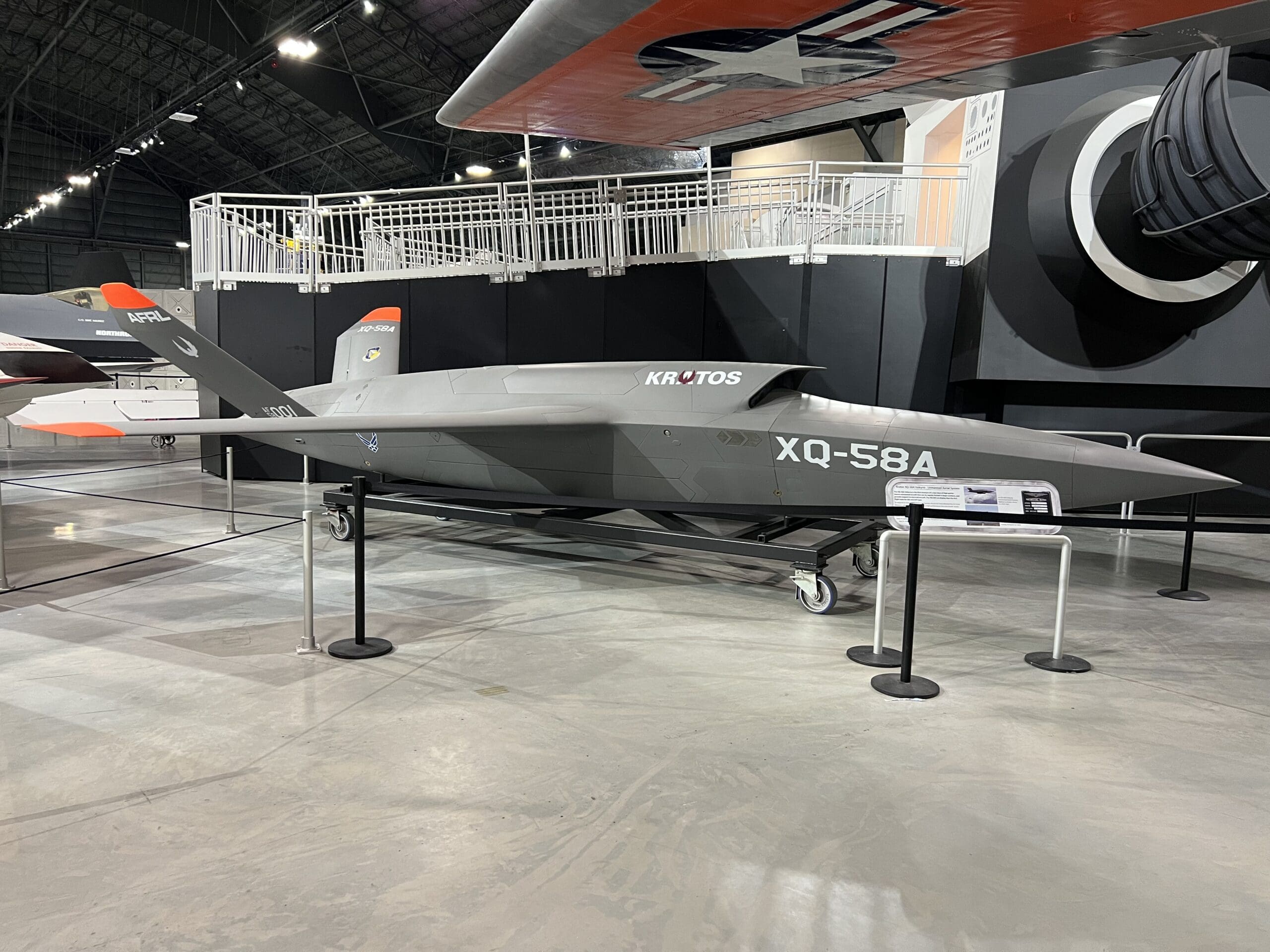
To address this gap, the U.S. Marine Corps is moving toward a collaborative combat drone of its own. The service has selected a stealthy unmanned platform based on the XQ-58 Valkyrie airframe as its first “loyal wingman”, marking a shift in how marine aviation plans to operate alongside crewed aircraft. Rather than acting as a standalone drone, the system is designed to fly independently or team with manned fighters, sharing the burden of sensing, strike, and survivability.
The solution combines a proven unmanned aircraft with mission-focused autonomy. The platform provides the physical platform: a conventionally launched, runway-capable drone with internal payload bays and a low-observable design. On top of that, an advanced mission kit integrates sensors and software-defined capabilities that allow the aircraft to deliver both kinetic and non-kinetic effects. Open-architecture autonomy software enables the drone to manage many tasks on its own, reducing pilot workload while still allowing human control when required.
According to NextGenDefense, at the performance level, the aircraft is optimized for operational flexibility. Powered by a turbofan producing roughly 907 kgs of thrust, it can approach high subsonic speeds, operate at high altitude, and carry several hundred kgs of payload internally. Its modular design supports different mission kits, from intelligence collection to strike support, and can also accommodate wing-mounted systems when required. Importantly for marine operations, it is designed to operate from austere or minimally prepared locations rather than relying solely on major airbases.
The loyal wingman concept is about extending reach while reducing risk. By pushing unmanned aircraft forward into the most contested areas, commanders can preserve crewed assets while still maintaining pressure on adversaries. Such drones can act as sensor nodes, decoys, communications relays, or strike platforms, complicating enemy targeting and defense planning.
The program places the U.S. Marine Corps alongside other services that are adopting collaborative combat aircraft, but with an emphasis on expeditionary use and flexibility. As air combat evolves toward mixed formations of crewed and uncrewed systems, platforms like this are expected to become a routine part of how airpower is generated. Rather than replacing pilots, the loyal wingman is designed to make them harder to target, better informed, and more effective in increasingly hostile skies.























