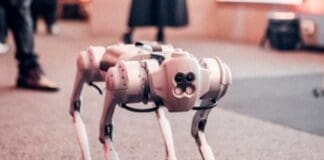
Why Future Ground Robots Won’t Need Pre-Programmed Gaits
Robots are often expected to operate where wheels fail: collapsed buildings, uneven ground, mud, ice, or debris-covered floors. Yet most legged robots still struggle...
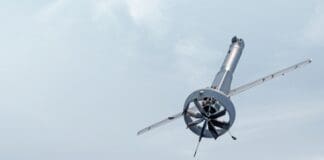
From Surveillance to Strike in One Compact Drone
Small units operating at the edge of the battlefield often face a familiar problem: they need precision strike capability, but traditional close air support...

How a Sea Creature Is Teaching Robots to “Just Keep Swimming”
Autonomous robots still struggle with a basic problem that animals solve effortlessly: how to keep moving when conditions suddenly change. Uneven terrain, loss of...

The Blind-Spot Tech That Could Make Autonomous Systems Safer
Autonomous vehicles and mobile robots rely on cameras, LiDAR and other sensors to navigate safely. These systems perform well within direct line of sight,...

Cyborg Cockroaches? The Military’s New Recon Tool Is Very Real
Modern militaries continue to search for reconnaissance tools that can operate where drones and ground robots struggle — inside collapsed buildings, narrow tunnels or...

AI at Scale: The Push Into Secure Government Networks
Government agencies are increasingly looking to integrate artificial intelligence into daily operations, but adoption at scale presents challenges. Sensitive workloads, including classified environments, require...

No Flash, No Noise: A New Kind of Handheld Weapon
Conventional firearms rely on chemical propellants, producing noise, flash, and visible signatures that can limit their use in certain operational scenarios. In law enforcement...

Nature’s Secret to Stronger, Safer Protective Gear
Protective gear such as helmets and body armor must strike a difficult balance. Materials need to be strong enough to withstand impact, but not...

Breaking the Limits of Subsea Endurance
Underwater missions are often constrained by endurance. Most autonomous underwater vehicles rely on batteries, which limit how long they can remain submerged before needing...

Cooperation Between Technology Giant and INTERPOL
As cybercrime continues to escalate around the world, defenders from both the public and private sectors must meet the threat with equal force. Global...

A Soft Robot Just Learned a Human-Like Sixth Sense
Most robots rely heavily on cameras and external tracking systems to understand their surroundings and control movement. But in cluttered, dark, or visually degraded...

The Push for Smarter, Faster Long-Range Artillery Is Accelerating
Modern artillery systems are under growing pressure to operate faster, strike farther, and survive in increasingly transparent battlefields. Counter-battery radars, drones, and long-range surveillance...


This Multi-Layer Defense Package Targets Modern Anti-Armor Weapons
Modern armored vehicles face a growing range of threats that traditional armor was never designed to handle alone. Mine blasts can injure crews even...

This Smart Artillery Shell Flies Farther Than Many Expect—Without a Rocket
Modern artillery faces two growing challenges. The first is range. As adversaries field longer-range weapons, artillery units must be able to strike targets from...

Scientists Built a Tiny Diving Suit for Cyborg Cockroaches
Collapsed buildings, flooded tunnels, and debris-filled drainage systems are among the most difficult environments for search-and-rescue teams to access after natural disasters. Small ground...

New Quantum Clock Keeps Perfect Time Even When GPS Goes Dark
Modern military and civilian systems depend heavily on precise timing. GPS satellites do far more than provide location - they also distribute highly accurate...
Latest

Satellites Can Spot Trouble in Orbit—but Can They Survive a Hit?
As more satellites enter orbit, simply knowing where every object is located is becoming increasingly difficult, and location alone may not provide enough information....