This post is also available in:
 עברית (Hebrew)
Finding a submarine beneath the ocean is one of the more difficult surveillance tasks in modern warfare. Sonar and sonobuoys can listen for underwater activity, while maritime patrol aircraft cover large areas, but these operations require specialized equipment and can be expensive to sustain. Japan is now exploring another layer of detection: quantum magnetic sensors carried by inexpensive aerial drones.
The technology has been included in Japan’s fiscal 2027 defense budget request, with development reportedly targeted for completion by fiscal 2031.
Rather than listening for a submarine, the proposed system would look for its magnetic signature. Large metallic objects can slightly disturb Earth’s surrounding magnetic field. Quantum magnetic sensors exploit atomic properties to measure extremely small variations in that field, potentially revealing the presence of a submerged vessel.
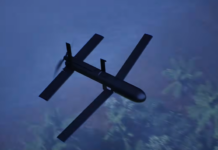
According to Interesting Engineering, Japan intends to make these sensors compact enough for drones operating close to the ocean surface. Using unmanned aircraft could allow large numbers of sensors to remain on patrol without exposing aircrews or depending entirely on expensive maritime patrol aircraft.
The concept has an important limitation: magnetic detection generally works over relatively short distances. A single drone would therefore not be able to efficiently search enormous stretches of open ocean for an unknown submarine.
Geography could make that limitation more manageable. Submarines moving between enclosed regional waters and the wider Pacific must pass through relatively constrained waterways. Deploying multiple low-cost drones around such maritime chokepoints could create persistent surveillance zones where each aircraft only needs to monitor a smaller area.
The technology would complement rather than replace existing anti-submarine tools. Magnetic detection could potentially contribute another clue alongside sonar, sonobuoys and maritime patrol aircraft, helping forces confirm or refine their understanding of underwater activity.
China is pursuing similar technology and reportedly tested a drone-mounted quantum magnetic sensor at sea in 2025. It is also expanding a broader anti-submarine network involving maritime patrol aircraft, helicopters, sonobuoy-carrying drones, satellites, buoys, underwater gliders and seabed sensors.
The parallel development reflects a growing competition over undersea awareness. China’s submarine fleet is expanding, with the Pentagon projecting approximately 80 submarines by 2035, while regional militaries are investing in unmanned systems capable of monitoring larger maritime areas.
Other developments point in the same direction. The MQ-9B SeaGuardian has been tested with expanded sonobuoy capacity, while autonomous underwater vehicles and new air-launched anti-submarine weapons are also under development.
Japan’s quantum-sensor project remains a research effort rather than an operational capability. Its eventual usefulness will depend heavily on detection range, sensor sensitivity and performance from a moving drone over the ocean.
But the underlying idea is straightforward: instead of searching for submarines only by listening for them, deploy fleets of unmanned aircraft capable of detecting the tiny magnetic disturbance they leave behind.