
This post is also available in:
 עברית (Hebrew)
Intercepting incoming rockets is only part of the challenge facing modern air-defense systems. During prolonged attacks, the ability to maintain protection depends not just on how effectively an interceptor performs, but also on how quickly additional missiles can be manufactured and delivered to replace those already fired.
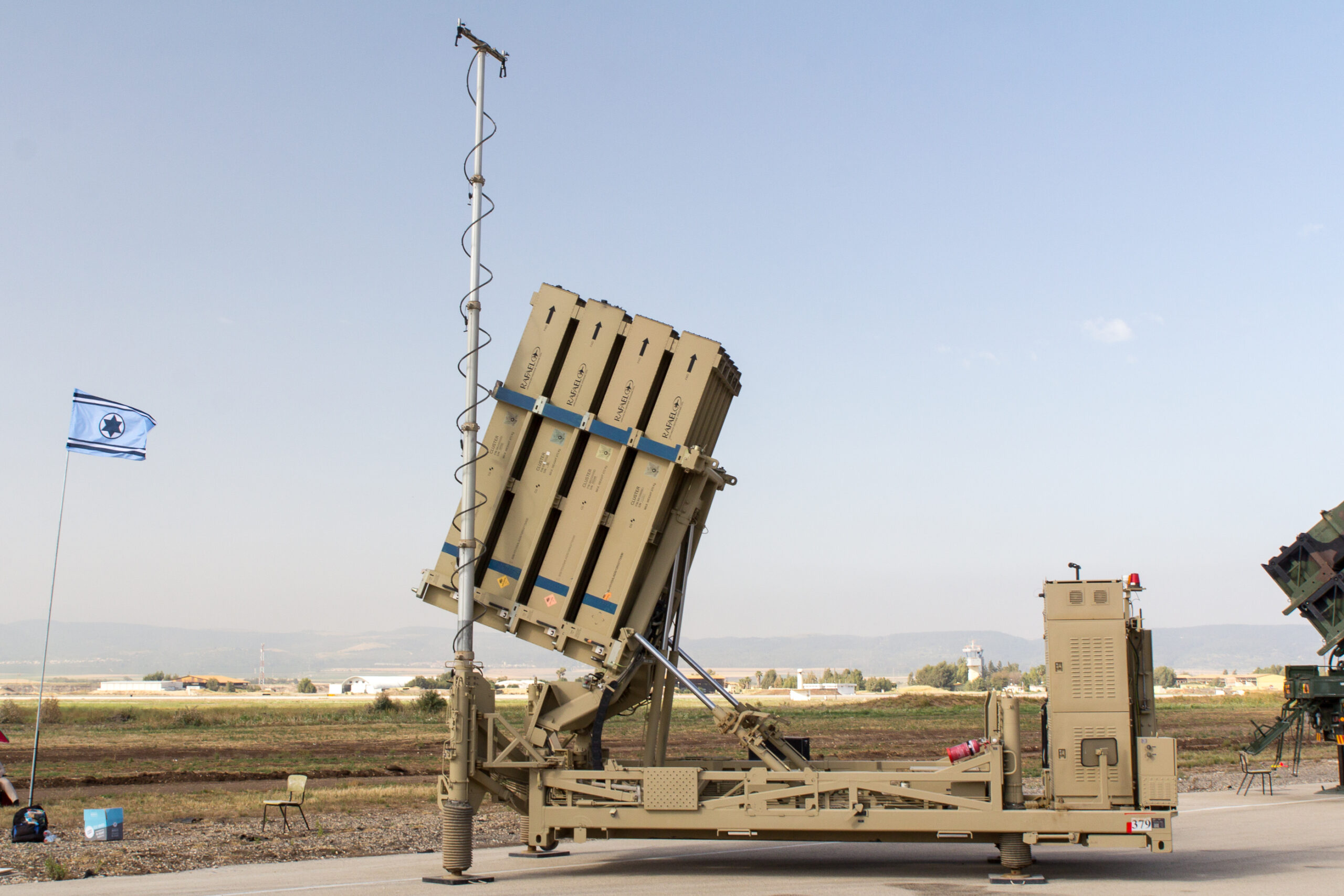
Israel’s Iron Dome air-defense system has reached a new production milestone with the delivery of the first Tamir interceptor manufactured and assembled entirely in the United States.
The missile was produced at a new facility in Arkansas, marking the first time a complete interceptor has been manufactured outside Israel.
It is the interceptor missile at the heart of Iron Dome, which is designed to protect populated areas and critical infrastructure from incoming aerial threats. The system has recorded more than 10,000 successful operational interceptions during 15 years of service, according to Rafael and the Israel Missile Defense Organization (IMDO).
Each successful interception consumes a missile, making a reliable supply of replacement interceptors essential for maintaining defensive readiness.
The new manufacturing capability addresses that requirement by adding another location capable of producing complete Tamir missiles.
According to Interesting Engineering, previously, production cooperation between the companies involved manufacturing work distributed between the two countries. The new facility, established through their partnership, expands that arrangement to include full interceptor production and assembly on American soil.
This creates an additional source of missiles for the air defense (AD) system, potentially helping increase production capacity and reduce dependence on a single manufacturing location.
The technology also has applications beyond the AD system. It serves as the basis for SkyHunter, an interceptor associated with the U.S. Marine Corps’ air-defense requirements, demonstrating how the underlying missile technology can support different defense architectures.
The expansion comes as modern air-defense systems face growing demands from repeated and large-scale aerial attacks. Even highly effective interceptors must be available in sufficient quantities to maintain protection over time.
That makes manufacturing capacity an important element of missile-defense performance alongside detection, tracking and interception.
The production line does not introduce a new version of it or change its operational capabilities. Its significance lies in making an established interceptor available from an additional manufacturing source.
For the AD system, which has already demonstrated its effectiveness through thousands of operational interceptions, the next challenge is ensuring that enough missiles can be produced to sustain that protection.
The new production capability addresses precisely that problem: keeping a proven air-defense technology supplied and ready for the next incoming threat.