This post is also available in:
 עברית (Hebrew)
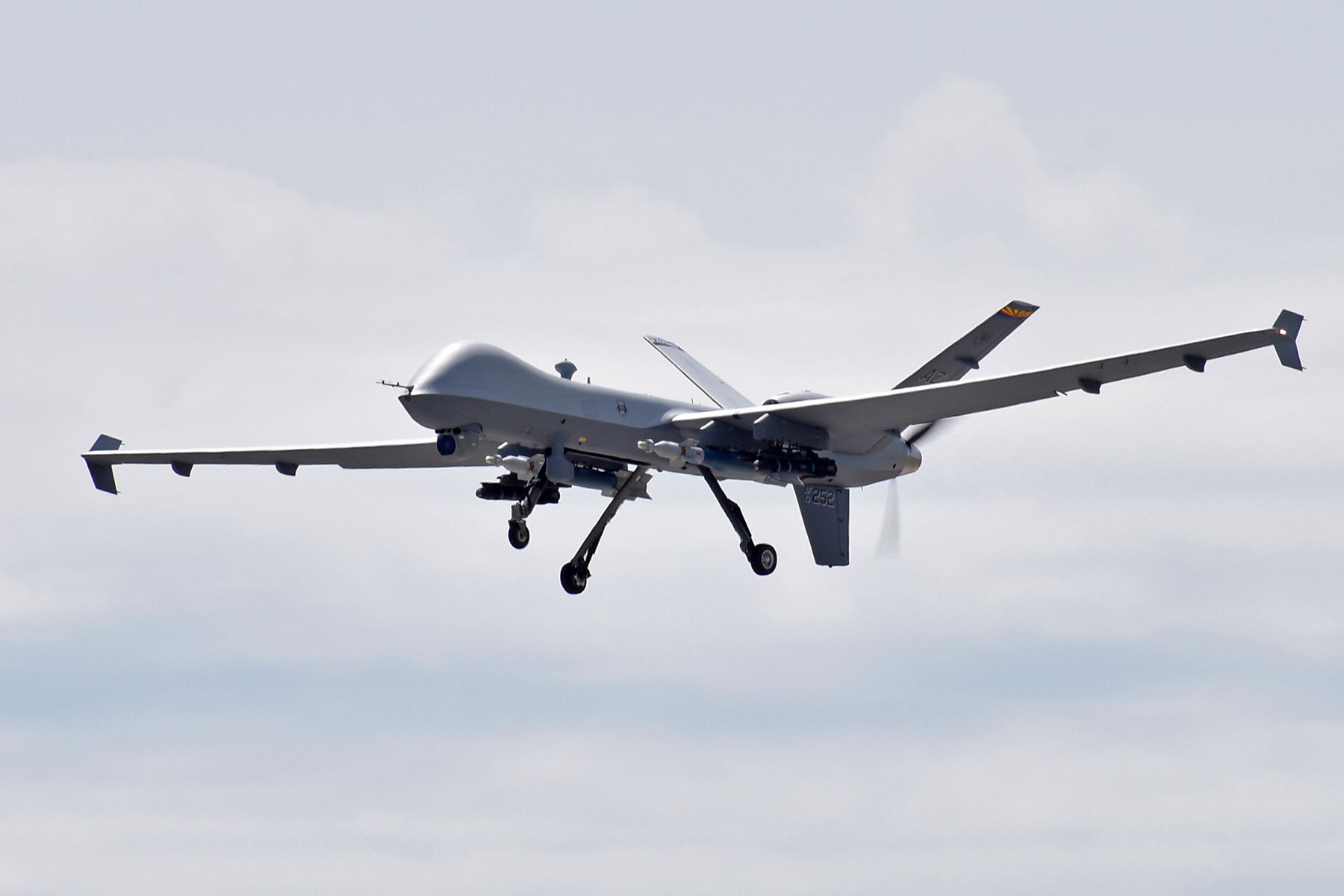
Long-endurance drones such as the MQ-9 Reaper have spent decades performing surveillance and strike missions, but the environment they were designed for is changing. Large, relatively slow unmanned aircraft face greater risks from modern air defenses, while recent losses have highlighted another problem: expensive drones can be difficult to replace quickly enough during prolonged conflicts.
General Atomics has unveiled Wildfire, a new unmanned aircraft concept intended for the next generation of long-range surveillance and strike missions. The design has been submitted to the Pentagon’s Massed Modular Aircraft (MMA) program, which is seeking relatively affordable aircraft that can operate over theater-scale distances and be deployed in significant numbers.
Public details remain limited, and the company has not yet released a complete specification sheet or imagery. However, the company is reportedly exploring a configuration with an 18,500-kilometer ferry range, allowing the aircraft to self-deploy across extremely long distances without aerial refueling.
According to Interesting Engineering, firepower could be another distinguishing feature. One proposed configuration could carry as many as four AGM-158C Long Range Anti-Ship Missiles (LRASM). These weapons are designed to engage heavily defended surface vessels at long distances, potentially giving Wildfire a maritime strike role in addition to intelligence, surveillance and reconnaissance.
The concept also reflects growing interest in operating unmanned aircraft as groups rather than individually. The company is examining technology that could enable coordination of up to 100 semi-autonomous aircraft, reducing the need for a dedicated pilot for every drone. Humans would retain supervisory control while automation handles more routine aspects of flight and coordination.
That approach aligns with the broader MMA requirement. The Pentagon is seeking a modular unmanned aircraft with at least 1,270 kilograms of payload capacity, an unrefueled combat radius of at least 4,560 kms, and the ability to self-deploy more than 14,815 kms. Modular payloads would allow aircraft to be adapted for different sensor and mission requirements.
The program also reflects a change in how unmanned airpower is being designed for high-end warfare. Instead of treating every aircraft as an asset that must survive indefinitely, future fleets may need enough scale and affordability to remain operational even after combat losses.
That issue has become increasingly relevant as the MQ-9A fleet declines. The Reaper is no longer in production, while losses in contested environments have demonstrated the vulnerability of conventional medium-altitude, long-endurance drones.
The UAV is still a concept rather than an operational aircraft, and its proposed performance has yet to be demonstrated in flight. The program expects full-scale prototype flight testing within 21 months of contract award and is targeting initial operational capability in fiscal year 2031.
If the concept progresses, this could represent a significant change from the traditional model: not simply a long-endurance drone carrying sensors and weapons, but a highly networked platform designed for long-range operations, heavy payloads and coordinated missions involving large numbers of autonomous aircraft.