This post is also available in:
 עברית (Hebrew)
Modern armored warfare is being reshaped by the rapid spread of advanced anti-tank weapons. Guided missiles, top-attack munitions, and portable rockets are now widely available and increasingly capable of engaging targets from multiple directions and at short notice. For main battle tanks operating close to the front line, passive armor alone is no longer sufficient to guarantee crew survivability.
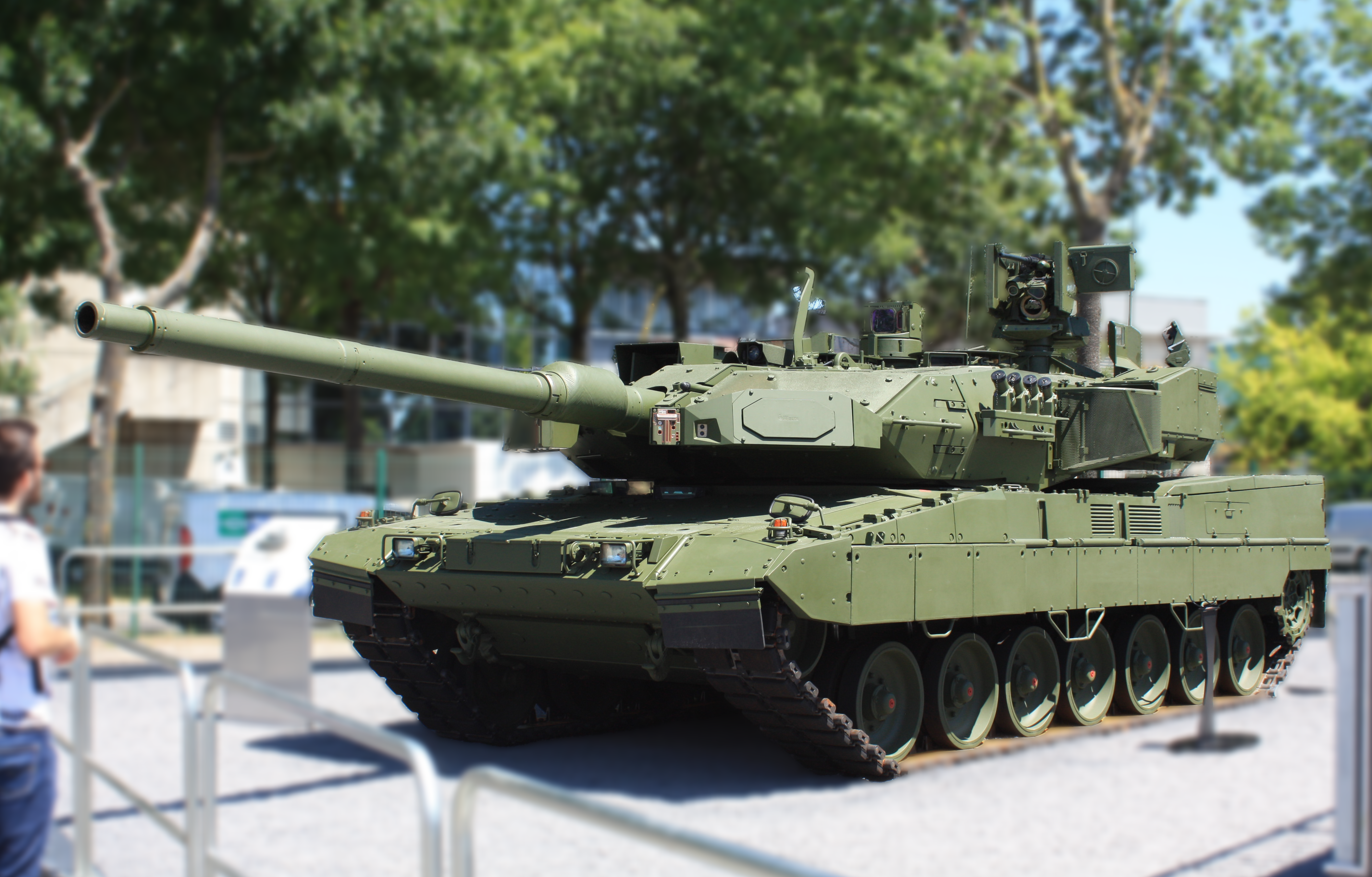
One response to this threat environment is the integration of active protection systems that can intercept incoming rounds before they strike the vehicle. A recent contract highlights how this approach is becoming standard rather than optional. Trophy Active Protection Systems will be installed as a core element on the latest Leopard 2A8 main battle tanks, ensuring a common protection baseline across several European armored fleets.
The system is designed to detect, track, and neutralize incoming threats in real-time. Using onboard sensors, it identifies hostile projectiles such as anti-tank guided missiles, rocket-propelled grenades, recoilless rifle rounds, and other hollow-charge weapons. Once classified, the system engages the threat at a safe distance from the vehicle, reducing the likelihood of armor penetration and catastrophic damage.
According to Army Technology, a key feature is its ability to handle complex attack profiles. Modern engagements increasingly involve simultaneous or sequential threats arriving from different angles. The system is designed to manage multiple incoming projectiles, providing coverage against coordinated attacks rather than single, isolated shots. This capability is particularly relevant in dense combat environments where infantry, drones, and armored units operate together.
The tank will integrate the system as a standard configuration, simplifying training, logistics, and interoperability between allied units. Alongside the systems themselves, the program includes spare parts, training, and support equipment to sustain long-term operation. This reflects a broader shift toward treating active protection as a permanent part of the vehicle lifecycle rather than an add-on.
From a defense perspective, the move underscores how NATO armored forces are adapting to lessons from recent conflicts. Tanks remain critical for firepower and maneuver, but their effectiveness now depends on layered survivability that combines armor, situational awareness, and active defenses. Active protection systems allow crews to operate with greater confidence in environments saturated with precision anti-armor weapons, particularly on Europe’s eastern flank.
The system is not limited to heavy tanks. It has already been deployed on lighter armored platforms, demonstrating scalability across vehicle classes. Its operational use since 2011 provides a mature track record compared to newer systems still in development.
As armies modernize their fleets, the integration of active protection is becoming a defining feature of next-generation armor. Rather than simply adding more steel, systems like these reflect a shift toward smarter, networked survivability—where detecting and defeating the threat matters as much as absorbing the hit.