

This post is also available in:
 עברית (Hebrew)
The rapid spread of small unmanned aerial systems on today’s battlefield has created a new challenge for attack helicopters. Platforms originally optimized for engaging armored vehicles and ground targets are increasingly required to counter agile drones operating at short notice and varying altitudes. Traditional cannon rounds, which rely on direct impact, can be less effective against small, fast-moving aerial threats.
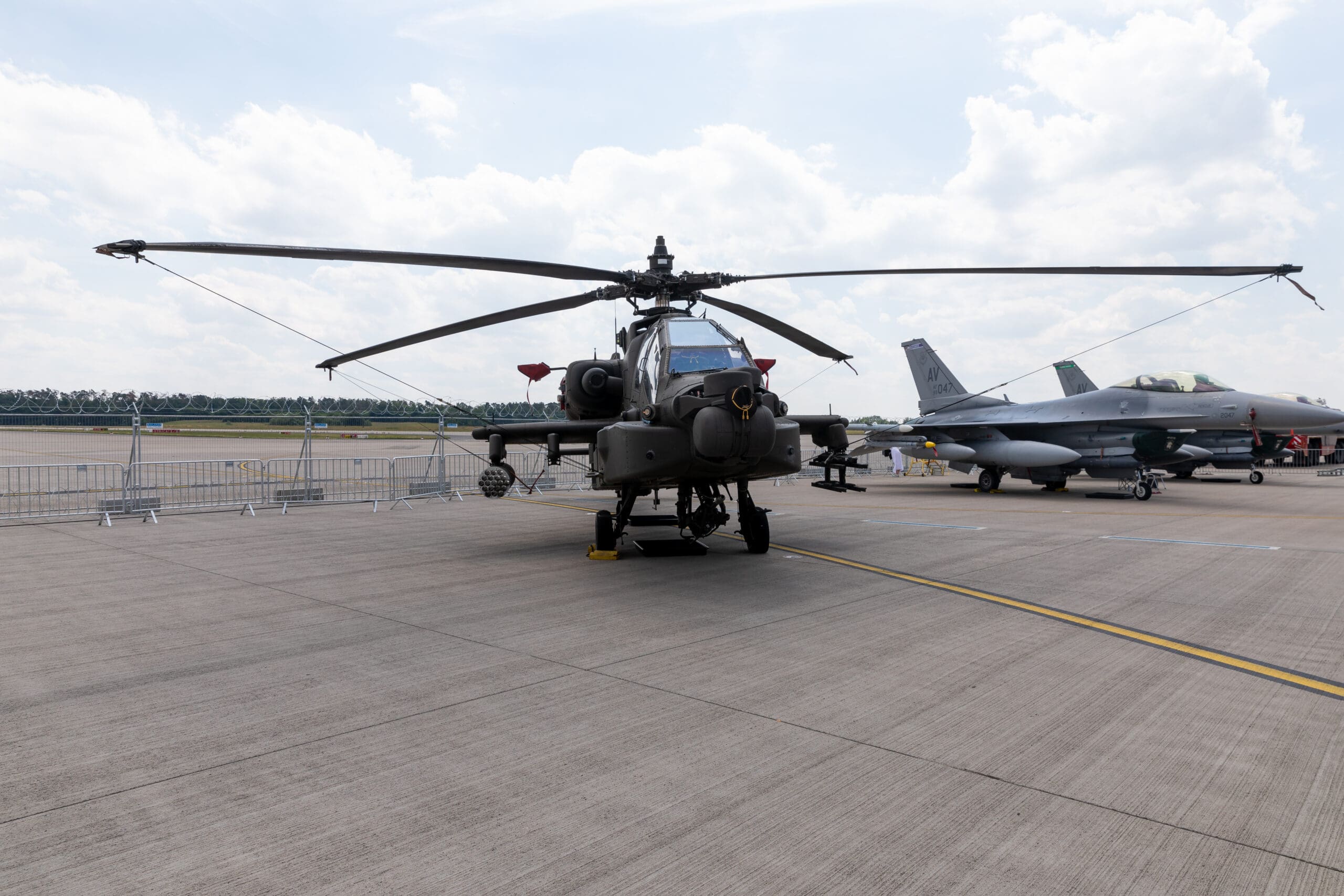
A recent live-fire test in the United States demonstrated a potential solution. An AH-64 Apache attack helicopter successfully engaged airborne targets using the 30×113mm XM1225 Aviation Proximity Explosive (APEX) round. Fired from the helicopter’s standard M230 Chain Gun, the new munition is equipped with a proximity fuse that detonates near the target rather than requiring a direct hit. This creates a wider lethal radius, increasing the likelihood of neutralizing drones and other lightly protected threats.
The trial evaluated the round’s performance at multiple ranges against unmanned aircraft systems. According to official data, the helicopter met accuracy requirements and demonstrated effectiveness against both aerial and ground targets. A key objective was to compare its performance under identical conditions with the legacy M789 High Explosive Dual Purpose round, as well as to assess the use of mixed ammunition loads.
According to Interesting Engineering, one of the notable aspects of the helicopter is that it can be fielded without modifications to the existing weapon system or fire control architecture. Its ballistic profile closely matches that of the abovementioned legacy, allowing integration without significant adjustments or additional training burdens. Extensive safety testing preceded the live-fire event to validate reliability.
Beyond drones, the round is designed to engage exposed personnel and small maritime targets, expanding the helicopter’s operational flexibility. Its proximity fuse increases vulnerability for dispersed or lightly protected targets, provided they can be accurately detected and tracked.
For defense forces confronting the growing use of unmanned systems, this development strengthens rotary-wing counter-drone capabilities. By enhancing the effectiveness of an existing platform and weapon system, the new 30mm round adds an additional layer of air and ground engagement options without requiring structural changes to the aircraft itself.
As unmanned threats continue to evolve in scale and sophistication, incremental upgrades such as proximity-fused ammunition illustrate how existing combat platforms can be adapted to new operational realities. Rather than introducing an entirely new interceptor, the approach leverages current aircraft and guns, extending their relevance in increasingly drone-saturated environments.























