This post is also available in:
 עברית (Hebrew)
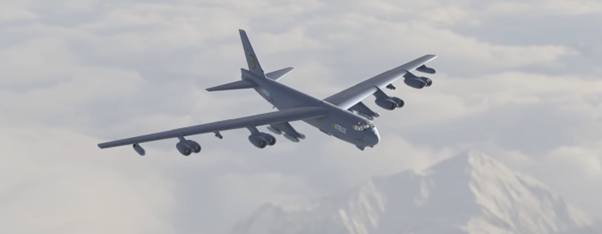
Large strategic bombers were designed for a very different battlespace than the one air forces face today. Modern conflicts rely on dense sensor networks, electronic warfare, and precision long-range weapons, placing new demands on aircraft that first entered service during the Cold War. For the B-52, one of the longest-serving platforms still in operation, its legacy radar has become a clear limitation—less reliable, easier to jam, and increasingly disconnected from today’s networked combat environment.
That gap is now being addressed with the introduction of a new Active Electronically Scanned Array (AESA) radar. The system, named AN/APQ-188, represents the first major radar replacement for the bomber in decades. Unlike the older mechanically steered radar it replaces, the design uses a large number of solid-state transmit/receive modules to steer its beam electronically, improving reliability and performance while reducing maintenance demands. The first aircraft fitted with the new radar has arrived at Edwards Air Force Base for flight testing, marking a long-awaited milestone in the modernization effort.
For defense planners, the upgrade is critical. A bomber intended to remain in service into the 2040s and beyond must be able to detect, track, and engage targets in heavily contested airspace. This technology offers longer detection ranges, higher-resolution ground imaging, and much stronger resistance to jamming. It also enables faster target updates and supports multiple functions at once, including navigation, targeting, and elements of electronic warfare.
According to Interesting Engineering, integrating the radar has not been straightforward. The bomber’s large nose structure was designed around the existing system, requiring the new antenna to be mounted at a downward angle and fitted within a radome (an enclosure that protects antennas) that must withstand extreme weather while remaining transparent to radar signals. These structural constraints were a key reason the upgrade took so long to reach flight testing.
Once fielded, the new radar will significantly improve the aircraft’s ability to guide modern weapons, track ground targets, and operate within joint and allied networks. It will also enhance self-protection by improving situational awareness in electronically contested environments.
The radar upgrade is part of a broader package of improvements planned for the fleet, including new engines, mission computers, displays, and updated electronic warfare and communications systems. Together, these changes are intended to keep the bomber operational alongside newer platforms well into the middle of the century, proving that even very old airframes can remain relevant when paired with modern sensing and networking technologies.