This post is also available in:
 עברית (Hebrew)
As short-range air-defense systems improve, many unmanned aircraft are being intercepted long before they reach their targets. Slow propeller-driven drones, even in large numbers, give defenders valuable reaction time. That gap has pushed several militaries to explore faster, harder-to-track platforms that can slip through radar coverage or compress the window available to engage them.
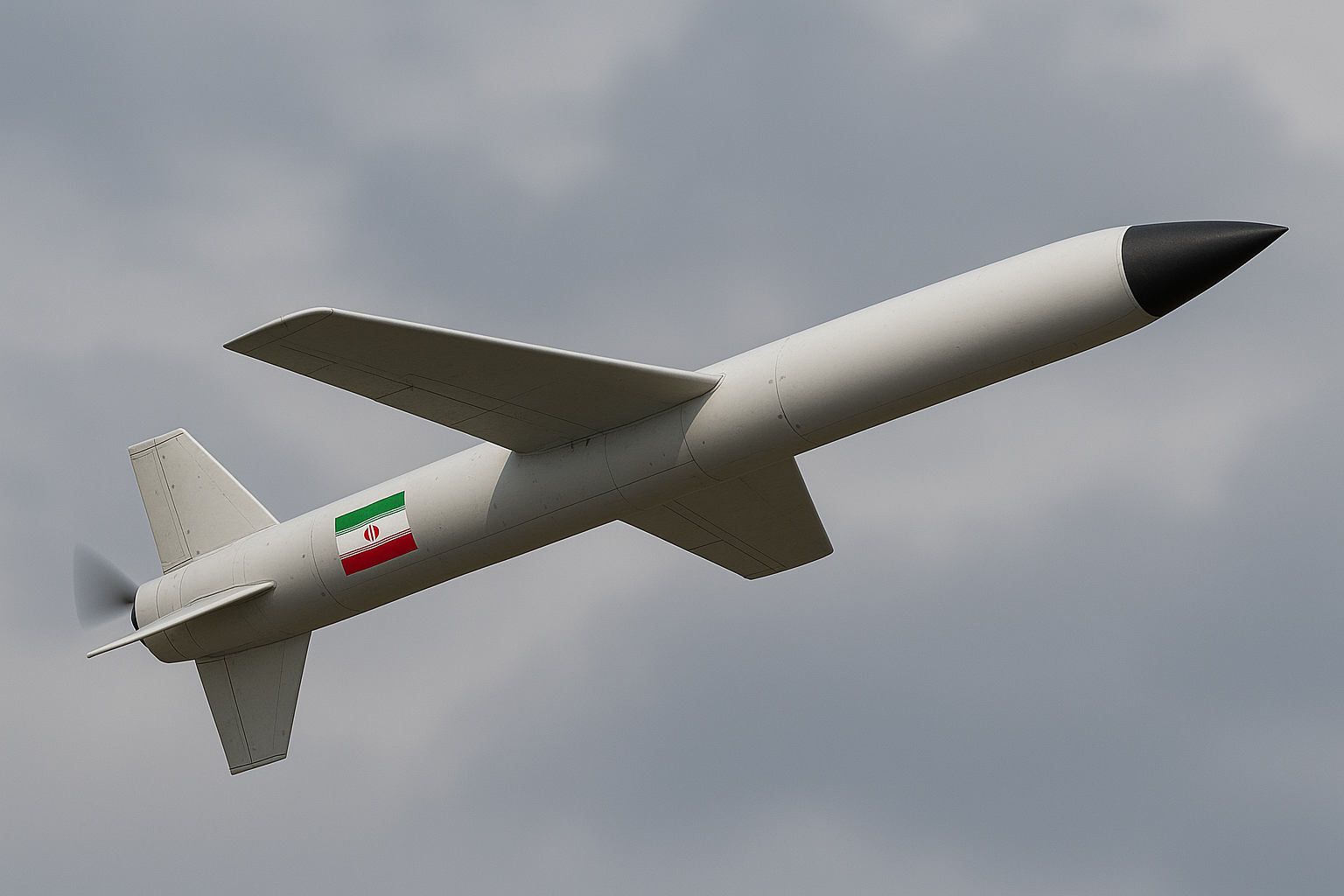
A newly unveiled jet-powered Iranian attack drone appears designed specifically for that challenge. Known as the Hadid-110, the system uses a compact turbojet engine and a sharply faceted airframe to reduce radar visibility. Images released on social media show a delta-wing configuration with angular body panels—features commonly associated with low-observable missiles. According to data compiled by U.S. military open-source assessments, the drone can reach roughly 510 kms per hour, making it one of the fastest strike-class UAVs currently fielded in the region.
According to Interesting Engineering, its primary purpose is offensive. The drone carries a 30-kilogram warhead and is configured as a one-way attack platform intended to hit fixed infrastructure or other high-value positions. Its listed range of around 350 kms gives it the ability to reach targets across multiple sectors, while its lightweight structure and radar-scattering geometry are intended to complicate detection by search radars.
Platforms like this highlight how rapidly expendable attack drones are evolving. Speed and shaping offer an alternative path to survivability compared with the mass-attack tactics associated with slower UAVs. As threats diversify, air-defense architectures increasingly need to account for faster, small cross-section drones that behave more like cruise missiles than traditional unmanned aircraft.
The UAV was shown publicly earlier this year and moved into field activity shortly afterward. It has already taken part in exercises that tested its launch sequence, which uses a rail and booster-assisted takeoff before the jet engine engages. The design appears intended to complement slower, propeller-driven drones that Iran has produced in significant quantities, offering a more rapid and radar-resistant option for strike operations.
While independently verified performance data remains limited, the platform reflects a broader trend: unmanned attack systems are becoming faster, more specialized, and increasingly optimized for penetrating layered defenses.