
This post is also available in:
 עברית (Hebrew)
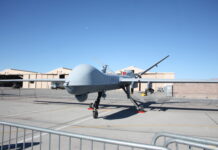
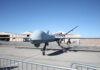
Long-endurance drones such as the MQ-9 Reaper have provided militaries with persistent surveillance and strike capabilities for decades. But future conflicts may demand something different: aircraft able to travel much farther, carry interchangeable payloads and operate in large numbers without making the loss of any single platform prohibitively expensive.
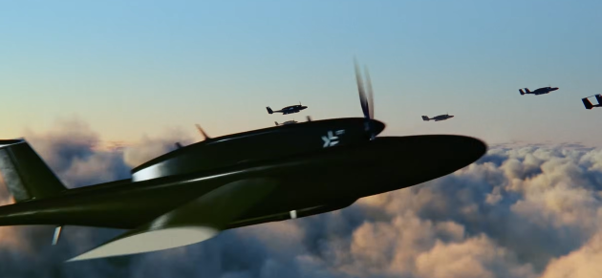
A new uncrewed aircraft called Gamera is being developed around that idea. Unveiled by Swarm Aero, the 21.9-meter-wingspan drone is intended for the Pentagon’s Massed Modular Aircraft (MMA) program, which is exploring lower-cost alternatives for long-range intelligence and strike missions.
The proposed aircraft has an unrefueled range of up to roughly 16,700 kilometers, allowing it to cover intercontinental distances without aerial refueling.
Its unusual configuration is immediately visible. Rather than placing the payload and systems inside one central fuselage, the aircraft uses two parallel fuselages connected by the wing and tail structure. Between them sits a Honeywell TPE331 turboprop engine in a nacelle above the wing, driving a forward-mounted propeller.
The twin-fuselage arrangement also shapes how the aircraft carries equipment. Four landing-gear assemblies are housed inside the fuselages, leaving the center section unobstructed for external payloads.
According to Interesting Engineering, the aircraft is planned with seven hardpoints for weapons, sensors and other mission equipment. The MMA requirement calls for at least 1,270 kilograms of payload capacity, with potential weapons including the AGM-158C Long Range Anti-Ship Missile.
Modularity is another central part of the design. The company says the aircraft will use adaptable hardware and avionics so payloads can be changed as missions evolve, while range and payload can be balanced according to operational requirements.
The aircraft is also being designed for one-to-many autonomous control. The company’s Legion autonomy architecture is intended to allow a single operator to supervise as many as 35 of these aircraft, rather than assigning a separate pilot to every drone.
That could become important if militaries begin deploying long-range uncrewed aircraft in much larger formations. The company is using automated composite manufacturing and modular electronics with the aim of supporting higher production volumes and a target price of approximately $10 million per aircraft. By comparison, an MQ-9A can cost considerably more depending on its configuration.
The aircraft remains a development program rather than an operational aircraft, and its stated range, cost and swarm capabilities have not yet been demonstrated in flight. The company plans to fly its first aircraft next year.
If those targets can be reached, the most significant change may not simply be replacing one long-endurance drone with another. The concept points toward a different model of uncrewed airpower: long-range aircraft produced more cheaply, configured for different missions and controlled in groups rather than one at a time.