This post is also available in:
 עברית (Hebrew)
As militaries and security organizations deploy growing numbers of drones, robots, and autonomous systems, a new challenge is emerging: each platform comes with its own hardware, interface, and operating environment. The result is a fragmented ecosystem that complicates operator training, the integration of new platforms, and the simultaneous management of multiple robotic systems.
Israeli company XTEND is seeking to address this problem with a software layer designed to operate drones and autonomous robotic systems. The company is expected to begin trading in New York this week under the ticker XTND, following the completion of its merger with publicly traded JFB, at a valuation of approximately $1.5 billion. Alongside the transaction, the company is raising approximately $100 million from private investors.
The company’s technology is designed to function as a common operating system for different robotic platforms. Rather than developing a separate control environment for every drone or robot, its software layer enables a range of systems to operate through a shared infrastructure while supporting varying levels of autonomy. The concept is similar to an operating system in computing: the underlying hardware may differ, while the software environment remains consistent and can support new applications and capabilities.
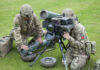
This approach has particular relevance for the defense sector. Robotic systems are increasingly being deployed to scan buildings, tunnels, and hazardous environments, gather intelligence, and perform missions in which sending personnel would involve significant risk. A common operating environment can shorten the integration process for new platforms and allow forces to operate a diverse robotic fleet without having to learn a different system for each platform.
According to the company, approximately 12,500 of its systems have been deployed across 30 countries. It recently signed a $15 million multi-year framework agreement with the defense ministry of a NATO member state, as well as a separate $12 million agreement with the U.S. Department of Defense.
The company’s Wall Street debut, however, comes with a significant gap between its valuation and current financial performance. The company generated $20 million in revenue in 2025, while recording a $27 million loss. In the first quarter of 2026, revenue jumped 234% to $5.8 million, but its loss reached $11.5 million.
At the beginning of the merger process, the company projected revenue of $85.6 million in 2026, $150 million in 2027, and $381 million in 2028. Alongside the technology itself and growing demand for defense robotics, public-market trading will therefore put another question to the test: whether a common operating-system model for the robotics industry can scale quickly enough to justify a $1.5 billion valuation.