This post is also available in:
 עברית (Hebrew)
Naval mines continue to pose a disproportionate threat to modern fleets. Relatively cheap to deploy and difficult to detect, they can deny access to ports, disrupt sea lines of communication, and place crews at risk during clearance operations. Traditional mine countermeasures rely heavily on crewed vessels operating slowly in hazardous waters, a model that struggles to keep pace with the scale and complexity of today’s maritime threat environment.
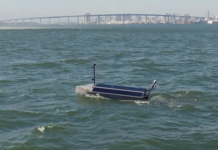
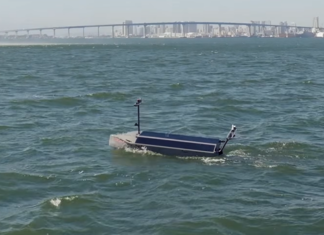
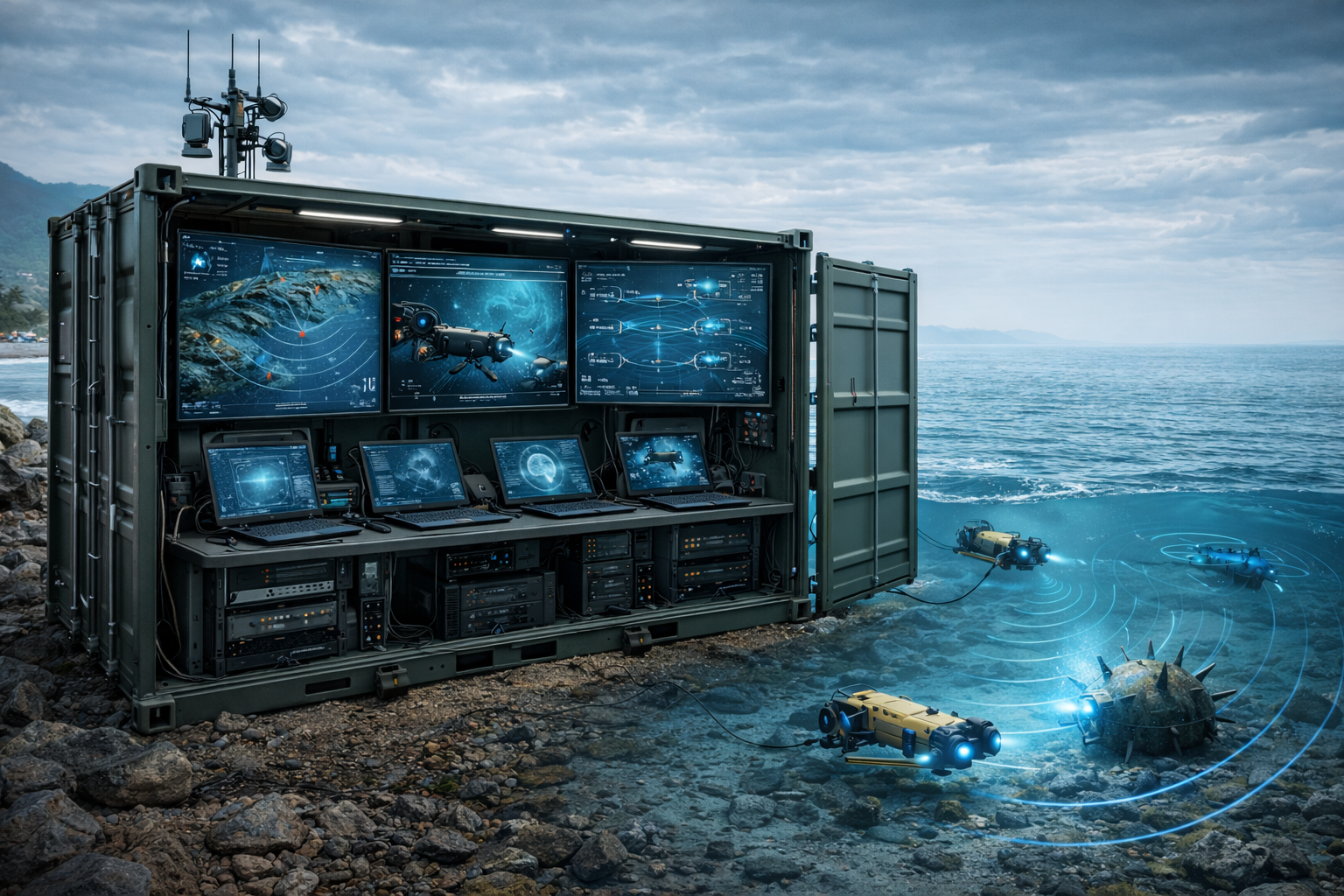
The Royal Navy is now moving to address this challenge by shifting mine hunting away from platforms and toward data-driven control. Under a new programme, a next generation of portable, autonomous command centres will be developed to manage mine countermeasure operations remotely. These centres are designed to coordinate fleets of uncrewed surface and underwater vehicles, allowing mine detection and classification to be conducted at a distance, with fewer personnel exposed to danger.
At the core of the concept is an autonomous command-and-control architecture capable of integrating multiple systems into a single operational picture. Rather than treating each drone or sensor as a standalone asset, the command centres will fuse data across platforms, enabling operators to plan missions, monitor progress, and make decisions in near real-time. The initial configuration will be containerised, allowing the system to be deployed flexibly from shore facilities, ports, or support vessels.
According to Interesting Engineering, a key element of the system is an AI-enabled mission management suite already in service with several navies. This software supports the full mission cycle, from planning through execution and post-mission analysis, and is designed to handle both conventional and autonomous mine countermeasures. Complementing it is an AI-powered planning and evaluation tool that applies machine learning to sonar and sensor data. By automatically filtering and prioritising potential mine contacts, it reduces operator workload and speeds up the identification process while improving accuracy.
The shift toward autonomous command centres reflects a broader move toward what the UK describes as a “Hybrid Navy”, combining crewed platforms with uncrewed systems. Mine warfare is a natural starting point for this approach, given the risks involved and the heavy reliance on sensing and data analysis. Remote command-and-control also supports seabed warfare more broadly, including the protection of undersea infrastructure.
The first phase of the programme focuses on twin containerised command centres, but the architecture is intended to scale—from deployable units to larger shore-based operations centres. By placing autonomy and AI at the centre of mine countermeasures, the Royal Navy is reshaping how one of naval warfare’s oldest problems is addressed, prioritising safety, speed, and adaptability over proximity to the threat.