This post is also available in:
 עברית (Hebrew)
Moving extremely heavy military payloads has always involved trade-offs. Conventional missile launch vehicles rely on large diesel engines, rigid axles, and complex mechanical linkages. While proven, these designs are noisy, generate significant heat, and struggle in confined or uneven terrain. For strategic systems such as intercontinental ballistic missiles, mobility, concealment, and reliability are becoming just as important as raw carrying capacity.
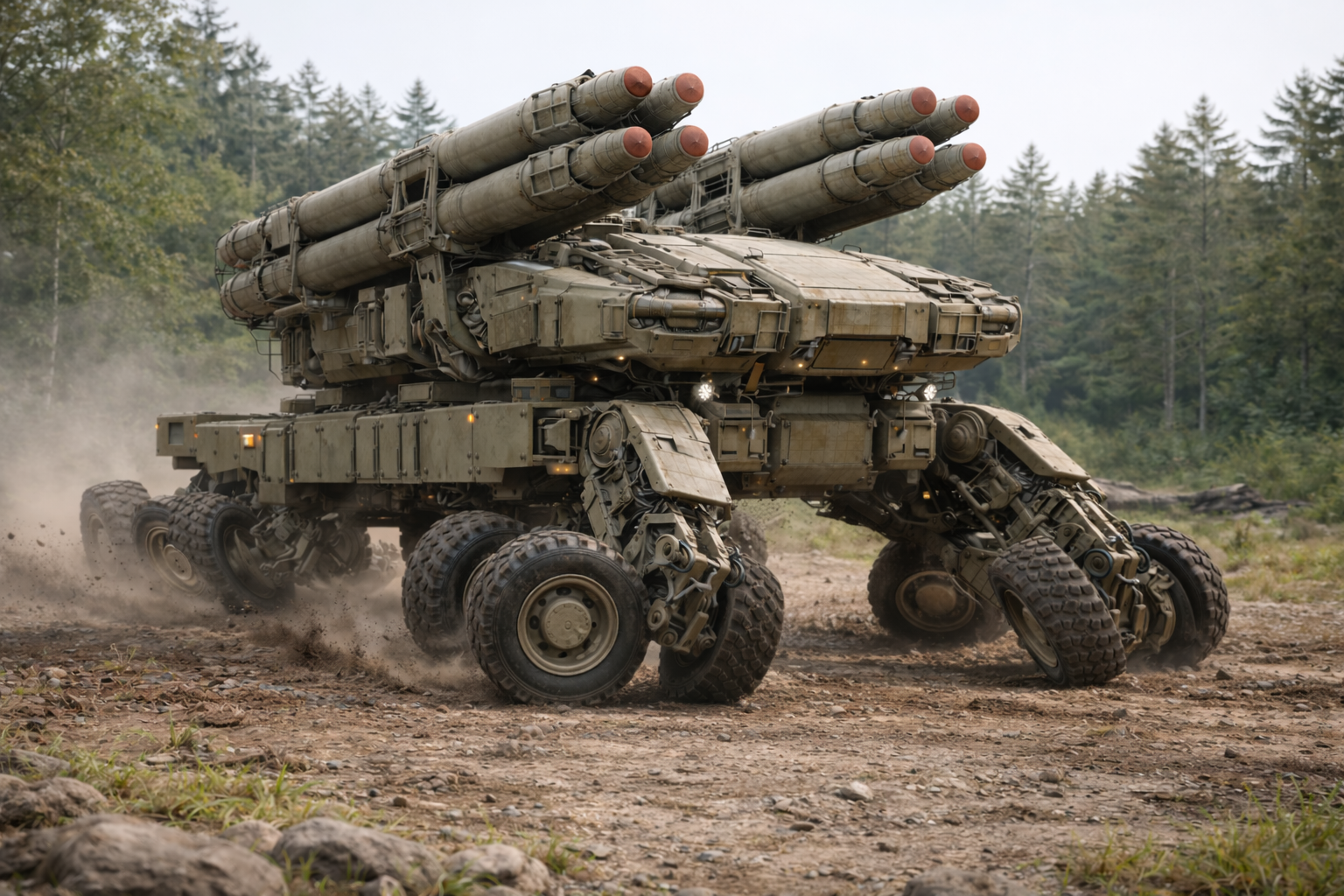
A newly unveiled electric heavy-duty vehicle prototype points to a different approach. Presented in Beijing in late December, the platform is designed as a fully electric, modular transporter capable of carrying very large loads—including, according to researchers, missile launch systems. Unlike traditional launch vehicles, the design focuses on flexibility and precision movement rather than brute force alone.
The key to this approach is a modular wheel architecture. Instead of fixed axles, the vehicle is built from independent wheel units that can be added or removed depending on the required payload. Each wheel module contains its own electric motor and systems for steering, braking, and suspension. Coordinated by a centralized electronic control system, the vehicle can move forward, sideways, diagonally, or rotate in place—an ability often described as “crab walking”.
According to Interesting Engineering, this level of maneuverability allows the platform to operate in areas inaccessible to conventional missile carriers, such as narrow roads, forested terrain, or complex urban environments. It can also pivot around its own axis, dramatically reducing turning radius when transporting oversized loads. The electric drive further improves stability by actively controlling roll and pitch, even on slopes or winding routes.
A near-silent, low-heat vehicle reduces acoustic and infrared signatures, making it harder to detect during transport or deployment. The absence of exhaust and the simplified mechanical layout also lower maintenance demands and reduce the risk of mechanical failure. Because each wheel operates independently, the vehicle can continue moving even if one module fails—an important feature for mission-critical systems.
While the platform is described as dual-use and could support civilian heavy transport, its potential role as a mobile missile launcher stands out. By combining stealth, redundancy, and unprecedented mobility, the design reflects a broader shift toward electric propulsion and intelligent control in military ground systems. Future variants are expected to handle other strategic and industrial payloads, suggesting this technology may influence both defense logistics and heavy vehicle engineering more broadly.