

This post is also available in:
 עברית (Hebrew)
Modern combat aircraft face a steadily evolving threat environment. Radar-guided missiles launched from both air and ground platforms are becoming faster, smarter, and better able to filter out traditional countermeasures such as chaff. Even low-observable aircraft are not immune once detected, especially during high-intensity operations near advanced air-defense systems. This has driven a renewed focus on survivability tools that work beyond the aircraft itself.
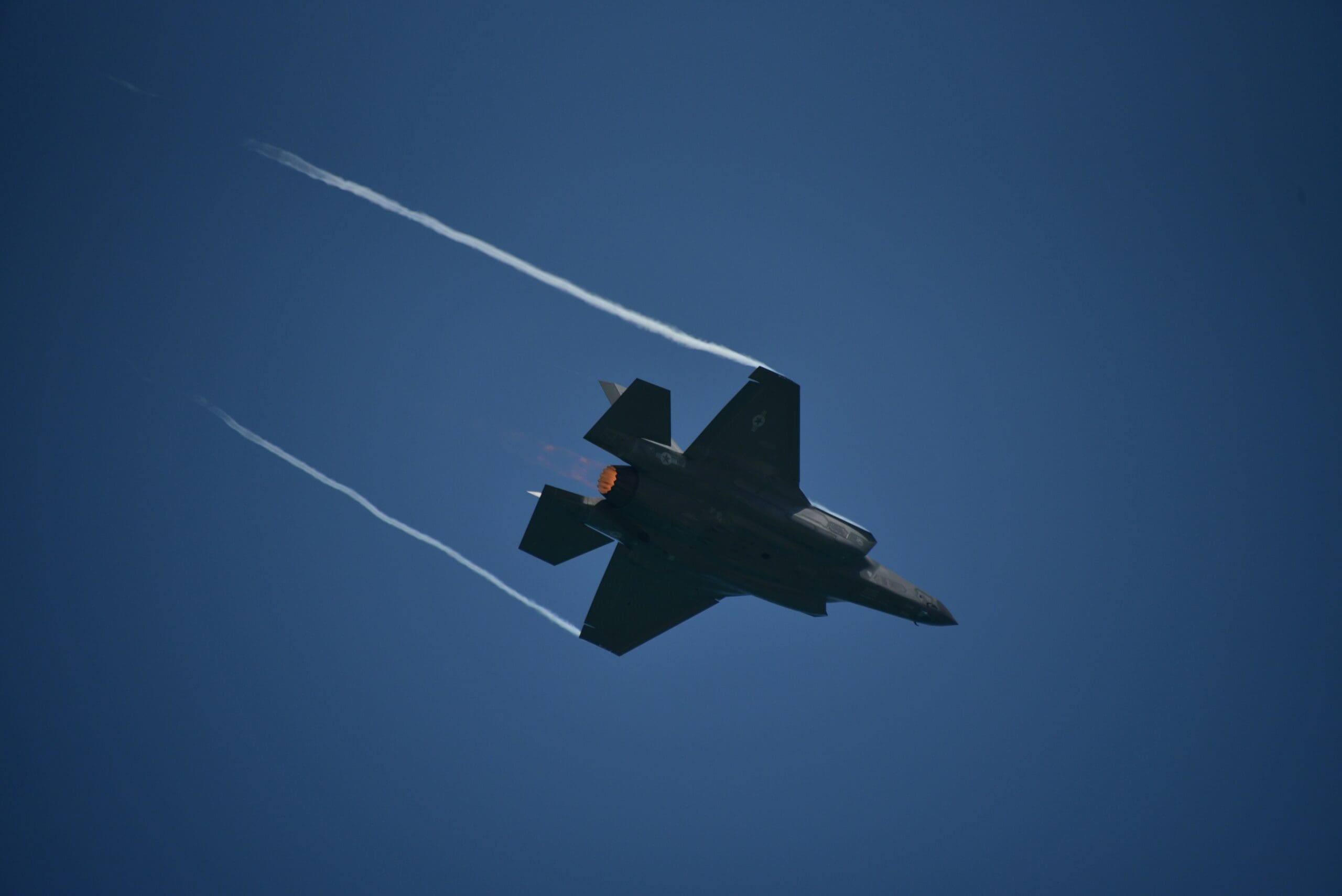
To address this gap, U.S. Navy F-35 fighters are set to receive a new active expendable decoy designed to draw incoming missiles away from the aircraft. The system, designated AN/ALQ-260(V), is a compact, self-contained device that can be ejected from standard chaff and flare dispensers already installed on naval aircraft. Once deployed, it functions as a false target, operating independently of the jet it protects.
The core idea is simple: rather than trying to overpower or confuse a missile’s seeker from onboard systems alone, the decoy creates a more attractive target elsewhere. After launch, it emits radio-frequency signals that closely replicate the radar signature of an aircraft. Incoming missiles are deceived into tracking the decoy instead of the fighter, buying critical time and distance for the pilot.
This approach solves several limitations of conventional electronic countermeasures. Because the decoy operates away from the aircraft, it avoids the “home-on-jam” problem, where missiles home in on the source of jamming signals. The device also obscures range and Doppler information, making it harder for modern seekers to distinguish between a real aircraft and a synthetic target—something that legacy chaff often fails to do.
According to Interesting Engineering, for the F-35, the decoy is intended to complement existing survivability systems rather than replace them. The aircraft already relies on a combination of reduced radar signature, onboard electronic warfare, and limited towed decoys. Adding a disposable, off-board decoy expands the defensive envelope, particularly against advanced radar-guided threats encountered in contested airspace.
From a defense perspective, this reflects a layered approach to aircraft protection. As adversaries invest in more capable sensors and interceptors, survivability increasingly depends on combining stealth, onboard electronic attack, and expendable countermeasures. Small, relatively low-cost decoys that integrate seamlessly with existing launchers offer a practical way to enhance fleet readiness without redesigning aircraft.
The move underscores how air combat survivability is shifting toward distributed, disposable solutions—tools that accept attrition in order to keep pilots and aircraft out of the missile’s final engagement zone.























