This post is also available in:
 עברית (Hebrew)
Long-range ballistic missiles are among the most complex systems in military service, and maintaining their reliability depends heavily on continuous testing and verification. For submarine-launched systems in particular, accuracy and operational readiness must be validated under real-world conditions, since these weapons form a critical part of strategic deterrence frameworks.
A new upgrade effort is focused on improving how flight-test data is collected and analyzed during missile launches. The program centers on instrumentation systems used to monitor every phase of a ballistic missile’s flight—from launch and trajectory tracking to guidance behavior and reentry vehicle deployment. These systems are designed to capture high-resolution telemetry data that allows engineers and defense planners to evaluate overall missile performance and certify readiness.
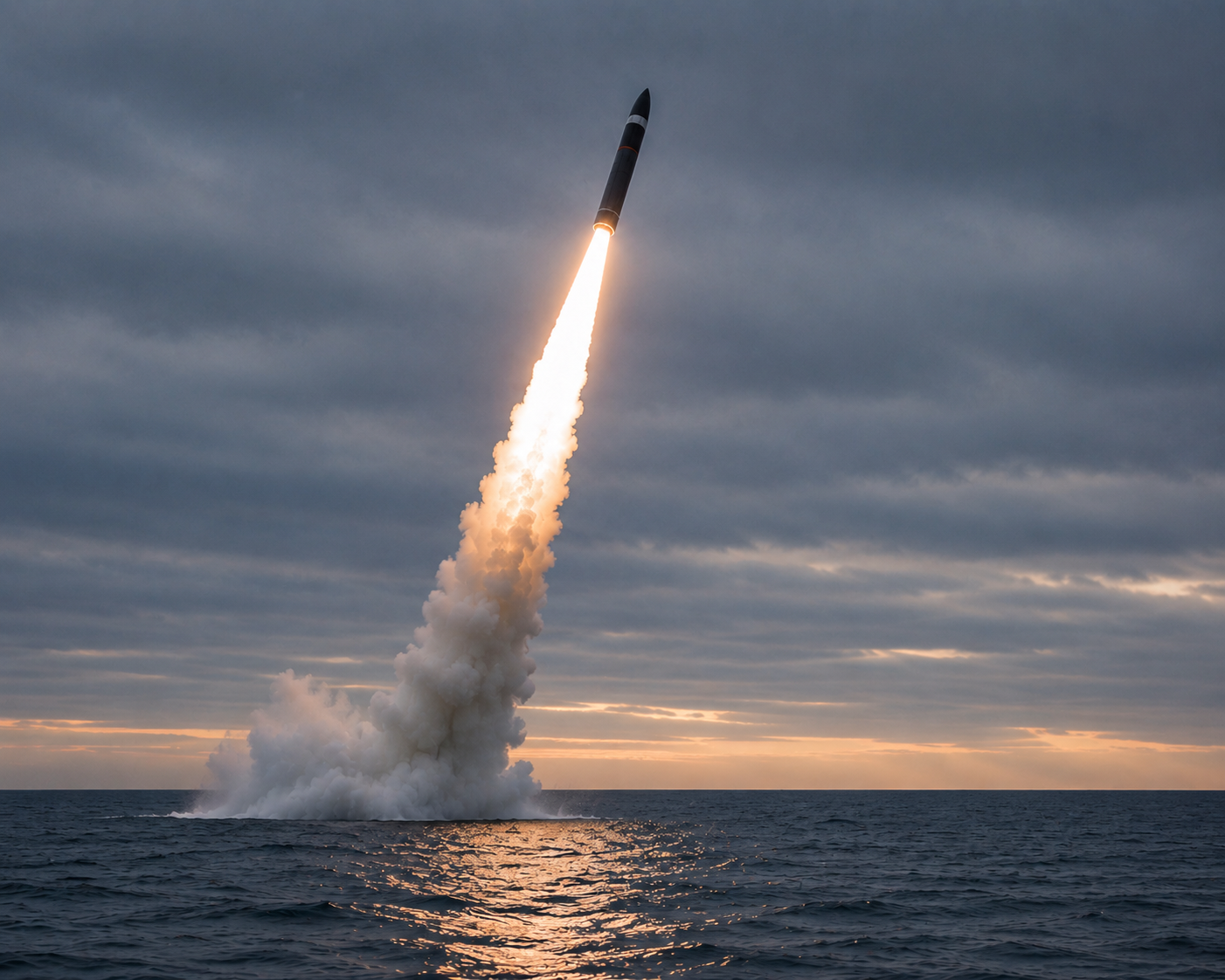
The missile involved is a submarine-launched ballistic system deployed aboard strategic submarines designed for long-duration, low-visibility patrols and is called Trident II D5. Because these submarines operate covertly and remain difficult to detect, they provide a survivable second-strike capability, making reliability and precision especially important.
According to Interesting Engineering, the upgraded instrumentation acts as a monitoring layer during test launches, collecting detailed information in real time. This includes trajectory measurements, system responses during flight, and the behavior of reentry vehicles traveling at hypersonic speeds. Without this telemetry, it would be difficult to validate whether the missile is performing within operational parameters.
The missile itself is capable of traveling intercontinental distances and deploying multiple independently targetable reentry vehicles, allowing a single launch to engage several targets. Advanced guidance systems are intended to maintain high levels of accuracy over long ranges, making ongoing testing essential as the platform continues in service.
From a defense perspective, modernization efforts around test and tracking infrastructure are just as important as upgrades to the missile hardware itself. Accurate telemetry data is essential for validating missile performance and maintaining operational readiness.
The work also supports the transition to the next generation of ballistic missile submarines, where existing missile systems are expected to remain in use for years to come. As strategic forces modernize, the ability to collect and analyze detailed flight data will remain a key component in maintaining operational confidence and long-term deterrence capability.