

This post is also available in:
 עברית (Hebrew)
Rescue helicopters operating in contested environments face a growing threat from infrared-guided missiles. While onboard warning systems can alert crews to incoming threats, they do not provide a way to actively defeat them. In low-altitude missions, where maneuvering options are limited, this gap can significantly increase risk to both aircraft and personnel.
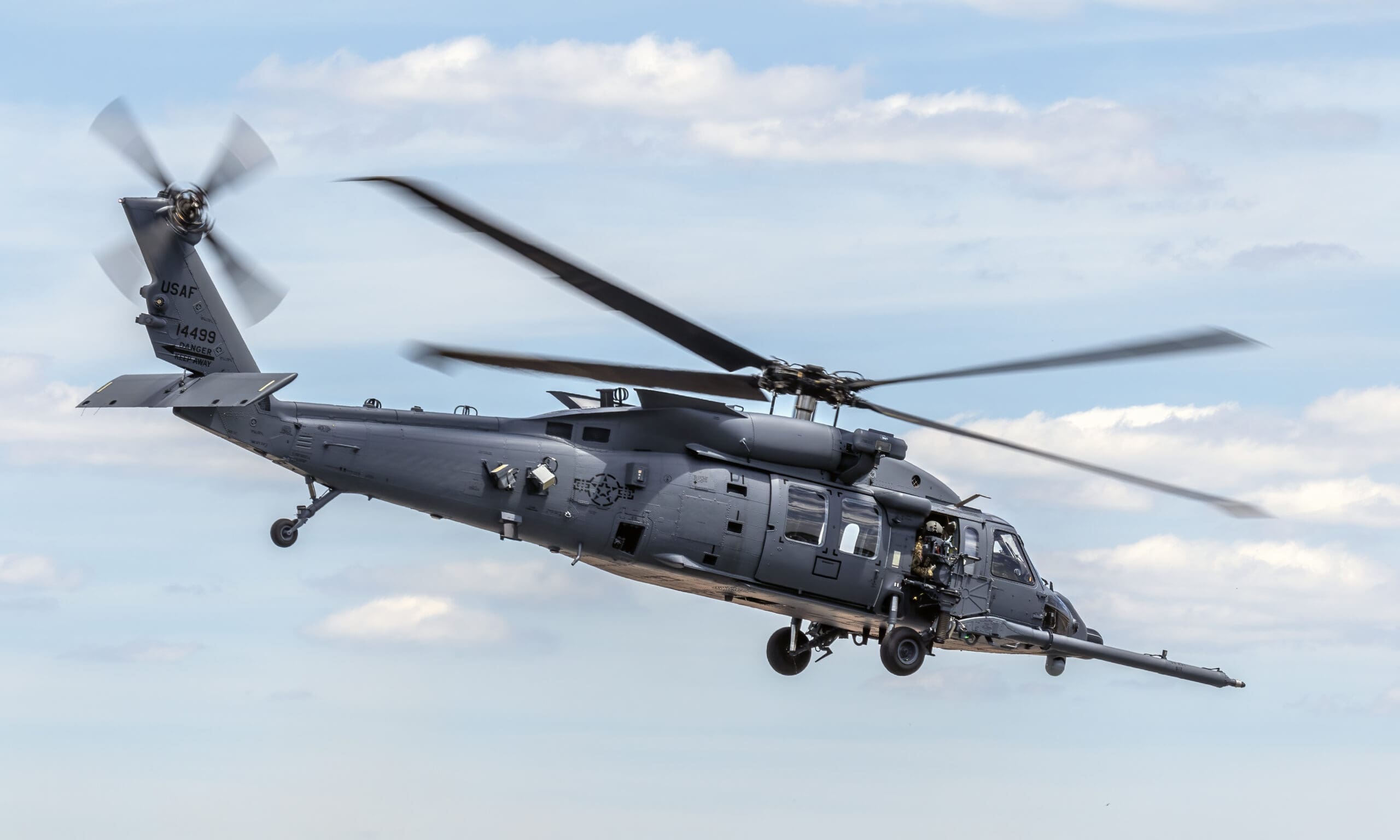
A new upgrade effort (for USAF’s HH-60W Jolly Green II helicopters) is focused on adding an active defense layer based on laser technology. The system under consideration uses directed infrared energy to interfere with the guidance systems of incoming missiles. Once a threat is detected, the system tracks it and directs a laser beam toward the missile’s seeker, disrupting its ability to lock onto the aircraft.
According to Interesting Engineering, this approach shifts the response from passive detection to active protection. Instead of relying solely on evasive action, the helicopter gains the ability to counter the threat directly within seconds. The system operates as part of an integrated defensive suite, combining sensors, tracking algorithms, and countermeasure delivery into a unified response loop.
Two mature solutions are being evaluated, both built around similar principles but differing in architecture and sensor configuration. These systems are designed to operate continuously, scanning for threats and engaging them automatically when required. Their effectiveness depends on rapid detection, precise tracking, and accurate targeting of the missile’s infrared seeker.
Integrating such systems into an existing helicopter platform presents technical challenges. Power consumption, cooling requirements, and compatibility with onboard avionics must all be addressed. The goal is to incorporate the system without compromising flight performance or mission capability. Open architecture is also a priority, allowing future upgrades and easier long-term maintenance.
From a defense perspective, this reflects a broader trend in aircraft survivability. As missile technologies improve, especially in the infrared domain, platforms that operate close to the ground are increasingly exposed. Directed energy countermeasures offer a scalable way to address this threat without relying on expendable systems.
For search-and-rescue missions in particular, where helicopters must enter high-risk areas to extract personnel, the addition of active protection could prove critical. It allows crews to operate with greater confidence in environments where threats can emerge quickly and unpredictably.
As integration efforts move forward, laser-based countermeasures are likely to become a standard feature in enhancing the survivability of rotary-wing aircraft in modern operations.























