

This post is also available in:
 עברית (Hebrew)
Conventional drones rely on spinning propellers to generate lift and maneuver in the air. While effective, this approach has limitations, especially in tight, cluttered, or unpredictable environments. Rotors can struggle with fine control in turbulent air, and their rigid design makes them less adaptable to sudden changes in conditions or close contact with obstacles.
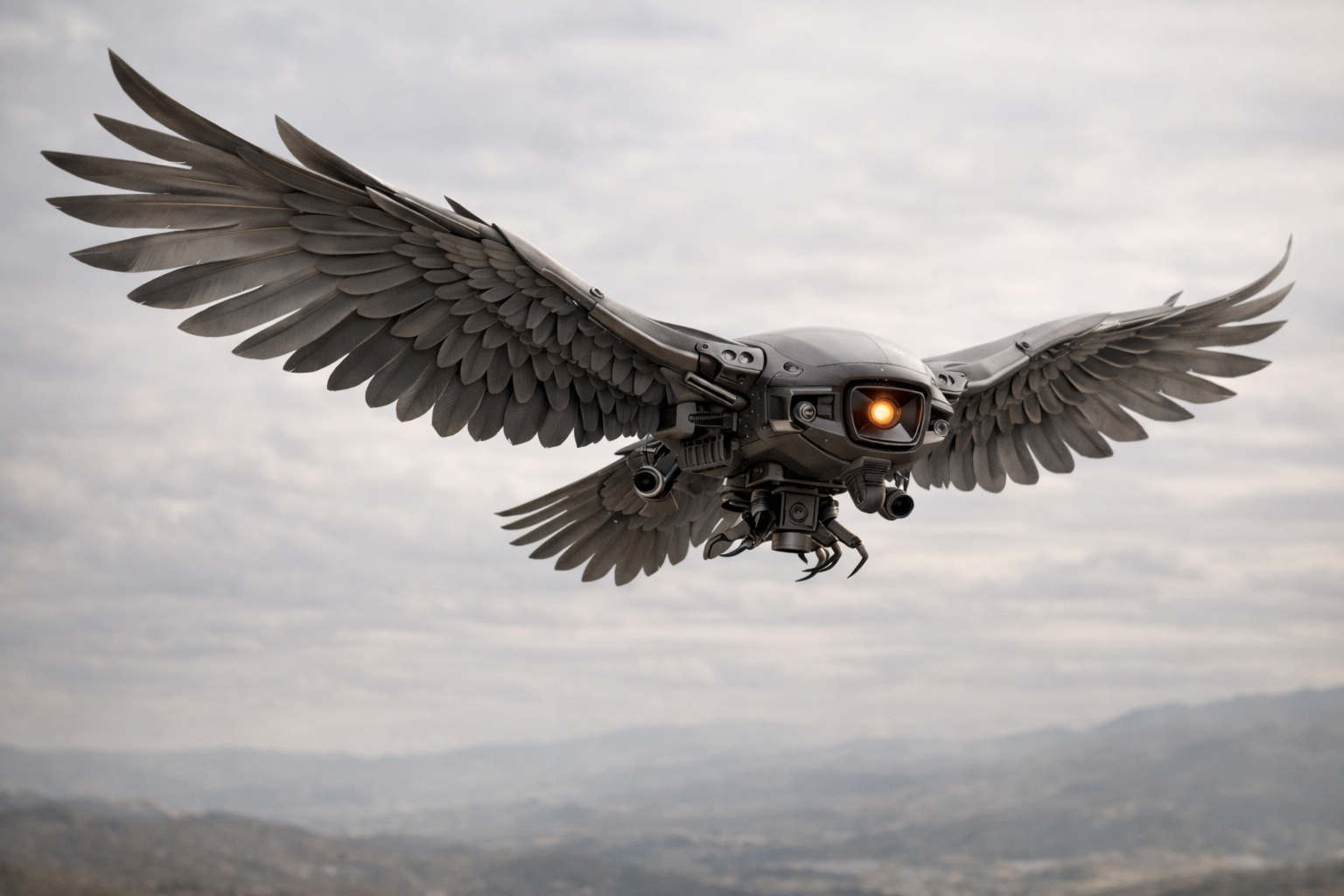
A new type of aerial system aims to address these limitations by taking inspiration from nature. Instead of using motors and propellers, researchers are developing a “solid-state” flapping-wing robot that mimics how birds fly. The system replaces traditional mechanical components with smart materials that move when electricity is applied, allowing the wings to flap, twist, and adapt in real time.
At the core of the design are piezoelectric materials integrated into lightweight composite wings. When voltage is applied, these materials change shape, causing the entire wing structure to flex and generate motion. This eliminates the need for gears, joints, or motors, reducing mechanical complexity while enabling more fluid and responsive movement.
According to TechXplore, the result is a platform capable of more precise control, particularly in environments where airflow is unstable or obstacles are nearby. Flapping wings can also be less damaging upon contact, both to the vehicle and its surroundings, which is an advantage in confined spaces.
To support development, the research team built a detailed simulation model that integrates aerodynamics, structural behavior, electrical dynamics, and control systems. This allows engineers to test different configurations digitally before building physical prototypes, accelerating the design process and reducing costs.
Although current material performance still limits real-world deployment, the concept demonstrates a different direction for aerial robotics – one that prioritizes adaptability over mechanical power.
From a defense and homeland security perspective, such systems could be useful in urban or complex terrain where traditional drones face constraints. Their ability to maneuver with greater precision and reduced risk of damage could support missions such as close-range reconnaissance, search and rescue, or operations in confined environments.
As materials technology advances, flapping-wing systems may become a practical alternative to rotor-based drones, offering a more flexible approach to aerial mobility in challenging conditions.
The research was published here.























