

This post is also available in:
 עברית (Hebrew)
Long-range flights place heavy demands on both aircraft and passengers. Business jets are expected to link distant city pairs efficiently, operate from varied airports, and maintain comfort over many hours in the air. Until now, speed has often been the limiting factor, with most civilian aircraft cruising well below the transonic performance achieved decades ago by the Concorde.
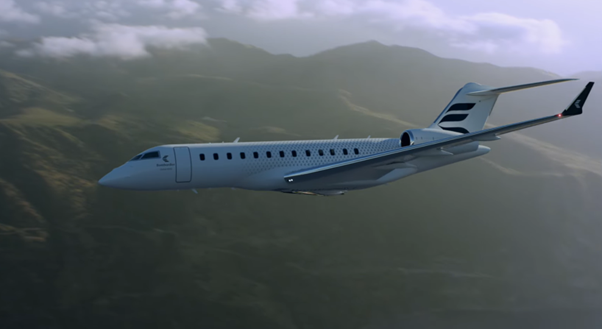
Bombardier’s new Global 8000 aims to change that equation. The company has delivered the first aircraft in the series, introducing a platform that reaches Mach 0.95 — the highest cruise speed available today in civil aviation. The jet builds on the lineage of the Global 7500 but incorporates aerodynamic refinements and performance upgrades that position it at the top of the business jet market.
Speed, however, is only one aspect of the design. The jet is engineered for missions of up to 14,816 nautical kms, a range verified during testing earlier this year. That capability enables nonstop routes across continents and oceans, reducing the need for intermediate stops and giving operators more flexibility in planning long-haul travel. A redesigned wing with leading-edge slats supports short-field performance, allowing the aircraft to use runways typically associated with smaller jets.
While the platform targets business aviation, its characteristics align with requirements seen in government and defense transport fleets as well. High-speed, long-distance mobility combined with low cabin altitude can support missions that involve rapid transit between remote regions, sensitive delegations, or time-critical operations. The aircraft’s endurance and runway accessibility may also appeal to agencies that operate across dispersed geographies.
According to Interesting Engineering, inside the cabin, Bombardier has focused on minimizing fatigue on extended flights. The aircraft maintains a cabin altitude of 820 meters even at high cruising levels, reducing physical strain during long journeys. Air quality is managed through a system that refreshes the cabin every 90 seconds, while a circadian lighting suite adjusts illumination to support natural sleep cycles. Four distinct living zones and designated rest space for crew members offer additional comfort during nonstop operations.
The aircraft has completed its flight-test program and received type certification from Transport Canada, with approvals from U.S. and European regulators underway. With its combination of speed, range, and cabin design, the jet establishes itself as Bombardier’s new flagship and a notable addition to the long-range aircraft segment.























