

This post is also available in:
 עברית (Hebrew)
Securing large installations at night remains one of the most persistent challenges for defense and critical-infrastructure operators. Traditional low-light cameras often struggle with grainy imagery, poor contrast, and limited detection ranges—conditions that can delay threat identification or leave blind spots entirely unmonitored. A new collaboration between two California technology firms is targeting this problem with an AI-powered approach designed to extract far more detail from existing low-cost sensors.
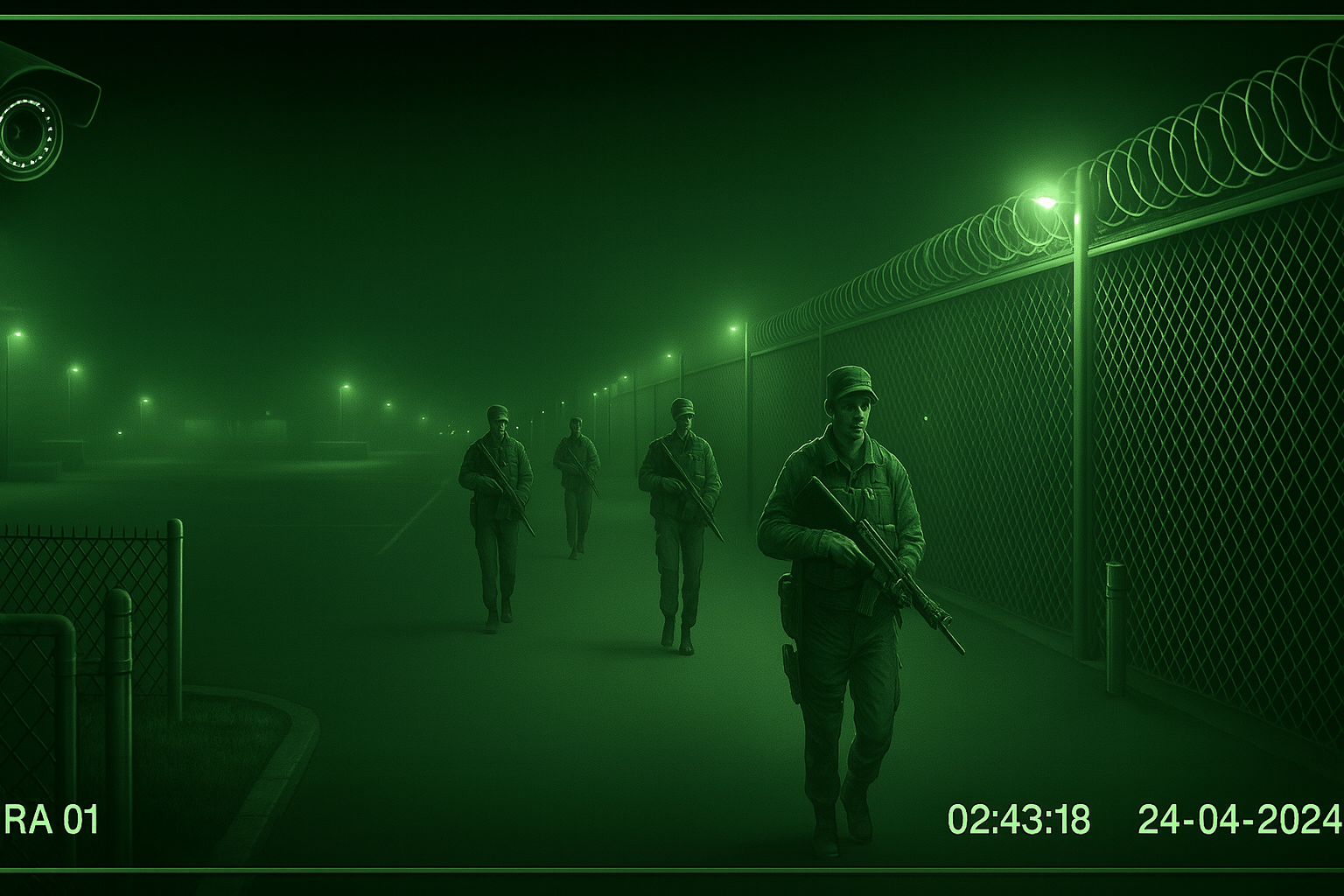
At the center of the effort is an AI-driven low-light enhancement engine capable of boosting a camera’s effective sensitivity by roughly an order of magnitude. Instead of relying on specialized hardware, the system processes video on compact edge devices using standard processors. By sharpening dark or noisy footage in real time, it gives operators a clearer view of movement, objects, and terrain in near-total darkness. This approach is meant to help security teams detect and classify threats earlier while reducing dependence on expensive optical systems.
According to MilitaryAI, the software is being integrated into Legion, a platform that aggregates cameras, drones, and other mission-support tools into a unified dashboard. Legion is already deployed at more than a dozen U.S. military sites, where it consolidates sensor inputs and provides a common operating picture for base-protection units. Because the platform is compatible with both legacy and modern systems, the AI night-vision capability can be added without replacing existing infrastructure.
For defense and homeland security applications, the value of this enhancement is clear. Perimeter protection, counter-UAS operations, and patrol monitoring depend heavily on visibility, especially in remote or austere environments where lighting is limited. AI-boosted imagery can reduce false alarms, improve tracking, and help operators maintain situational awareness during hours when adversaries are most likely to exploit poor visibility.
The system will undergo a $1.7-million Department of Defense demonstration to assess its performance under real operating conditions. The goal is to show that inexpensive cameras, paired with advanced processing, can meet or exceed the effectiveness of traditional night-vision solutions at a fraction of the cost.
If successful, the technology could broaden access to enhanced night surveillance across military installations, energy facilities, border zones, and other high-risk areas—an incremental but significant step toward more resilient 24/7 protection.























