This post is also available in:
 עברית (Hebrew)
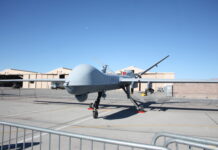
Military drones increasingly operate in environments where reliable communications cannot be taken for granted. Radio signals may be blocked by terrain, cellular infrastructure can become unavailable, and electronic warfare can interfere with wireless connections. For unmanned systems that depend on exchanging information with operators, losing a communications link can disrupt an entire mission.
A new communications upgrade for the Mayhem 10 autonomous military drone system aims to reduce that vulnerability by allowing the aircraft to use several different networks simultaneously.
AeroVironment is integrating Halo connectivity technology, developed by Israeli-founded company Elsight, into the system. The system combines satellite communications, cellular networks and point-to-point radio links into a unified connection.
Rather than requiring an operator to manually switch between communications methods, the technology automatically manages the available links as network conditions change.
The technology uses network bonding, which combines multiple communications paths to maintain connectivity. If one connection becomes weak or unavailable, the system can rely on other functioning links to continue transmitting information.
According to Interesting Engineering, it supports satellite communications alongside public and private cellular networks, as well as direct radio connections between platforms.
This approach could be particularly useful for drones operating beyond visual or radio line of sight, where maintaining a stable connection with the operator becomes more difficult.
However, the system cannot guarantee uninterrupted communications. Its effectiveness still depends on the availability and quality of the remaining networks, particularly in environments affected by deliberate electronic interference.
The upgrade is being introduced through the system’s modular open architecture, which allows additional technologies and mission equipment to be integrated without redesigning the entire platform.
The system is designed to support several military roles, including intelligence, surveillance and reconnaissance (ISR), electronic warfare, communications relay and precision-strike missions.
Maintaining connectivity is important across these applications. Surveillance platforms need to transmit information to operators, while other unmanned systems may require updated mission instructions or coordination with additional assets.
The technology could also support operations involving multiple autonomous systems, where communications disruptions can make it harder to maintain coordination across different platforms.
The companies have not disclosed detailed performance figures, results from electronic-warfare testing or a timeline for operational deployment.
The integration remains under development, with the objective of improving communications resilience rather than making the aircraft completely independent of external networks.
For modern military drones, autonomy alone does not eliminate the need for dependable connectivity. Even when an aircraft can perform parts of its mission independently, operators still need ways to monitor its activity and exchange critical information.
By combining several communications technologies into one adaptable system, the upgrade aims to make losing a single connection less likely to mean losing contact with the drone altogether.