
This post is also available in:
 עברית (Hebrew)
Hypersonic missiles offer the ability to strike targets at extremely high speeds, but their cost and specialized launch infrastructure can limit how many a military can deploy. Developing weapons that combine high performance with more affordable production has therefore become an important priority, particularly for forces seeking to engage moving or time-sensitive targets.
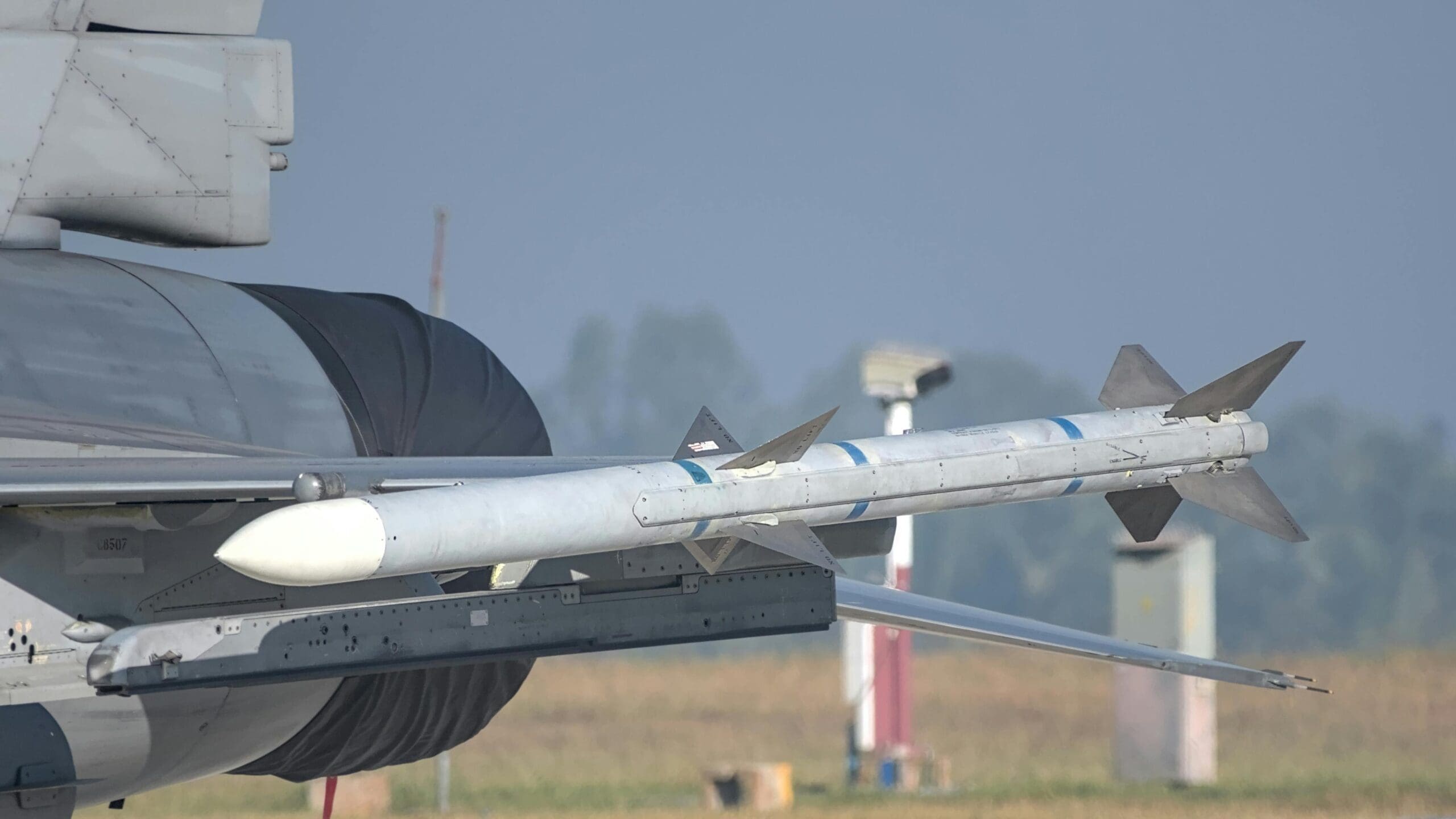
A new ground-launched hypersonic missile called Blackbeard GL is being developed to address that challenge, with a recently released image showing the weapon launching from a containerized system mounted on a military truck.
Developed by Castelion, it is intended to provide a lower-cost precision-strike capability that can be manufactured in larger quantities than many existing hypersonic weapons.
According to Interesting Engineering, the ground-launched version is being designed for compatibility with existing military rocket artillery infrastructure, potentially reducing the need for entirely new launch platforms.
The development plan begins with a modified Multiple Launch Rocket System Family of Munitions (MFOM) pod, followed by dedicated launch containers and missile prototypes.
A longer-term objective is to demonstrate the missile using the M142 HIMARS fire-control system, allowing it to operate within an established mobile artillery architecture.
The newly released image shows a missile leaving an enclosed launcher carried by a high-mobility truck. However, the configuration remains experimental, and the final launcher design and missile capacity have not been disclosed.
It is being developed to engage moving, hardened and time-sensitive targets, with the Army seeking approximately 80% of the capability planned for its Precision Strike Missile Increment 4 at a substantially lower cost.
Hypersonic weapons travel faster than Mach 5, although their effectiveness also depends on factors such as maneuverability, flight trajectory and guidance.
The company has previously suggested a range approaching 805 kilometers, but the production missile’s precise performance and propulsion characteristics remain undisclosed. Ground-launched versions may also have different range limitations from air-launched configurations.
The technology is being developed for more than one launch platform. A separate effort is integrating it with the F/A-18E/F Super Hornet, expanding its potential use beyond ground-based forces.
The U.S. Navy has awarded contracts supporting integration and early operational capability, including an order for 50 pre-production missiles.
For the ground-launched system, a production-representative live-fire demonstration is planned as part of the Army’s fiscal 2027 development milestones.
If testing is successful, the program could eventually support much larger procurement quantities. The Pentagon has discussed potential production of at least 500 missiles annually, alongside longer-term plans involving thousands of weapons.
Its main innovation is therefore not simply hypersonic speed. Its development focuses on making that capability more practical to deploy at scale, using mobile launch infrastructure and manufacturing methods intended to bring the cost of precision strikes down.