This post is also available in:
 עברית (Hebrew)
Missile-defense systems cannot be validated using simulations alone. Radars and combat-management systems ultimately need to encounter physical targets moving through real airspace, allowing crews and engineers to see whether they can detect, track and share information about an incoming missile under realistic conditions.
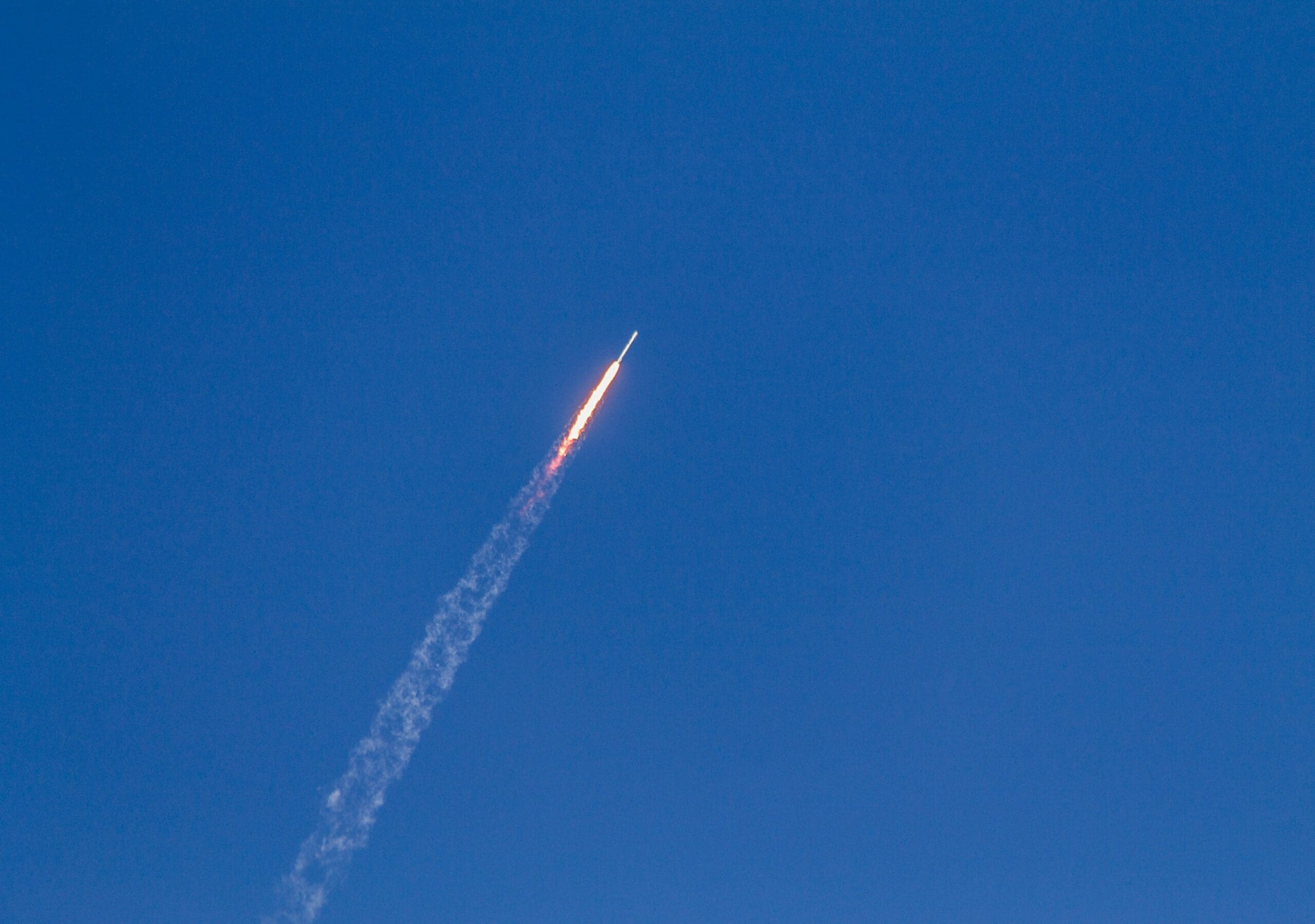
A recent multinational exercise around Hawaii provided exactly that challenge. On August 6th, 2026, an ARAV-B ballistic missile target was launched from the Pacific Missile Range Facility as part of Pacific Dragon 2026, giving participating ships and sensors a live target for missile-defense testing.
The missile is not an operational weapon. It is a two-stage target vehicle specifically designed to reproduce characteristics of ballistic missile threats so defensive systems can be evaluated without launching an actual combat missile.
The vehicle uses spin stabilization during flight, while its upper stage is powered by the commercially developed Oriole rocket motor. The latest launch marked the target’s 43rd successful mission, according to developer Kratos.
It belongs to a wider family of configurable targets. Different versions can generate different trajectories and flight characteristics, allowing test planners to select a profile that better represents the threat a particular defensive system is expected to face.
According to Interesting Engineering, that flexibility is important because missile defense involves more than determining whether a radar can see something in the sky. Systems must detect the target early enough, maintain an accurate track as it moves and provide useful information to the wider combat network.
One of the key platforms participating in the exercise was the destroyer USS Jack H. Lucas, equipped with the AN/SPY-6 radar and Aegis Baseline 10 combat system. Live targets provide an opportunity to test how those technologies respond to representative missile trajectories outside controlled laboratory environments.
The exercise also examined another increasingly important part of missile defense: sharing tracking information between different forces. Ships and sensors may observe the same threat from different locations, so combining their data into a common tactical picture can improve situational awareness and support coordinated responses.
The exercise ran from August 6th through August 15th, 2026, and included forces from several allied countries, combining live missile-target activity with networked defense scenarios.
The target technology itself is also expanding beyond traditional ballistic profiles. The company says configurations within the same broader family can support hypersonic testing at speeds above Mach 10, including low-altitude trajectories and longer-duration flights.
That capability reflects how the threat environment is changing. As missiles become faster and their trajectories more difficult to predict, defensive systems need targets capable of evolving alongside them.
The vehicle’s role is therefore deliberately straightforward: behave enough like a real incoming threat to force radars, combat systems and interconnected crews to prove that they can find it, follow it and respond correctly when the test moves from a computer screen into the sky.