This post is also available in:
 עברית (Hebrew)
Large-scale air combat exercises face a practical limitation: creating a realistic battlefield can require dozens of aircraft, support platforms and air-defense systems operating simultaneously. That is expensive, logistically demanding and sometimes impossible when forces want to rehearse capabilities that are still under development or tactics they would rather not reveal in a live exercise.
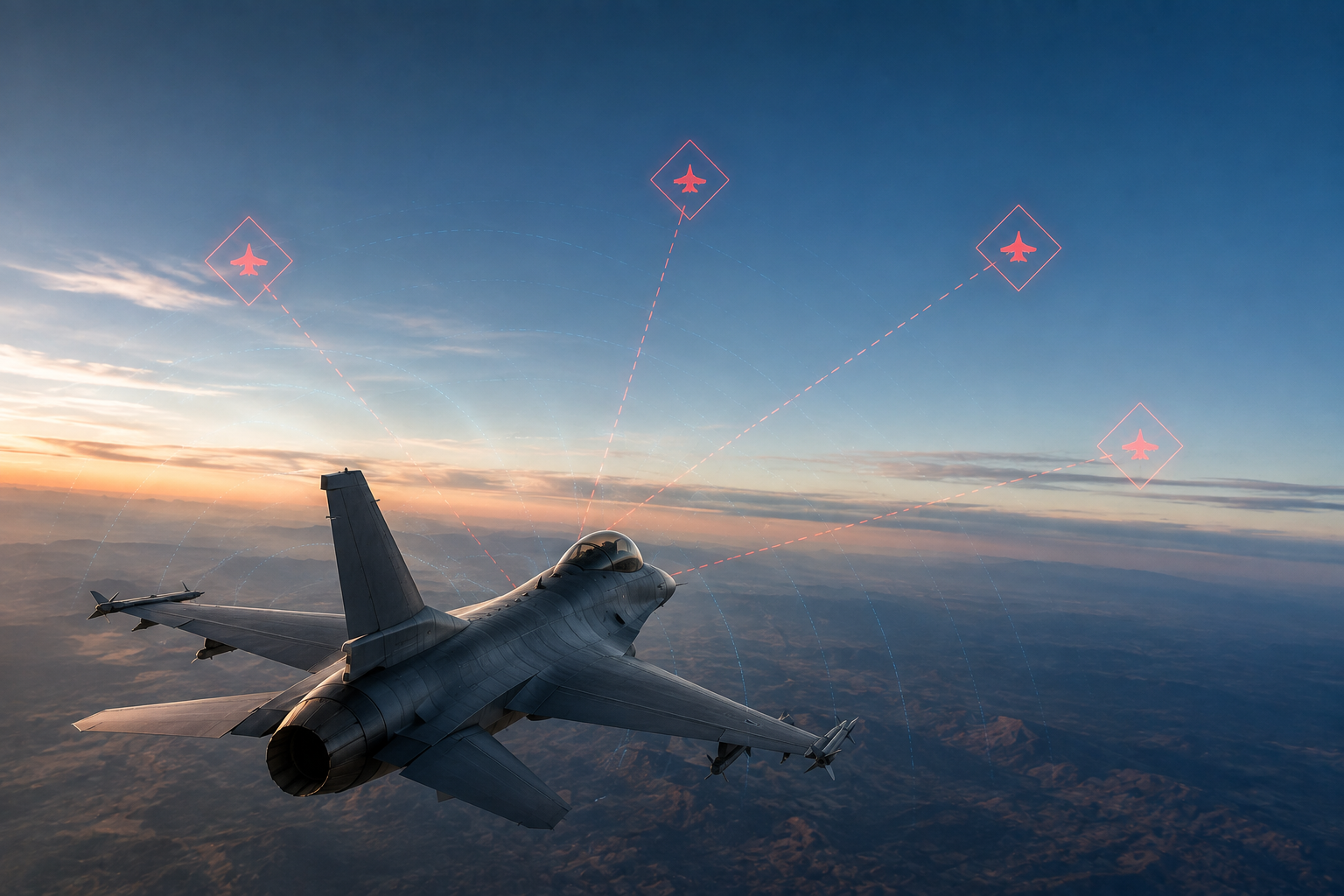
A training platform demonstrated during the German Air Force’s Timber Express 2026 exercise offers another approach. Airbus’ System Development Lab (SDL) can inject computer-generated friendly aircraft and enemy threats into an exercise involving real pilots and aircraft, creating a larger virtual battlespace without requiring every participant to physically take to the air.
The system uses a Live, Virtual, Constructive (LVC) framework. The “live” component consists of actual aircraft and crews, while the “virtual” element includes human operators participating through simulators. The system supplies the “constructive” layer: computer-generated entities whose behavior is simulated rather than directly controlled by a person.
During the exercise, the platform added synthetic allies and adversaries to training involving Eurofighter and Tornado aircraft. From the pilots’ perspective, these virtual entities can become part of the same tactical scenario, expanding the number and variety of threats they must manage.
According to NextGenDefense, the approach also makes it possible to introduce capabilities that may not yet exist in operational numbers. For example, the system can simulate Collaborative Combat Aircraft (CCA), which is an autonomous or semi-autonomous uncrewed aircraft expected to operate alongside crewed fighters. Forces can therefore experiment with how fighters might command or cooperate with future unmanned teammates before large fleets are available.
It is also intended as an engineering tool. Developers can construct Red-versus-Blue scenarios involving fighters, tankers, CCAs and ground-based air defenses, while extending the simulation across air, land, maritime, space and cyber domains.
Because the environment is software-based, engineers can run thousands of accelerated simulations rather than conducting each scenario as a full live exercise. Different aircraft configurations, weapons or tactics can be tested repeatedly to determine which combinations perform best under varying conditions.
Human participants can remain part of the process through physical role-player stations. Pilots and battle managers interact with computer-generated forces, allowing researchers to evaluate not only technical performance but also how people respond to complex situations.
For defense forces, this type of synthetic training offers another advantage: sensitive capabilities and tactics can be explored without exposing them during a large public or multinational flying exercise.
The objective is not to replace live training. Real aircraft remain necessary for validating how systems and crews perform outside simulation. Instead, LVC environments can make those exercises larger and more complex virtually, while reducing the number of expensive physical assets required.
As future air combat incorporates autonomous aircraft, cyber effects and increasingly networked forces, training the complete battlespace may become difficult to reproduce physically. Synthetic participants provide a way to build that complexity before every piece of it exists in the real world.