This post is also available in:
 עברית (Hebrew)
Unexploded bombs, naval mines, and artillery shells left behind by past conflicts remain a hazard in coastal waters around the world. Buried beneath sand or covered by marine growth, these munitions threaten shipping, coastal construction, divers, and marine ecosystems. Detecting them has traditionally required sonar surveys or divers, which are methods that can be slow, expensive, and less effective in shallow water.
Researchers have now demonstrated an airborne system that combines multispectral imaging, advanced image correction, and artificial intelligence to locate submerged unexploded ordnance with high accuracy.
Instead of searching from the water, the system operates from a drone flying above the surface. One of the biggest obstacles to aerial underwater imaging is the constant distortion created by waves, which bend light and blur objects on the seabed. To overcome this, the researchers used a technology known as Fluid Lensing, which compensates for wave-induced optical distortion and reconstructs clearer images of the seafloor in real time.
According to Interesting Engineering, the second component is an active multispectral imaging system called MiDAR. Rather than relying solely on natural sunlight, it projects multiple wavelengths of light into the water, improving visibility beneath the surface and revealing details that conventional cameras may miss.
The resulting imagery is then processed by a machine-learning model trained to distinguish unexploded munitions from natural objects such as rocks, coral, and marine debris. Instead of identifying color alone, the AI analyzes geometric characteristics and other visual features associated with military ordnance.
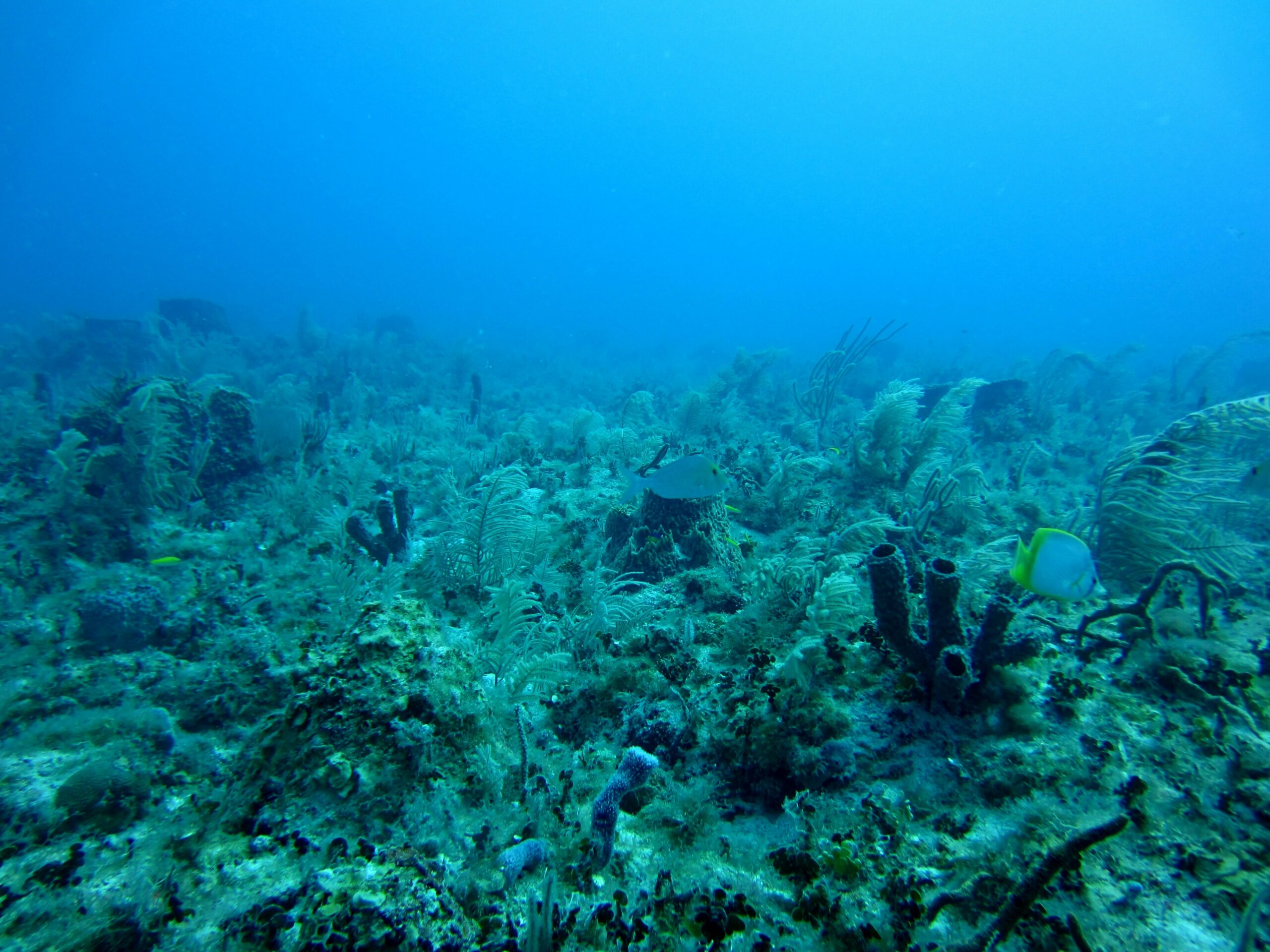
To evaluate the system, researchers placed inert test munitions and decoy objects across the seabed. They also allowed biological growth and sediment to accumulate over the targets to simulate the appearance of long-submerged explosives. Despite the additional camouflage, the AI successfully identified all of the test munitions during the trials.
From a defense and homeland security perspective, the technology could support explosive ordnance disposal operations, coastal security, naval route clearance, and post-conflict remediation. Airborne detection also reduces the need to place divers in potentially hazardous environments while allowing large stretches of coastline to be surveyed more rapidly.
Although further testing in different marine environments is planned, the demonstration highlights how combining drone platforms, multispectral sensing, image-processing algorithms, and artificial intelligence can significantly improve the detection of underwater explosive hazards that have remained hidden for decades.
The research was published here.