This post is also available in:
 עברית (Hebrew)
Small drones have become one of the fastest-growing threats on the modern battlefield. Whether used for reconnaissance, target acquisition, or carrying explosive payloads, they can appear with little warning and force ground units to react within seconds. Engaging these fast-moving targets becomes even more difficult when the defending vehicle is also in motion, as both the target and the firing platform are constantly changing position.
A newly developed fire-control system (“Gunslinger”) aims to solve that problem by allowing military vehicles to detect, track, and engage drones without coming to a stop.
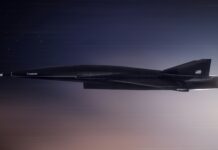
The capability combines advanced targeting software with a remotely operated weapon station mounted on the vehicle. Originally developed for a reconnaissance aircraft program, the fire-control technology has been adapted for ground-based counter-drone missions, enabling vehicles to maintain accurate targeting while driving.
According to Interesting Engineering, at the core of the system are algorithms that continuously process data from onboard sensors to calculate an updated firing solution. Rather than relying on a fixed aim point, the software constantly adjusts for the movement of both the vehicle and the drone, helping the weapon remain locked onto its target throughout the engagement.
Recent testing demonstrated the system’s ability to successfully engage small unmanned aerial systems while the host vehicle remained in motion. The evaluations also provided engineers with operational data that will be used to improve future versions of the software.
Another important aspect of the design is its modular open-system architecture. Instead of being tied to a single vehicle or weapon platform, the software can be integrated into different military systems and upgraded more easily as new sensors, algorithms, or counter-drone technologies become available.
The improved targeting accuracy may also reduce ammunition consumption by increasing the likelihood of hitting aerial targets with fewer rounds. As inexpensive drones continue to proliferate, improving engagement efficiency has become an important objective for military planners.
From a defense perspective, mobile counter-drone capabilities are becoming increasingly important. Modern forces often operate in environments, where stopping to engage an aerial threat may expose vehicles to additional risks. Systems capable of tracking and defeating drones while maneuvering improve survivability and help maintain operational momentum.
Engineers plan to continue testing the software against faster drones and at higher vehicle speeds, further refining its performance as militaries adapt to the growing challenge posed by unmanned aerial systems.