This post is also available in:
 עברית (Hebrew)
One of the less visible challenges in modern defense programs is manufacturing. Even when advanced weapons are fully designed and tested, production bottlenecks can slow deployment, increase costs, and strain supply chains. Composite structures used in missiles and aerospace systems are particularly demanding, often requiring complex manufacturing processes that can limit production speed and consistency.
A new effort is exploring whether continuous fiber 3D printing can help solve those challenges.
The project focuses on a manufacturing technology known as CF3D, or Continuous Fiber 3D printing. Unlike conventional additive manufacturing methods that build parts layer by layer using standard materials, CF3D integrates continuous fiber reinforcement directly into the printing process. This allows the production of lightweight composite structures with mechanical properties suitable for high-performance aerospace applications.
The technology is now being evaluated for the production of missile components such as nose cones, fins, leading edges, and bulkheads. These structures must withstand significant aerodynamic, thermal, and mechanical loads while maintaining strict weight requirements.
According to Interesting Engineering, one of the distinguishing features of the process is automated fiber steering. During manufacturing, continuous fibers can be positioned along specific load paths inside the component rather than following fixed geometric patterns. This enables engineers to optimize strength and stiffness while minimizing material usage.
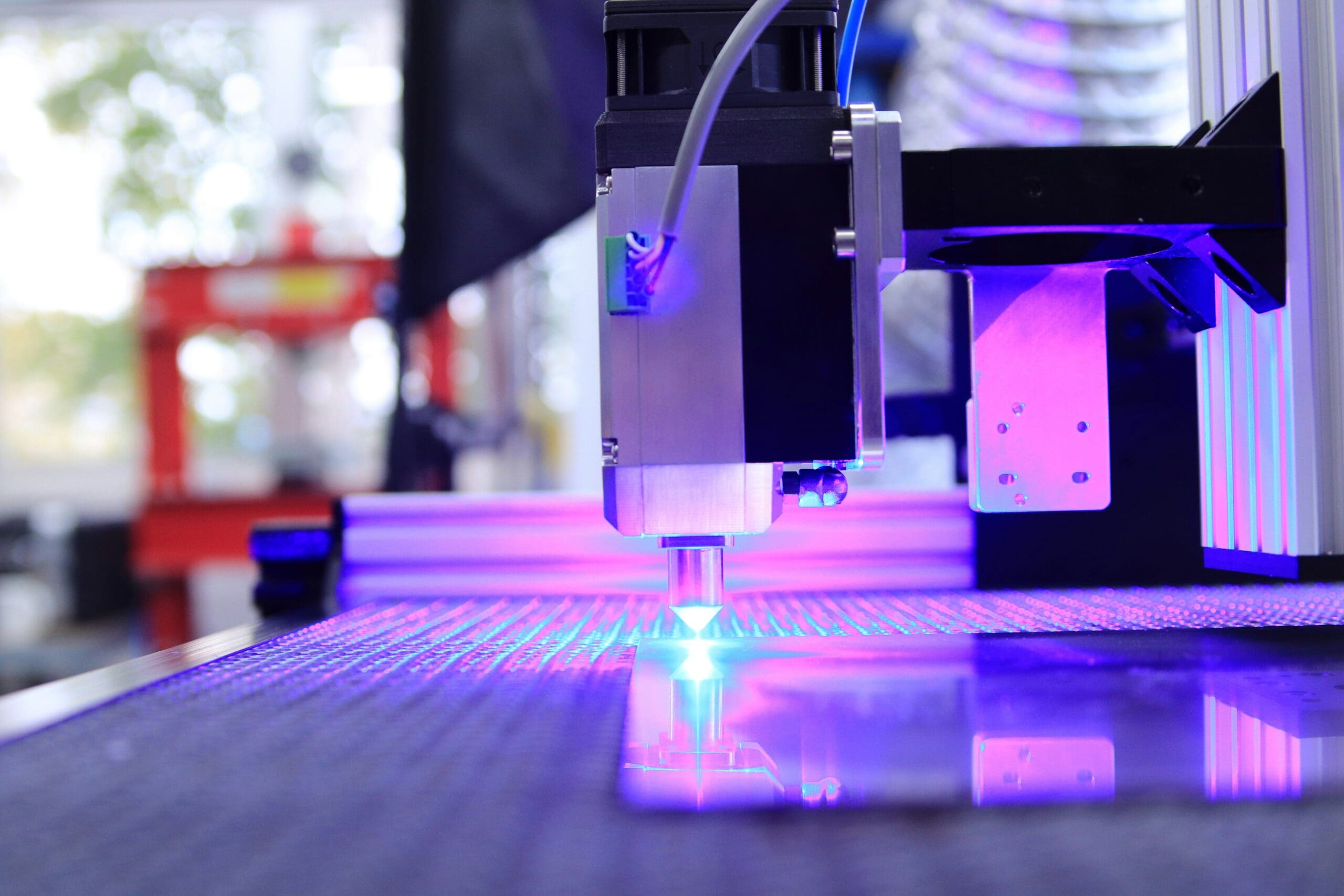
The process also incorporates rapid ultraviolet curing and digital manufacturing techniques, allowing complex composite parts to be produced with fewer production steps than traditional methods. Researchers hope this could improve manufacturing throughput while reducing variability between parts.
From a defense perspective, the technology is being studied as a potential way to support larger-scale production of precision-guided munitions and aerospace systems. Faster production rates and more resilient supply chains have become increasingly important as defense organizations seek to expand manufacturing capacity for advanced weapons and aircraft.
Beyond missile applications, the same technology is also being evaluated for next-generation aerospace structures, including lightweight fuselage components and load-bearing composite assemblies. By combining fiber steering, topology optimization, and additive manufacturing, engineers are exploring ways to create stronger structures while reducing overall weight.
The broader goal is not simply to produce individual components faster. It is to establish a scalable manufacturing process capable of supporting future aerospace and defense programs while maintaining the performance standards required for operational systems.