

This post is also available in:
 עברית (Hebrew)
Modern military aircraft operate in increasingly contested airspace. Portable surface-to-air missiles, radar-guided threats, and improvised munitions pose constant risks to rotary- and fixed-wing platforms alike. For crews flying transport, reconnaissance, or close-support missions, early detection of incoming threats can mean the difference between survival and loss.
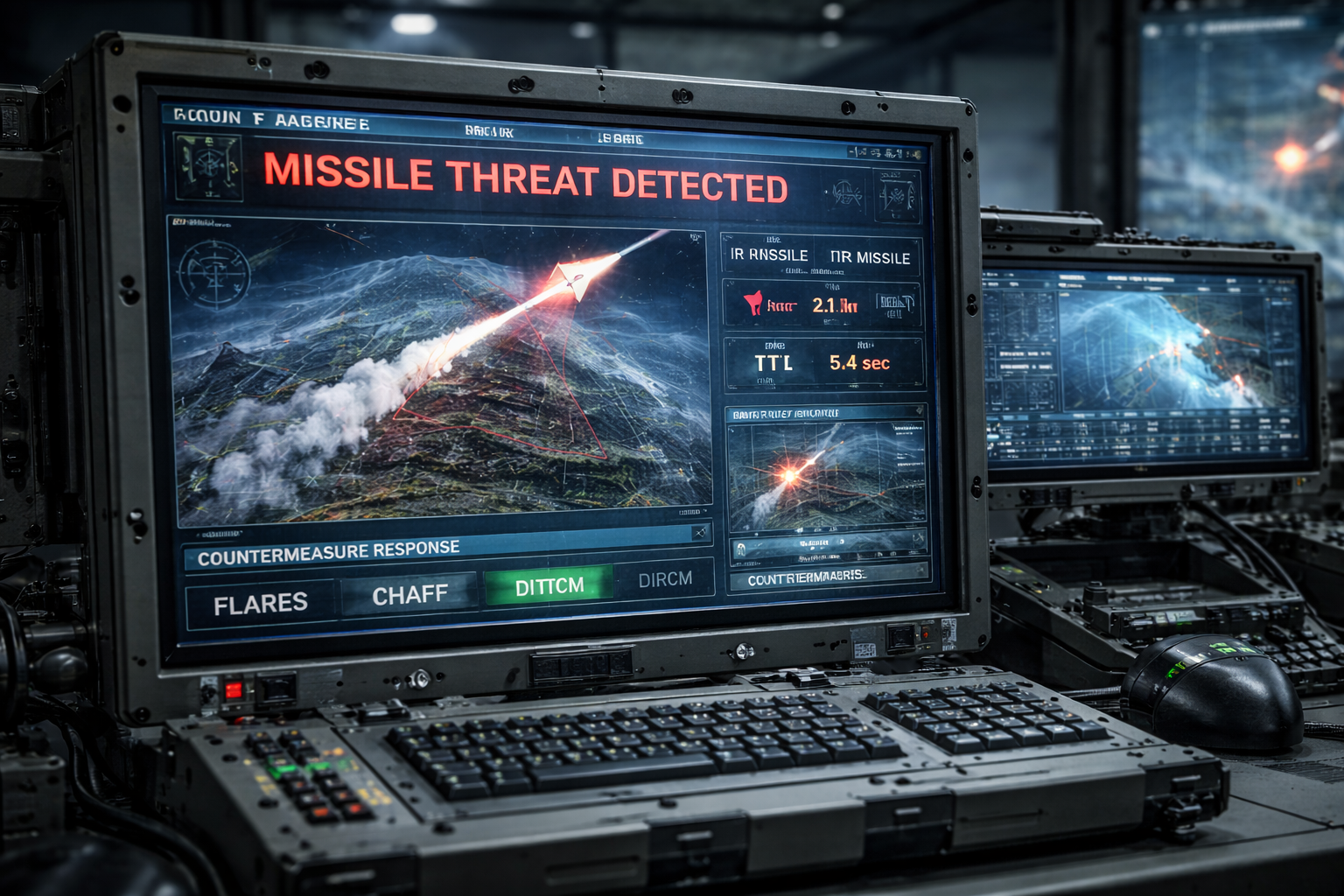
A widely deployed missile warning system is now being integrated into additional aircraft fleets under a new round of contracts. The Common Missile Warning System (CMWS), designated as AN/AAR-57, is designed to detect infrared- and radio-frequency-guided missiles, as well as unguided projectiles and other hostile fire. Once a threat is identified, the system automatically alerts the crew and cues countermeasures in real time.
The core function of the system is rapid threat recognition. Sensors monitor the surrounding environment for missile plumes and signatures across relevant portions of the electromagnetic spectrum. According to Interesting Engineering, when a launch is detected, the system can trigger flares, chaff, radio-frequency decoys, or direct infrared countermeasures (DIRCM), depending on the aircraft’s defensive configuration. This automated response reduces reaction time and eases pilot workload during high-stress scenarios.
One of the system’s key attributes is its adaptability. Algorithms can be updated to address evolving threat profiles, allowing the platform to remain effective as adversaries introduce new missile technologies. The warning system is also compatible with a wide range of aircraft types and survivability equipment, functioning as a centralized processing hub within an integrated defensive suite.
Rather than relying on a single countermeasure, modern aircraft integrate detection, warning, and response systems into a coordinated architecture. Missile warning is the first step in that chain, providing the data required to activate protective measures. With more than 4 million combat flight hours recorded and over 3,000 units delivered, the system has been fielded across dozens of aircraft types worldwide.
Ease of maintenance also supports operational readiness. Line-replaceable units can be swapped within minutes on the flight line without specialized tools, minimizing downtime. The system includes data recording features for post-mission analysis, helping operators refine tactics and improve future responses.
As missile threats continue to proliferate, equipping aircraft with reliable, upgradeable warning systems remains a critical component of platform survivability. Early detection and rapid countermeasure deployment are central to keeping crews and aircraft protected in complex operational environments.























