This post is also available in:
 עברית (Hebrew)
Monitoring vast maritime areas has become one of the harder problems for modern air forces. Surface vessels can blend into sea clutter, operate far from shore, and change course long before they are detected. For long-range strike aircraft, the ability to find, identify, and track targets at sea often determines whether a mission succeeds at all.
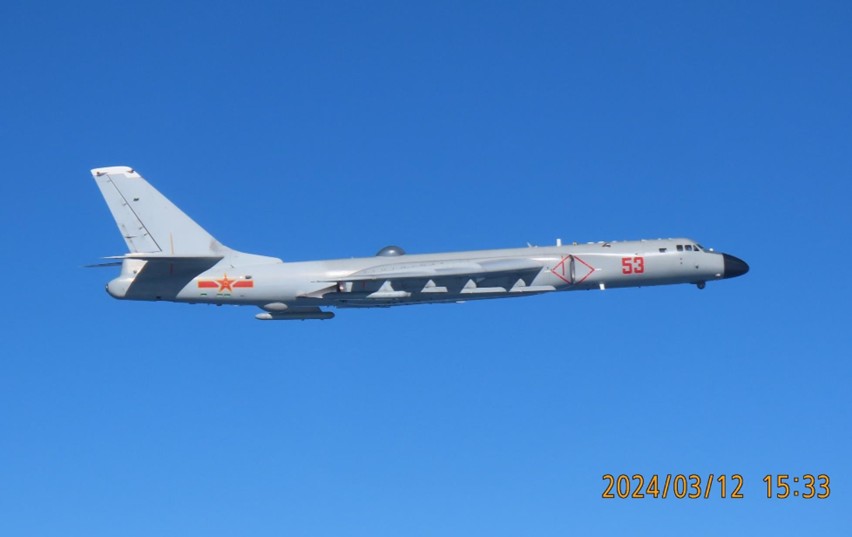
Recent footage aired on Chinese state television pointed to a notable development in how this challenge is being addressed. The H-6J maritime strike bomber has begun operating with two external reconnaissance pods mounted under its wings, a configuration that significantly expands the aircraft’s sensing range over open water. The change suggests a shift toward earlier and wider-area target detection, beyond what the bomber’s internal radar can provide on its own.
According to Interesting Engineering, the pods effectively extend the aircraft’s field of view, allowing it to locate maritime targets at longer distances and across a broader swath of ocean. For a platform intended to launch long-range anti-ship missiles, this capability is critical. Detecting a vessel hundreds of kilometers away provides more time to plan an attack, select weapons, and launch from outside the reach of ship-based air defenses.
Beyond basic detection, the external sensors are believed to support more precise target cueing. This helps guide missiles toward moving ships, particularly slower or lower-signature targets that are harder to track with radar alone. Some assessments also point to potential electronic intelligence or electronic warfare functions, adding another layer of flexibility to the system.
The bomber itself is designed primarily for maritime strike missions. It can carry long-range supersonic anti-ship cruise missiles and has a significantly larger payload than earlier variants. Its extended combat radius allows it to operate far from base while still supporting sustained missions over open seas. Additional wing hardpoints make it possible to carry a mix of weapons and sensors in a single sortie.
From a defense perspective, the upgrade highlights the growing importance of integrated surveillance and strike capabilities. Long-range bombers are no longer just missile carriers; they are becoming sensor platforms that feed targeting data into wider naval and air networks. In peacetime, this enables persistent maritime monitoring. In conflict, it shortens the gap between detection and engagement.
The addition of reconnaissance pods reflects a broader trend in air power: improving situational awareness as a foundation for long-range precision strikes, especially in contested maritime environments.