This post is also available in:
 עברית (Hebrew)
For decades, mobile phones have relied on a fixed network identifier that quietly follows users wherever they go. Known as the International Mobile Subscriber Identity, or IMSI, this 15-digit number is stored on a SIM card and used by cellular networks to authenticate devices and manage connections between cell towers. While essential for basic service, a static IMSI also allows long-term tracking of location, movement patterns, and usage—often without the user’s awareness.
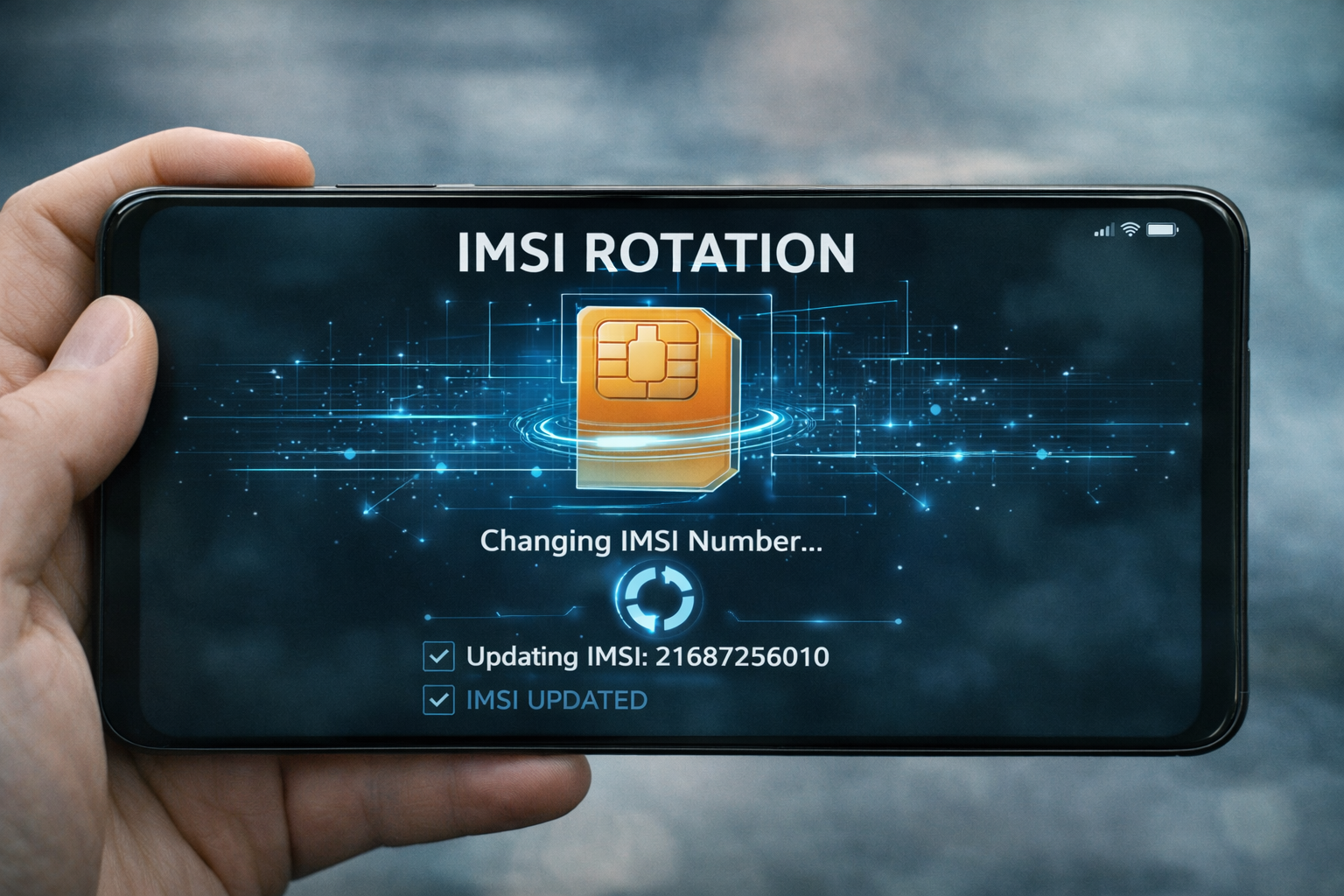
A newly expanded mobile feature aims to change that model by making the identifier itself temporary. Phones on this service, provided by Cape, now automatically switch their IMSI every 24 hours, preventing networks and third parties from linking activity over time to a single, persistent identity. Instead of presenting the same identifier day after day, the device appears as a different subscriber on the network, breaking the continuity that enables profiling and location reconstruction.
According to CyberNews, the technical approach relies on rotating IMSIs drawn from a large, randomly assigned pool. Each device receives a set of identifiers for the week, which are then returned to the general pool and replaced with new ones. According to the service, identifiers are not reused in consecutive weeks and are selected randomly, making future assignments unpredictable. The system also allows users to trigger an immediate change through an app if they feel exposed in a sensitive situation.
Static mobile identifiers have long been exploited by surveillance tools such as IMSI catchers—fake base stations that prompt phones to reveal their identity. These tools have been used to monitor movements, intercept communications, or map the presence of devices in a given area. Regularly changing the identifier complicates such techniques by limiting how long any captured IMSI remains valid.
The risks associated with fixed IMSIs are well documented. Carriers can associate them with detailed behavioral records, governments can request logs tied to a specific identifier, and attackers who obtain an IMSI can attempt signaling-network exploits. In one widely cited case, historical IMSI records were used to reconstruct a user’s movements with near-minute precision, illustrating how much information accumulates over time.
Previously, IMSI rotation required manual setup and was limited to specialized users. The latest rollout makes daily rotation automatic by default on supported iPhone and Android models, removing the need for configuration. The rotation interval was chosen to disrupt persistent tracking without causing unusual network behavior, according to the service.
By turning a long-fixed network identifier into a moving target, IMSI rotation represents a structural change in how mobile privacy is handled—shifting control away from static identifiers and toward short-lived, randomized identities that are harder to exploit.