This post is also available in:
 עברית (Hebrew)
Airspace security has reached a frustrating paradox. Drones are easier than ever to detect, yet safely stopping them remains a persistent challenge. Airports across Europe and North America continue to shut down for hours after drone sightings, disrupting flights and endangering public confidence. Despite years of advances in sensors and artificial intelligence, the gap between identifying a drone and neutralizing it without collateral damage remains largely unresolved.
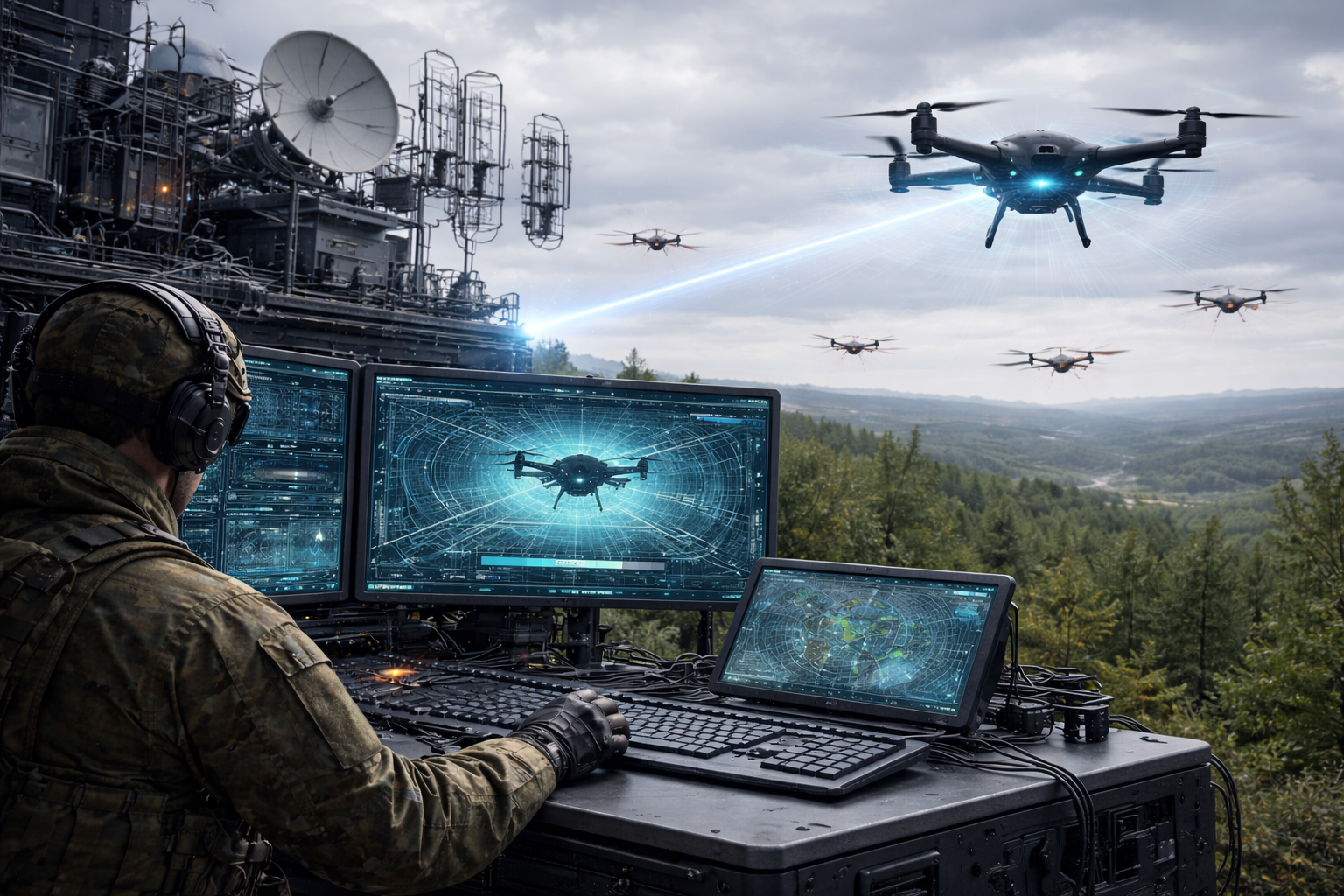
Artificial intelligence has become a cornerstone of modern counter-drone systems. AI excels at fusing data from radar, RF sensors, cameras, and acoustic arrays, allowing operators to spot anomalies quickly and even predict flight paths. But detection is only the first step. Once a drone is identified, the available responses are often blunt instruments. Shooting it down risks debris falling onto runways or crowds. Jamming radio signals can interfere with navigation systems, emergency communications, and even friendly drones operating nearby. In sensitive environments, these options can create risks greater than the original threat.
According to Forbes, a different approach is gaining attention: cyber-based drone control. Instead of destroying the aircraft or flooding the spectrum with interference, RF-cyber systems analyze the drone’s control link. When conditions and legal authority allow, the system can interrupt the operator’s commands and take control of the drone itself. The aircraft can then be guided to a predefined landing area, neutralizing the threat without explosions, signal disruption, or loss of evidence.
The operational benefit is continuity. Airports, ports, and critical sites can continue functioning while a rogue drone is dealt with discreetly. The drone remains intact, allowing forensic analysis or intelligence exploitation, and surrounding systems remain unaffected. Compared to kinetic interceptors—which can cost tens of thousands of dollars per engagement—or jammers that face heavy regulatory restrictions, cyber takeover offers a lower-cost and less disruptive option.
From a defense and homeland security perspective, this distinction matters. Most real-world drone incidents involve small, commercial or improvised platforms rather than military-grade systems. Cyber control is particularly effective against these widely available drones, which account for the majority of disruptions to civilian airspace and domestic security sites. Against larger or radio-silent platforms, other layers of defense are still required, reinforcing the need for a multi-layered approach.
Procurement trends reflect this shift. Agencies are moving away from rigid, hardware-centric systems toward software-defined solutions that can adapt as drone technology evolves. AI remains vital, but increasingly as a decision-support tool rather than the final answer. The real objective is closing the gap between detection and safe mitigation.
The lesson from years of repeated airport shutdowns is clear: seeing the drone is not enough. Effective counter-drone defense depends on having response options that are precise, proportionate, and operationally practical. AI can point out the threat, but cyber control may be what finally allows authorities to act without causing more damage than the drone itself.