

This post is also available in:
 עברית (Hebrew)
Modern warships face a growing challenge: the number of threats they must engage is increasing faster than the space available onboard. Missile launch cells, interceptor inventories, drones, and surveillance systems all compete for limited deck and internal capacity. Expanding firepower traditionally requires building larger ships or deploying additional vessels, both of which can be costly and time-consuming.
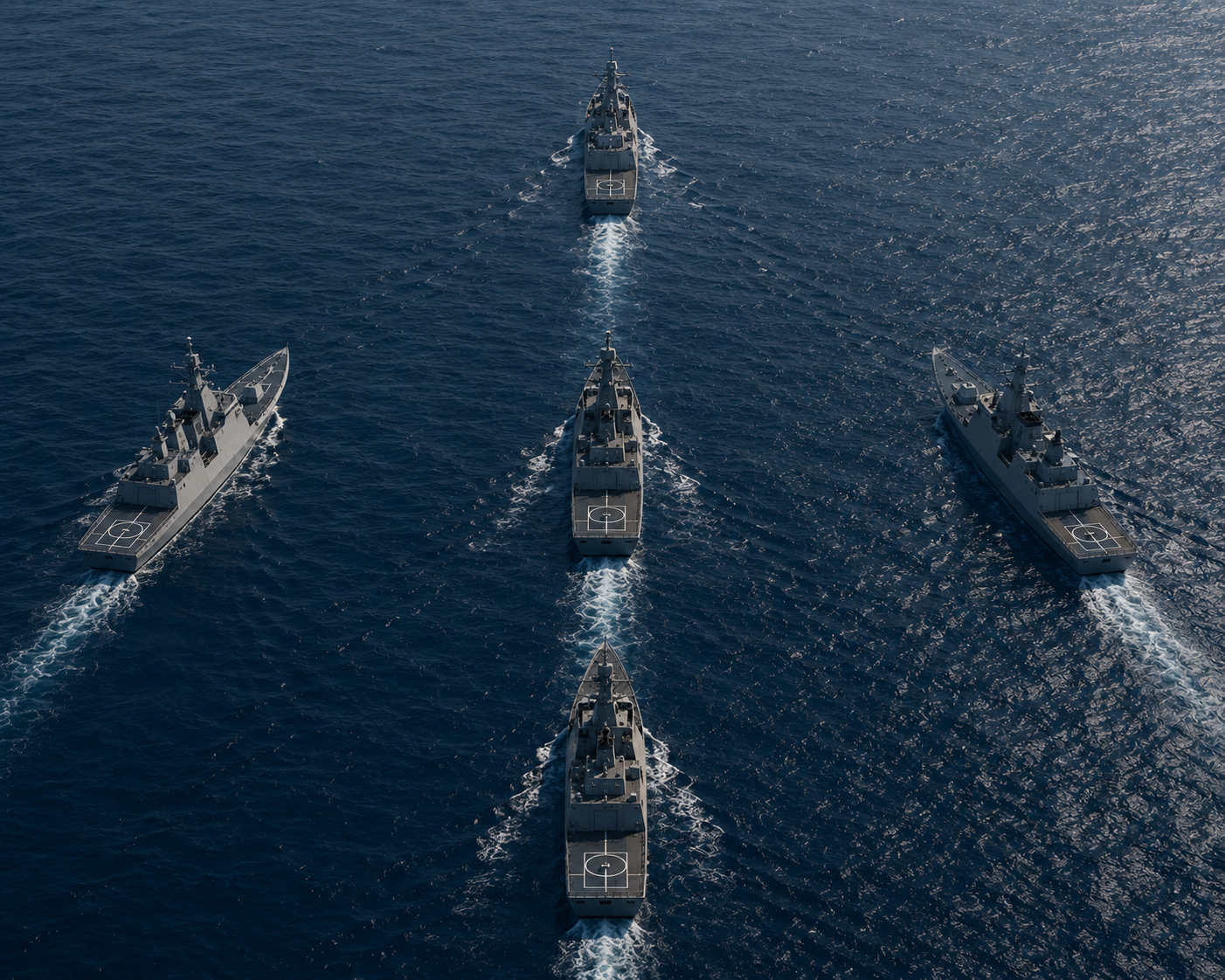
A new Israeli naval concept, called DIAMOND, aims to address that limitation by extending a warship’s combat capabilities beyond its own hull. The system connects smaller support vessels directly to a frigate’s combat architecture, allowing them to operate as remote launch platforms controlled through the mothership’s sensors and command systems.
The approach is based on a distributed force structure in which small “wing-ships” function as extensions of a larger combat vessel. Through modular systems installed onboard these auxiliary platforms, the frigate can share radar tracks, targeting information, and fire-control data with vessels operating at a distance. According to NextGenDefense, from the operator’s perspective, the remote vessels appear as integrated components of the ship’s own combat system.
This effectively creates additional launch capacity without requiring major modifications to the frigate itself. A commander can position wing-ships in different locations while maintaining centralized control over their weapons and sensors.
The system supports a wide range of payloads. These include loitering munitions such as Harop, Harpy, and Mini-Harpy; long-range strike weapons including Blue Spear cruise missiles and LORA ballistic missiles; BARAK MX air-defense interceptors; and counter-drone systems. Depending on mission requirements, the vessels can be configured for offensive strike operations, air defense, or layered protection against unmanned threats.
From a defense perspective, the concept reflects a broader shift from platform-centric naval operations toward networked and distributed combat architectures. Instead of concentrating all capabilities on a single vessel, navies are increasingly exploring ways to spread sensors and weapons across multiple connected platforms. This can increase survivability, expand operational reach, and complicate enemy targeting efforts.
The concept also offers a potential alternative to acquiring additional major surface combatants. By linking smaller vessels into an existing naval network, commanders gain access to additional missile inventories, loitering munitions, and defensive systems while extending the operational footprint of a single frigate.
As naval warfare becomes increasingly driven by networking and distributed operations, systems that transform support vessels into integrated combat assets may play a growing role in future fleet design.























