This post is also available in:
 עברית (Hebrew)
Modern air operations depend heavily on airborne early warning aircraft to detect threats, coordinate forces, and manage complex engagements across large areas. But many of the systems currently performing these missions were designed decades ago and are increasingly challenged by modern electronic warfare environments, long-range missiles, and rapidly evolving sensor networks.
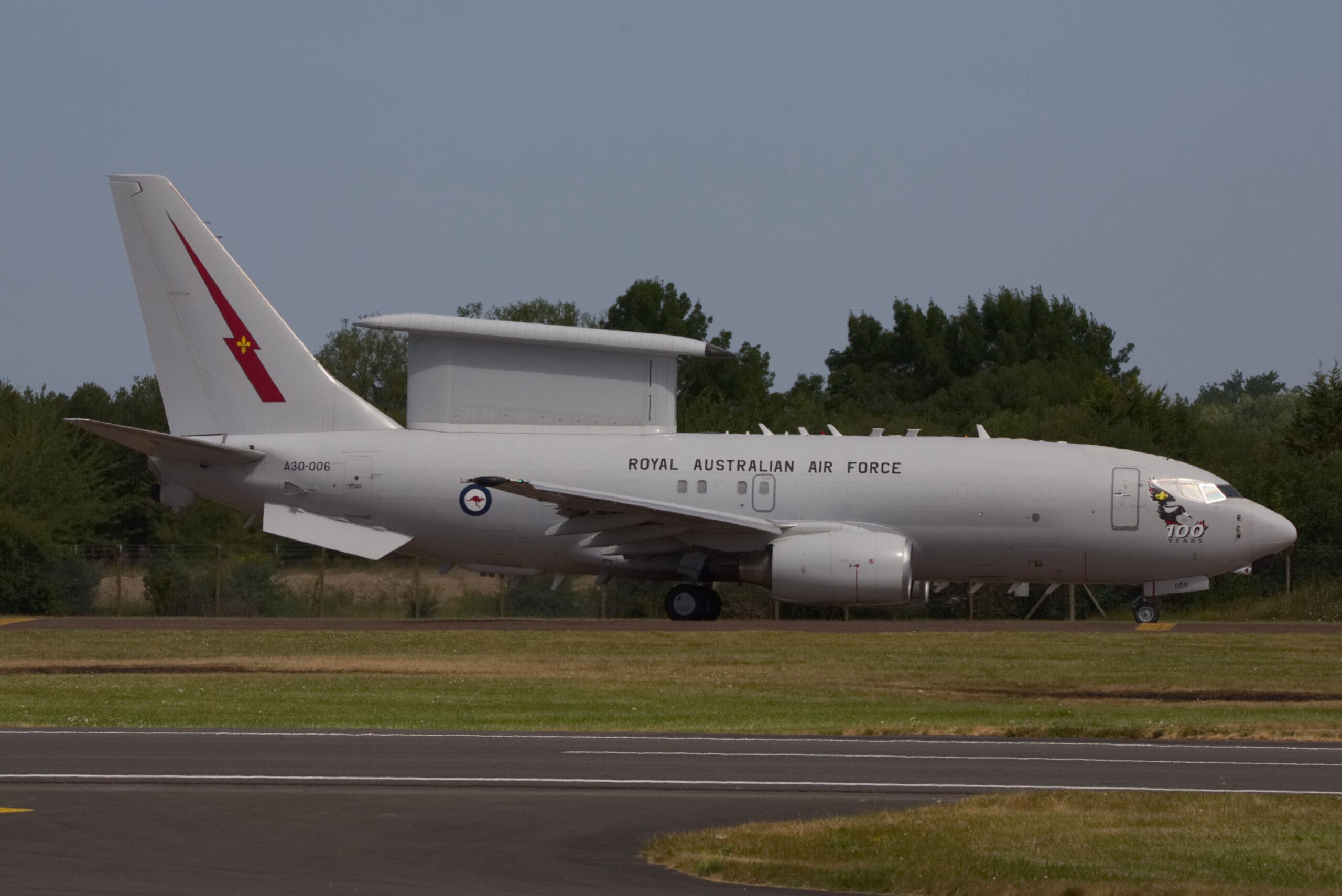
To address these limitations, a new generation of airborne command-and-control aircraft (Boeing E-7A “Wedgetail”) is being introduced to replace aging platforms. The aircraft combines advanced radar technology with networked battle management capabilities, allowing it to function not only as a surveillance platform, but also as a central coordination node for joint operations.
According to Interesting Engineering, at the core of the system is an electronically scanned radar mounted in a fixed “top hat” configuration rather than the rotating dome traditionally associated with airborne warning aircraft. Because the radar scans electronically instead of mechanically, it can track more targets simultaneously, react faster to emerging threats, and improve detection of low-flying aircraft and cruise missiles. The design also reduces mechanical complexity, improving reliability and maintainability over time.
Beyond radar performance, the aircraft is designed to support multi-domain operations by linking air, land, sea, space, and cyber assets into a shared operational picture. Instead of simply detecting threats and relaying information, it can distribute targeting and tracking data across multiple platforms in real time. This allows different systems to respond simultaneously and coordinate more effectively during fast-moving operations.
The aircraft has also been adapted for more contested environments. Enhanced electronic warfare resilience and upgraded secure communications are intended to improve survivability against jamming and disruption attempts. Its modular architecture further allows future hardware and software upgrades without requiring a complete redesign, extending operational relevance over time.
From a defense perspective, airborne early warning systems remain essential for maintaining situational awareness and coordinating large-scale operations. As modern threats become faster and more distributed, platforms capable of integrating and managing vast amounts of data in real time are becoming increasingly important.
Although the planned fleet size is relatively limited, each aircraft is capable of monitoring large operational areas and coordinating multiple assets simultaneously. The move reflects a broader shift toward fewer but more capable network-centric systems designed to operate as force multipliers in modern warfare.