This post is also available in:
 עברית (Hebrew)
As vehicles grow more connected, their internal systems depend on a constant flow of data from sensors monitoring everything from temperature and tire pressure to position and acceleration. This connectivity improves efficiency and automates decision-making, but it also creates a vulnerability: manipulated or falsified data injected into these networks can cause dangerous behavior or disrupt mission-critical operations. For autonomous or semi-autonomous defense vehicles, even a brief interruption can compromise the safety of operators or the success of a mission.
A new AI-powered intrusion detection system, known as LFT-IDS, is designed to solve this problem by identifying and blocking malicious data before it reaches a vehicle’s control systems. Instead of relying on static rules or known attack signatures, the system uses machine learning to learn “normal” sensor behavior at a granular level. By understanding typical patterns in temperature readings, pressure changes, velocity, and location inputs, the tool can detect when incoming data deviates from expected norms.
According to NextGenDefense, the core issue the system addresses is that traditional cybersecurity tools struggle to recognize new, previously unseen attack types. Attackers increasingly use tactics such as label flipping—corrupting sensor outputs so that otherwise legitimate data becomes misleading. By applying anomaly detection across integrated sensor streams, the system isolates suspicious inputs and prevents them from influencing the system. It acts as a network-level filter for cloud-connected platforms, stopping harmful signals before they propagate deeper into the architecture.
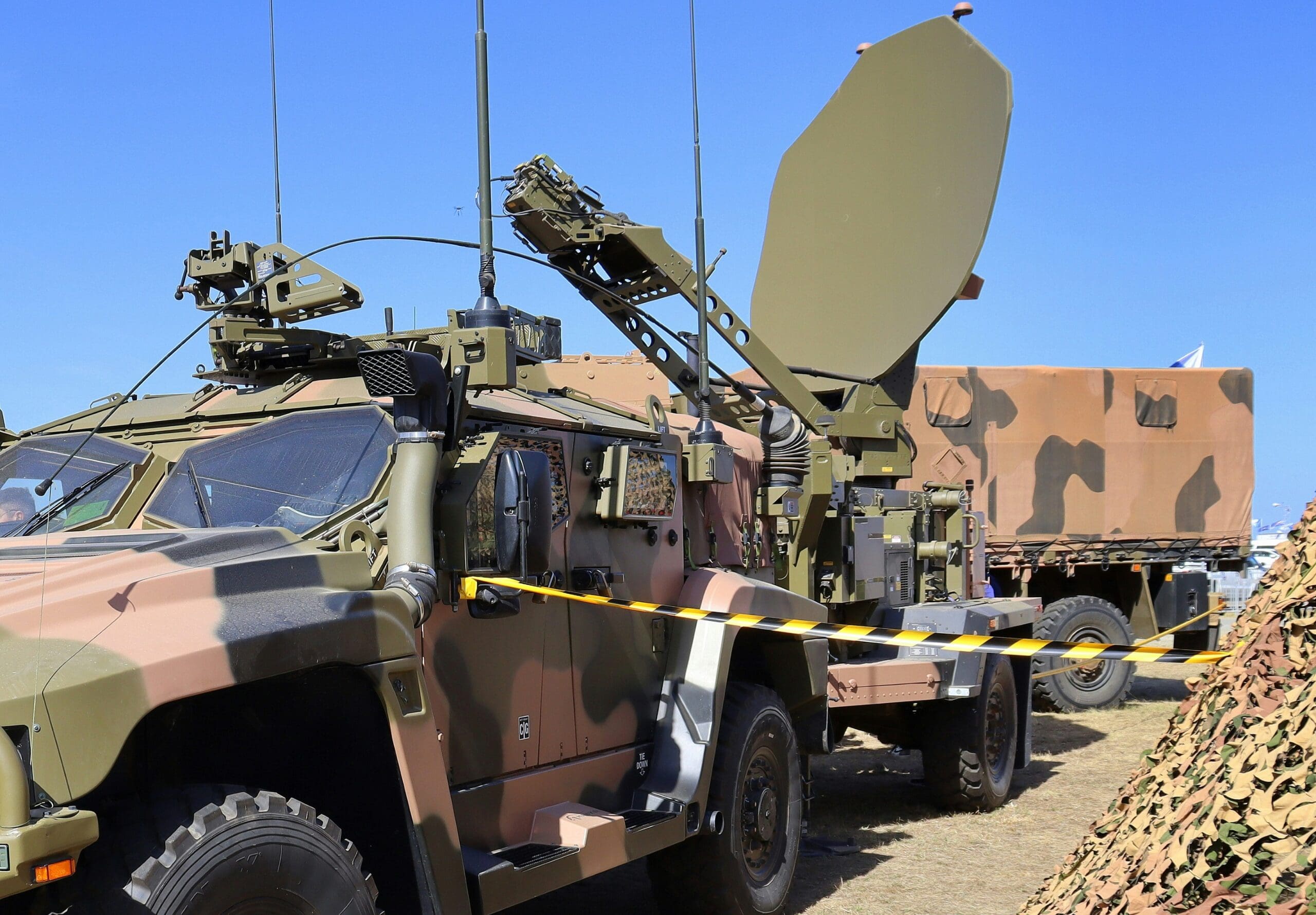
Armored vehicles, logistics convoys, unmanned ground systems, and battlefield support vehicles all rely on sensor fusion for navigation, predictive maintenance, and coordination with wider tactical networks. Any tampering with these data channels could hinder movement, cause mechanical failures, or mislead autonomous systems operating in contested environments. An adaptive intrusion-detection system provides an added layer of resilience against attempts to manipulate battlefield information streams.
Beyond defense, the system has relevance for public transportation fleets, emergency response vehicles, and industrial robotics—any environment where connected platforms rely on accurate sensor data. The research behind the system, carried out by teams from the University of Portsmouth, the University of Reading, and Italy’s Consiglio Nazionale delle Ricerche, demonstrates how AI-enabled security tools can evolve alongside the growing complexity of connected mobility systems.
By learning how sensors should behave—and shutting down what doesn’t belong—the technology provides a proactive approach to safeguarding next-generation vehicles from subtle but potentially harmful cyber intrusions.