This post is also available in:
 עברית (Hebrew)
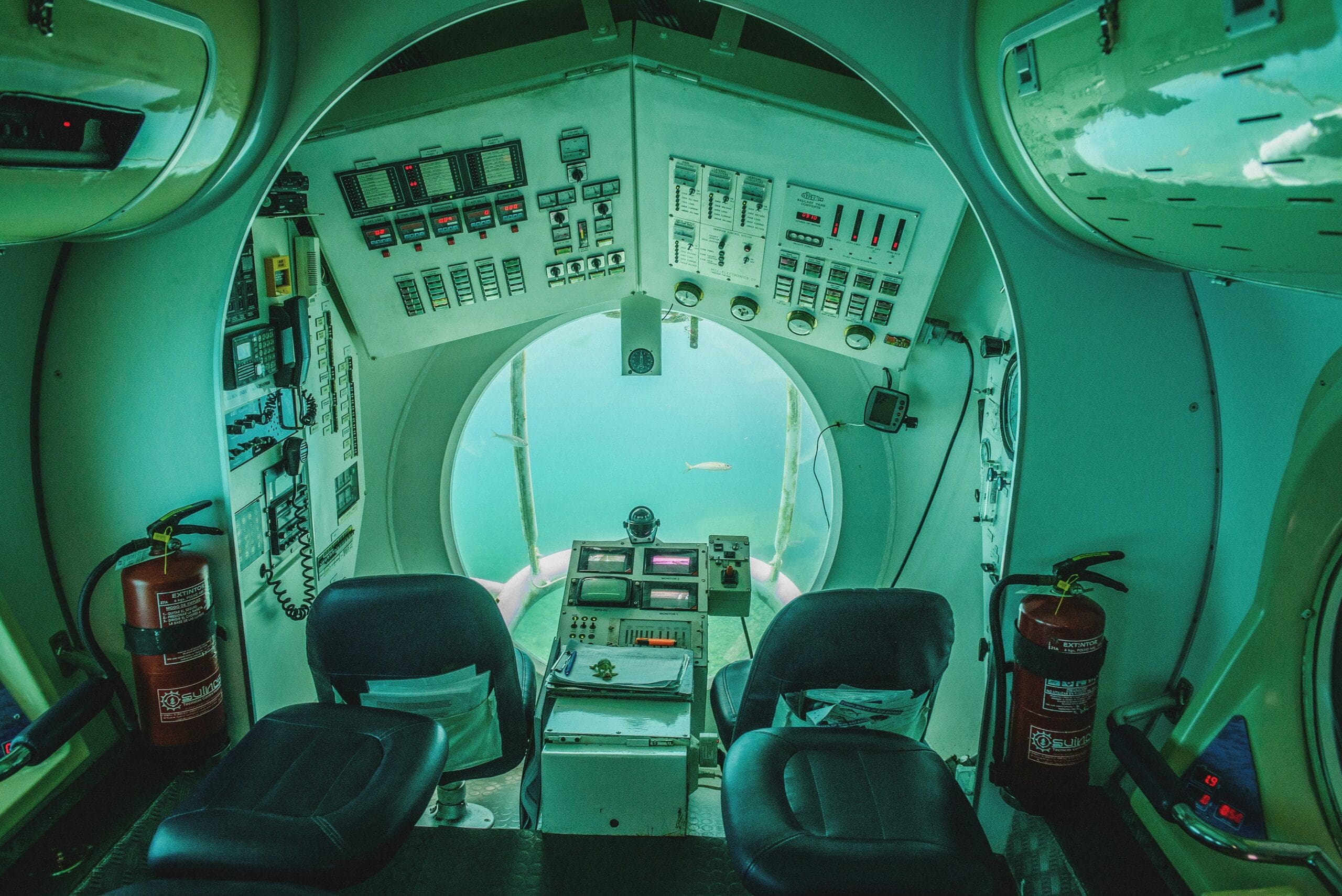
Modern submarines rely on increasingly complex control systems to maneuver safely in three dimensions, manage propulsion, and coordinate onboard sensors. As underwater missions expand to include longer deployments, tighter navigation in littoral zones, and integration with advanced weapons, these consoles have become strategic components rather than simple operator interfaces. A new steering console now entering production is designed to meet those demands for the next generation of attack submarines.
The system is being built for a 3,500-ton diesel-electric submarine class and addresses a central challenge: merging navigation, propulsion, and vessel control into a unified, highly reliable platform. Submarines must maintain precise depth, angle, and speed control under variable sea conditions while processing vast streams of sensor data. Traditional control stations struggle to handle this growing complexity efficiently.
According to Interesting Engineernig, the new steering console is built around Opsys, an integrated computing core designed to coordinate all movement-related functions. By consolidating control logic, propulsion management, and navigational inputs, the console improves operator awareness and reduces latency between command input and system response. This allows for smoother handling during demanding maneuvers such as low-speed dock approaches, rapid depth changes, or evasive actions during hostile encounters.
Technically, each unit requires nearly two years of coordinated work across electronics, mechanical systems, software, and integration teams. Interfaces with the submarine’s broader combat and sensor suites must be validated to ensure that the console can support dynamic underwater operations without disruption. Previous units have already undergone at-sea acceptance, demonstrating robustness under operational loads.
An advanced control console is more than a cockpit upgrade; by improving the submarine’s maneuvering precision and system integration, it enhances mission survivability in contested waters. Unified control also supports autonomous features and future combat-system evolutions, contributing to long-term naval independence and sustainment.
The console’s modular architecture is designed for decades-long service life, allowing upgrades as propulsion, sonar, and mission-system technologies evolve. With numerous pilot stations already deployed on submarines worldwide, the architecture has proven adaptable to varying hull designs and operational doctrines.
As undersea competition intensifies, improvements to core submarine handling systems will play a critical role in ensuring navies can operate quietly, safely, and effectively across the deep-sea battlespace.