This post is also available in:
 עברית (Hebrew)
Modern air-defense networks increasingly rely on multiple radars spread across different locations. Combining their observations can create a more accurate picture of aircraft, missiles and drones than any single sensor can provide. But there is an important requirement: every radar needs to agree precisely on time. If that synchronization is disrupted, their measurements become harder to combine and tracking performance can deteriorate.
That dependence creates a vulnerability when timing is obtained from GPS or other Global Navigation Satellite Systems (GNSS), whose signals can be jammed or spoofed during military operations.
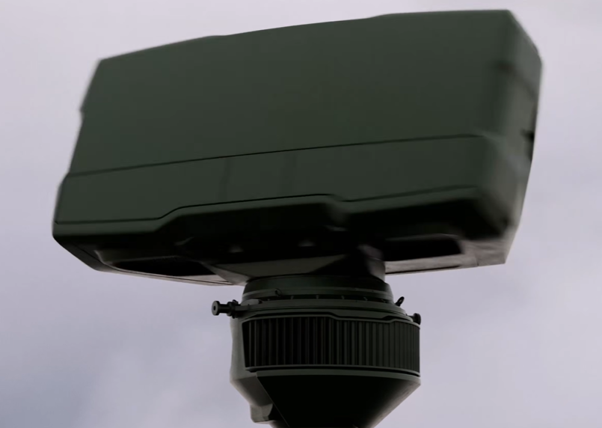
A recent demonstration in the UK tested an alternative based on quantum technology. Saab, Aquark Technologies and the Royal Navy’s Disruptive Capabilities and Technologies Office connected multiple Giraffe 1X radars using Aquark’s AQlock cold-atom clock, allowing the distributed sensors to remain synchronized without depending continuously on satellite timing.
According to NextGenDefense, during the trial, radars operating from separate locations detected and tracked live targets. Their measurements were then fused into a single airspace picture, demonstrating that precise local timing could support coordinated radar operations.
The researchers also deliberately disturbed the synchronization between the sensors. Radar-network performance declined in a predictable manner before recovering quickly when synchronization was restored. The system was subsequently tested under simulated GNSS denial and spoofing, conditions intended to represent an environment where satellite signals are unavailable or deliberately manipulated.
The cold-atom clock provides its timing reference using cold atoms. Atoms are cooled to temperatures near absolute zero, greatly reducing their motion and allowing their extremely stable atomic properties to serve as a precise frequency reference. That reference is used to stabilize the clock’s oscillator and limit the gradual timing drift associated with conventional systems.
The radar involved in the demonstration is a compact 3D surveillance system weighing less than 150 kilograms. It is designed to detect targets ranging from aircraft and helicopters to missiles, rockets, artillery and mortar rounds, as well as small, unmanned aircraft. Its size allows it to be transported on a pickup truck, carried by helicopter or moved on a trailer.
For defense forces, resilient timing is becoming increasingly important as electronic warfare targets the satellite services supporting navigation, communications and sensors. A distributed counter-drone or air-defense network may continue detecting targets individually after losing GPS, but maintaining precise synchronization is essential if those sensors are expected to work together effectively.
The demonstration does not eliminate every dependency associated with distributed radar operations, and quantum clocks must still prove practical across wider operational deployments. It does, however, show how precise local timing could remove one important vulnerability.
As air-defense networks become more distributed, the ability to keep sensors operating as one coordinated system, even when satellite signals disappear, could become as important as the performance of the radars themselves.